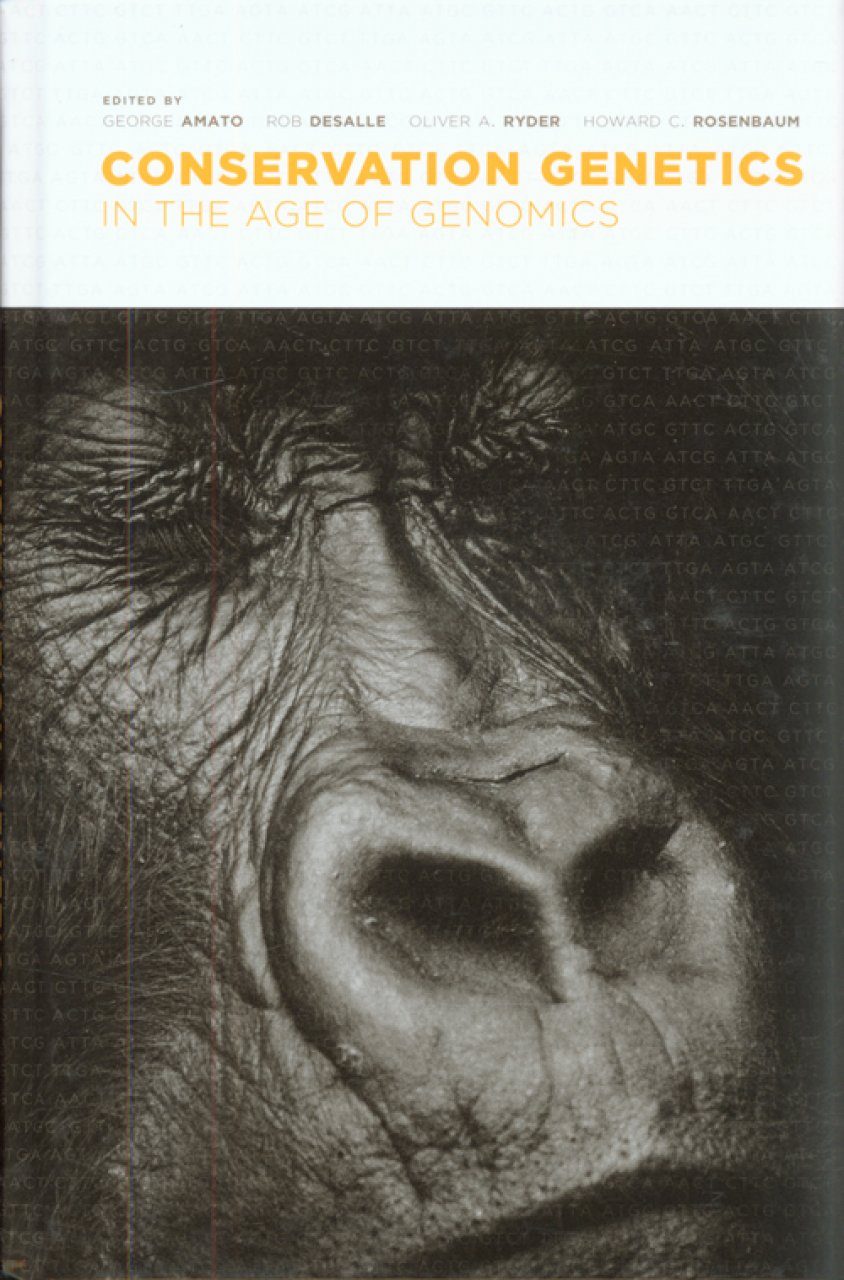
Conservation Genetics in the Age of Genomics
Edited by George Amato, R DeSalle and HC Rosenbaum
248 pages, figs, tabs.
- Description
- Images (1)
- Write a review
Genome sequencing enables scientists to study genes over time and to test the genetic variability of any form of life, from bacteria to mammals.
Thanks to advances in molecular genetics, scientists can now determine an animal's degree of inbreeding or compare genetic variation of a captive
species to wild or natural populations. Mapping an organism's genetic makeup recasts such terms as biodiversity and species and enables the
conservation of rare or threatened species, populations, and genes.
By introducing a new paradigm for studying and preserving life at a variety of levels, genomics offers solutions to previously intractable problems in understanding the biology of complex organisms and creates new tools for preserving the patterns and processes of the history of life on this planet. Featuring a number of high-profile researchers, this volume introduces the use of molecular genetics in conservation biology and provides a historical perspective on the opportunities and challenges presented by new technologies. It discusses the role of zoo-, museum-, and herbarium-based biological collections, which has expanded over the past decade, and covers the promises and problems of genomic and reproductive technology. The collection concludes with the philosophical and legal issues of conservation and potential effects on the formation of public policy.
Other products from the same publisher
related organisations include:
Biodiversity Action Network
British Wildlife
Conservation Handbook Gratis Copies Project
East Africa Natural History Society / Nature Kenya
Ecology Matters
Nature Conservancy
REGUA
SELVA
Wildfowl & Wetlands Trust
If you are involved in a scientific, conservation or environmental organisation and would like to be listed, please see our NHBS-Xchange information page.

Subject