By
Leon (NHBS Catalogue Editor)
12 Nov 2020
Written for Paperback

Convergent evolution is a topic I keep returning to. MIT Press recently published two books on it,
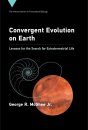
Convergent Evolution on Earth in 2019 and
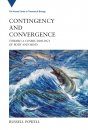
Contingency and Convergence in 2020. I felt the time was ripe to finally read their 2011 book
Convergent Evolution that I bought some years ago. All three of these are part of
The Vienna Series in Theoretical Biology, a series I hold in high regard. This, then, is the first of a three-part dive into what I consider one of evolutionary biology’s most exciting topics.
CGeorge McGhee is a Professor of Palaeobiology at Rutgers University and a member of the Konrad Lorenz Institute for Evolution and Cognition Research in Austria. The latter can be considered the alma mater of this series, as its three editors work here. The book’s subtitle, Limited Forms Most Beautiful, is a play on Darwin’s triumphant conclusion to
On the Origin of Species where he wrote that “endless forms most beautiful [...] are being evolved“.
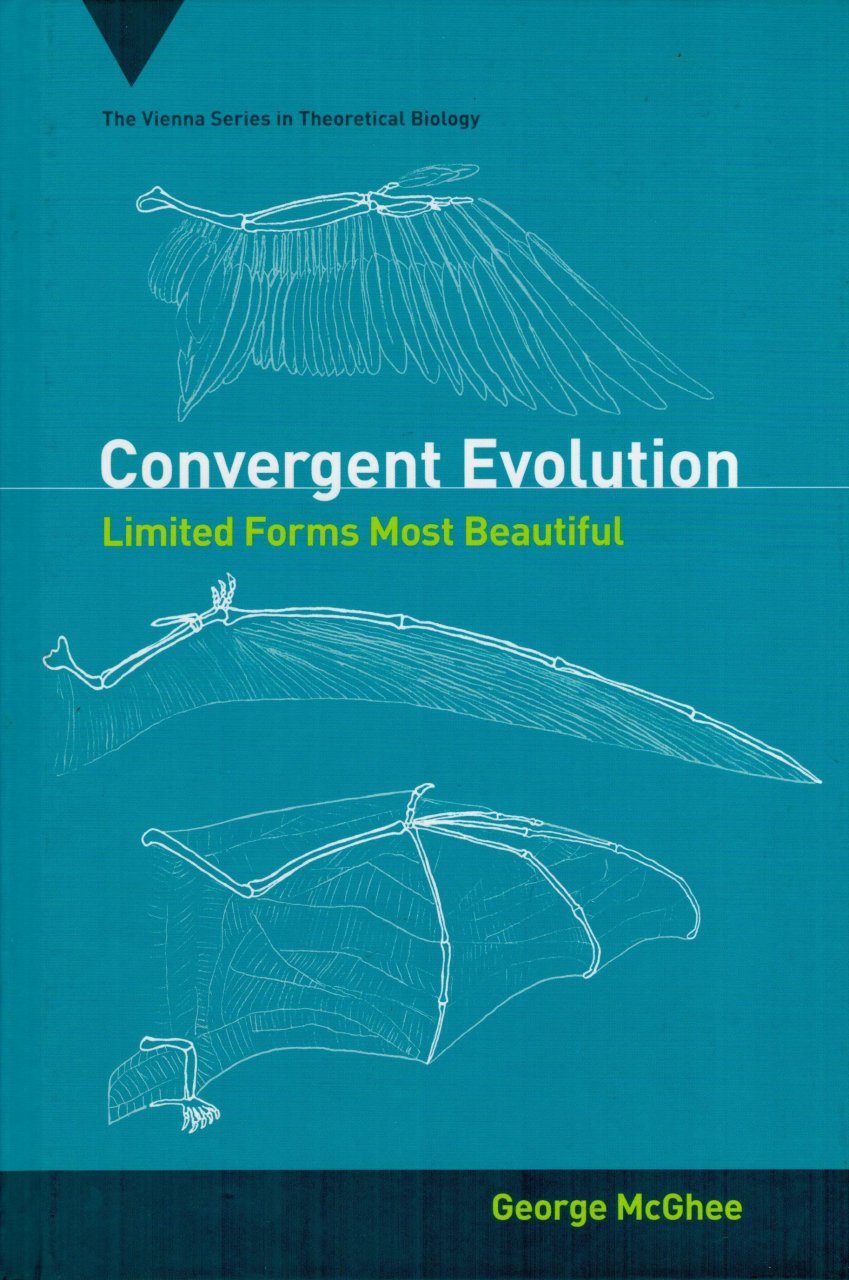
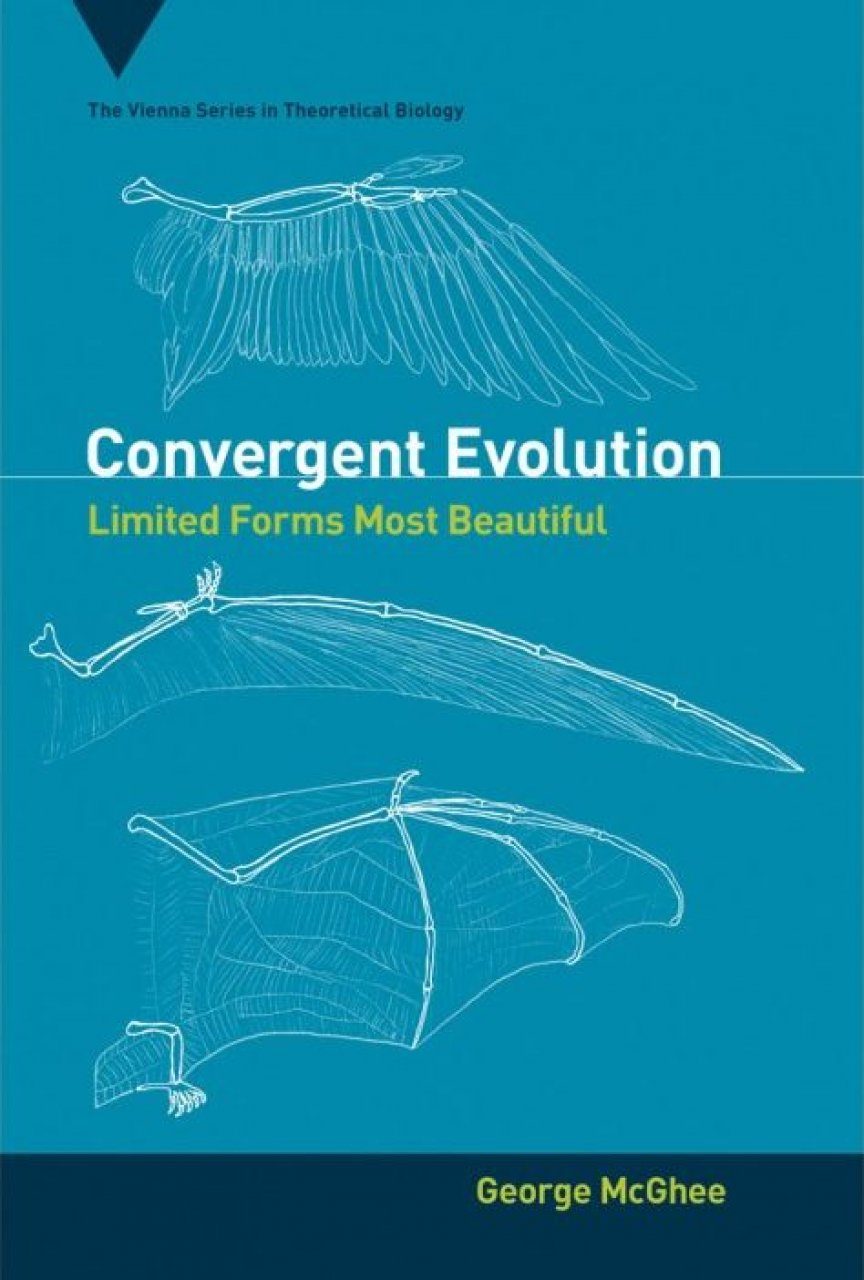
For those needing a refresher, convergent evolution refers to the ubiquitous pattern of evolution repeatedly hitting on the same or similar solutions to a problem in different organisms. One commonly cited example, shown on the book’s cover, is that of wings. Birds, bats, and pterosaurs all modified their forelimbs into appendages used to generate lift. This is where I feel
Convergent Evolution does not get off to its strongest possible start. Together with definitions, it immediately dives into a discussion on the subtle distinction between parallel and convergent evolution before deciding that the former is but one type of the latter. However, do not let this put you off, as the book is very accessibly written throughout.
Despite not planning to be an “Encyclopedia of Convergent Evolution”, the bulk of the book falls into the listicle category, with five of its eight chapters providing numerous tables with examples of convergent evolution. Two chapters tackle convergent structures in animals and plants, for example the eyes and ears involved in prey detection and reproductive structures such as plant seeds. Next to many remarkable examples, what stands out is how some adaptations are so common that you would forget they evolved convergently numerous times. Take viviparity, which is neither unique to terrestrial animals nor even to vertebrates; live birth also repeatedly evolved in marine animals and invertebrates.
More interesting even for evolutionary biologists are the subsequent three chapters where McGhee considers molecules, minds, and ecosystems. Molecules makes sense, as there are many examples of repeated evolution of DNA sequences coding for, say, a light-sensitive protein in eyes. Or of different amino acid sequences evolving to produce functionally and geometrically very similar proteins, such as antifreeze proteins in cold-water fish species. Convergent evolution of minds here means the repeated evolution of behaviours such as tool use or social hunting. But ecosystems? McGhee makes the convincing argument that whole assemblages of organisms, all with their specialised roles, have evolved repeatedly.
Where the book gets really interesting, and the theoretical biology part comes to the fore, are the last two chapters. One reason for convergent evolution is constraints imposed by physics – Cockell memorably summarised this with the phrase “physics is life’s silent commander”. The other is developmental constraints. Some biological forms that evolve are non-functional and lethal, these are the freaks of nature, the animal anomalies.
These two meet each other in the concept of theoretical morphology, which can be thought of as the less whimsical version of speculative zoology: an exercise in mapping all the possible forms, existent and non-existent, an organism could take, with the aim of answering why some morphologies evolved but others did not. The total set of all possibilities forms a hyperdimensional morphospace. McGhee wrote more about this in his 2007 book
The Geometry of Evolution where he applies it to the concept of the adaptive landscape to explain why evolution favours certain solutions over others (in short, because not all solutions are equally good). I realise that if you are not well versed in evolutionary biology this might all sound rather abstract. I thoroughly recommend Andreas Wagner’s brilliant books
Arrival of the Fittest and
Life Finds a Way as introductions to the idea of evolution as life endlessly probing the hyperdimensional space of all possible options (whether morphologies or DNA and protein sequences).
McGhee here shows how physical and developmental constraints form a Venn diagram in morphospace. All life forms, extinct and extant, are found in the space where the two constraints overlap: these are the forms that are both functional and viable. Lethal mutants are those that are allowed by physics but not by developmental constraints. Those that are developmentally but not physically allowed are of particular interest to astrobiology. “Not physically allowed” comes with an asterisk that reads: not on Earth. But what of other planets? Could silicon-based life forms exist on planets with extremely high or low temperatures? Peter Ward thought so, but Charles Cockell makes a case for the universality of carbon-based lifeforms. This leaves a vast set of possibilities not accessible to life due to the constraints imposed by both development and physics.
The other big question touched on is the predictability of evolution with McGhee juxtaposing the two dominant schools of thought. There is Stephen Jay Gould’s view of evolution as being dominated by contingency (i.e. chance events) and therefore being unpredictable if it was to be repeated. The second is the view of Simon Conway Morris and others who argue that evolution is predictable and its outcomes inevitable. In McGhee’s eyes, the latter is the clear winner and his argumentation why is worth reading.
There are some points of criticism that McGhee does not tackle here. Are we cherry-picking examples when arguing for convergent evolution? Are we even seeing patterns where there are none? To return to the example of the wings on the book’s cover: though all involve modification of forelimbs, the details differ. And is shared genetic ancestry predisposing organisms to converging on similar solutions? Losos tackled these questions in a very balanced manner in his brilliant book
Improbable Destinies.
McGhee delivers a fascinating tour through convergent evolution with this book and I am especially intrigued by the subtitle of his 2019 book which promises to apply this further to astrobiology.