

United States
£ GBP
Language: English
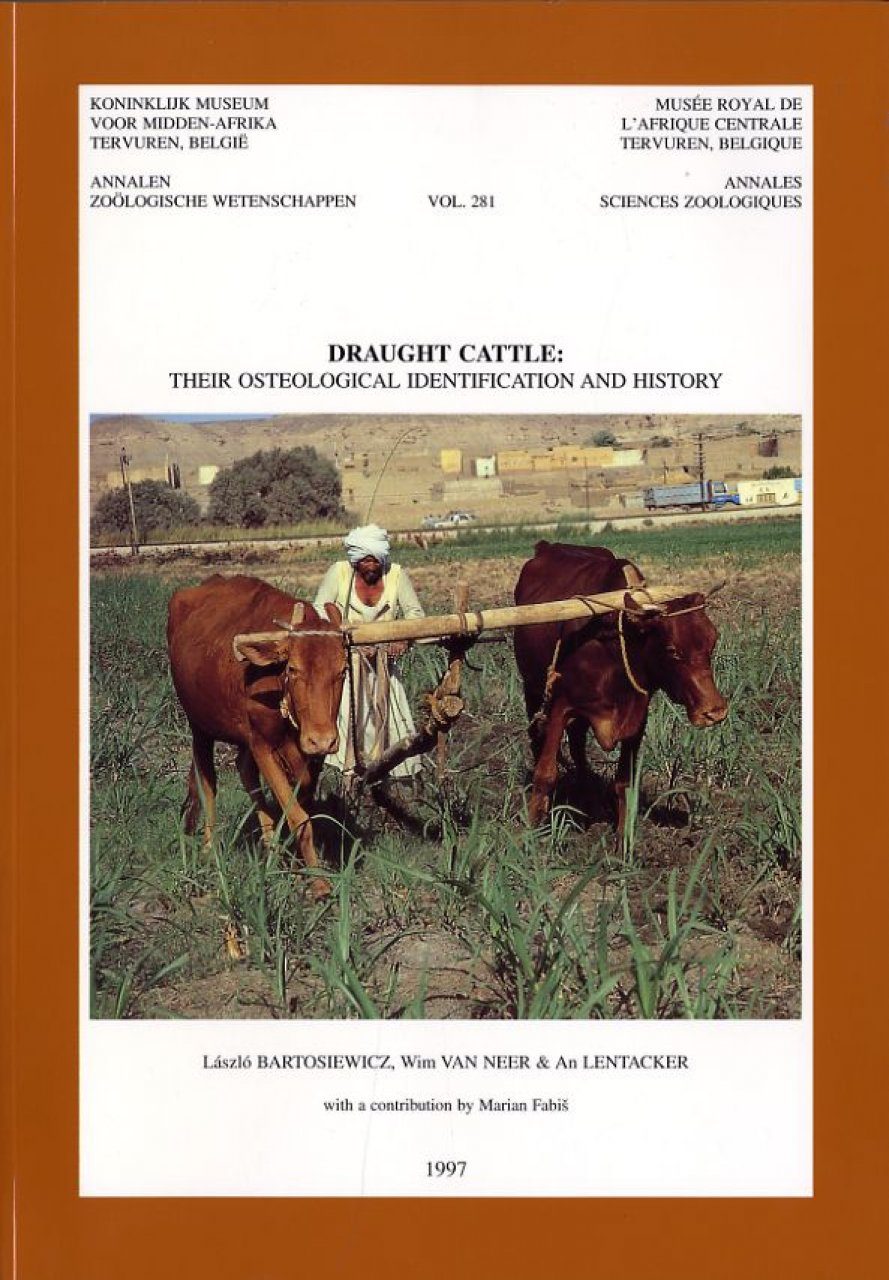
The most widely distributed form of work for cattle since the beginning of their domestication has been as draught animals for the palough and cart. This is known from archaeological, iconographic and written sources which, however, are limited in number and generally only inform us about younger periods. Skeletal remains found during archaeological excavations may yield additional data for the study of cattle as draught animals in former times. In this volume we will review the osteological evidence previously reported in the literature and describe the morphological and osteometric traits observed in a series of foot skeletons of modern draught cattle, collected in Rumania. A case study is presented in which the results obtained from the recent material are applied to a sample of cattle bones from a Roman site in Belgium. An attempt is made to define histological criteria for the recognition of draught cattle. The osteometry of the Rumanian material and a large sample of Hungarian grey cattle is studied. Moreover, the broader culture-historical and economic implications of using cattle in draught work is reviewed.








![Révision des Characidae Nains Africains [Revision of African Dwarf Characidae]](http://mediacdn.nhbs.com/jackets/jackets_resizer_medium/14/148604.jpg?height=150&width=99)

![Les Poissons du Lac Tumba et de la Région d'Ikela: Etude Systématique et Écologique [The Fish of Lake Tumba and the Ikela Region: Systematic and Ecological Study]](http://mediacdn.nhbs.com/jackets/jackets_resizer_medium/14/148546.jpg?height=150&width=100)
![Faune des Poissons d'Eaux Douces de la Réserve de la Biosphère de Dimonika (Mayombe, Congo) [Fauna of the Freshwater Fishes of the Dimonika Biosphere Reserve (Mayombe, Congo)]](http://mediacdn.nhbs.com/jackets/jackets_resizer_medium/14/148793.jpg?height=150&width=107)


![Atlas des Mammifères Sauvages de France, Volume 2: Ongulés et Lagomorphes [Atlas of Wild Mammals of France, Volume 2: Ungulates and Lagomorphs]](http://mediacdn.nhbs.com/jackets/jackets_resizer_medium/25/252352.jpg?height=150&width=107)


![Les Poissons des Hauts-Bassins de la Volta [The Fish of the Upper Basin of the Volta]](http://mediacdn.nhbs.com/jackets/jackets_resizer_medium/14/148583.jpg?height=150&width=99)

![Tshopo: Laborieuse Construction Politico-Administrative Coloniale Muée en Bastion du Nationalisme Congolais [Tshopo: Laborious Colonial Politico-Administrative Construction Turned into a Bastion of Congolese Nationalism]](http://mediacdn.nhbs.com/jackets/jackets_resizer_medium/25/254480.jpg?height=150&width=106)


