United States
£ GBP
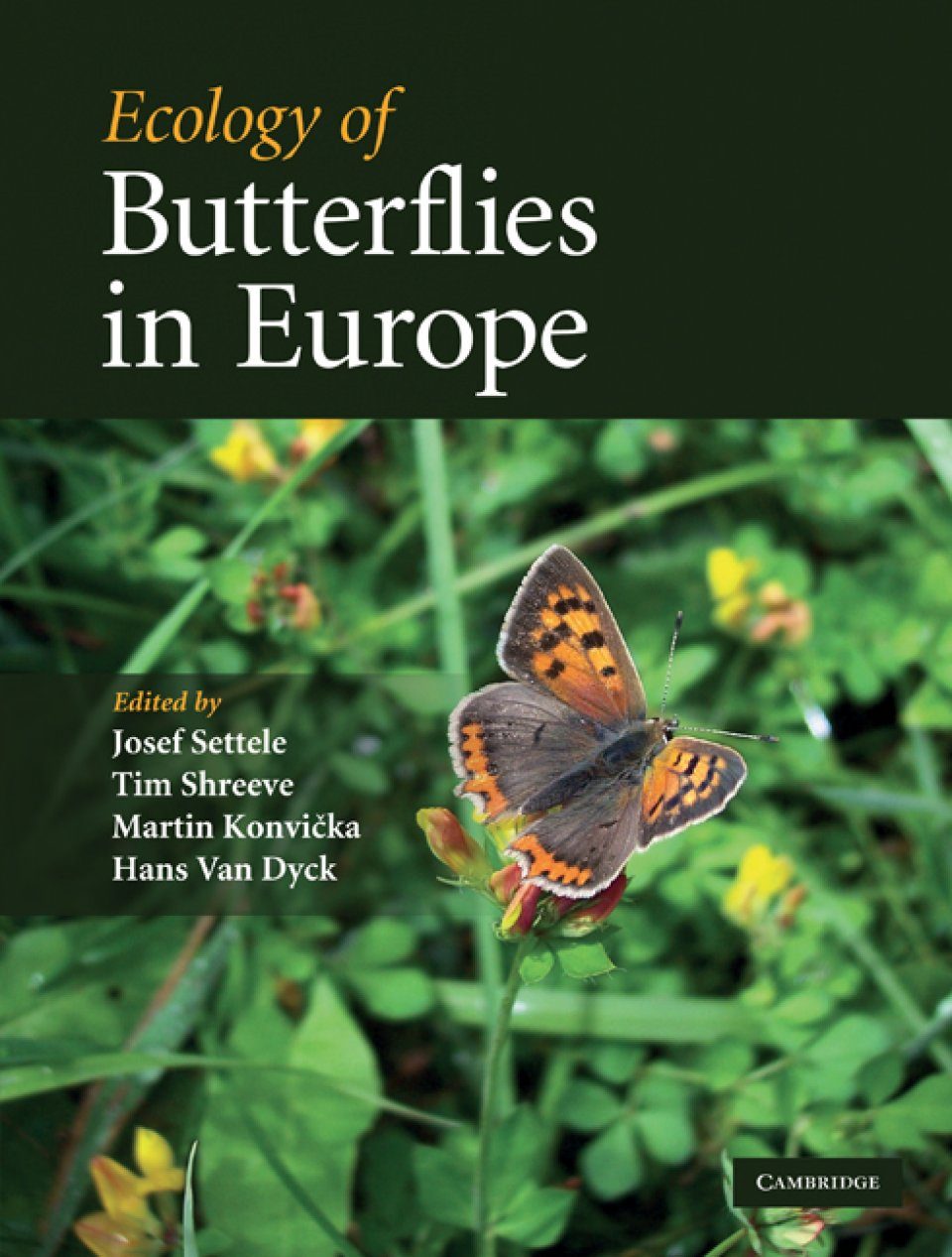
Due to the attractiveness of butterflies, and their usefulness as model systems for biological questions, there has been a considerable amount of material written on butterfly biology, largely in Europe. This book synthesizes all relevant and recent knowledge in the field, which is a must for those making use of this taxonomic group as a model system. It is divided into five major parts which deal with habitat use, population ecology and genetics, evolutionary ecology, distribution and phylogeny, and global change and conservation.
There are growing numbers of scientific projects and networks in Europe in which the use of butterflies as tools and targets for conservation is central, and application of knowledge is closely related to European cultural landscapes. However, the chapters can also be applied to a wide geographic scope. Written by an international team of experts, this timely book is suitable for students, researchers and enthusiasts.
Preface; 1. Introduction: ecology of butterflies in Europe - where are we now and where to go? Roger Dennis; Part I. Habitat-Use: Resources and Constraints: 2. Adult food resources in butterflies Andreas Erhardt and Jovanne Mevi-Schutz; 3. Mating behaviour in butterflies Per-Olof Wickman; 4. Butterfly oviposition: sites, behaviour and modes Enrique Garcia-Barros and Thomas Fartmann; 5. Butterfly herbivory and larval ecology Miguel L. Munguira, Enrique Garcia-Barros and Jose Martin Cano; 6. Thermoregulation and habitat use in butterflies Per-Olof Wickman; 7. Predictive species distribution modelling in butterflies Boris Schroder, Barbara Strauss, Birgit Binzenhofer, Robert Biedermann and Josef Settele; Part II. Population Biology: Population Structure, Dynamics and Genetics: 8. Butterfly population structure and dynamics Rob Wilson and David Roy; 9. Costs and benefits of dispersal in butterflies Thomas Hovestadt and Marko Nieminen; 10. Population genetics of butterflies Gabriel Neve; 11. Parasitoids of European butterflies Mark Shaw, Constanti Stefanescu and Saskya van Nouhuys; Part III. Evolutionary Ecology: 12. Adaptation and plasticity in butterflies: the interplay of genes and environment Hans Van Dyck and Jack Windig; 13. Functional significance of butterfly wing morphology Tim Shreeve, Martin Konvicka and Hans Van Dyck; 14. Evolutionary ecology of butterfly fecundity Bengt Karlsson and Hans Van Dyck; 15. Gradients in butterfly biology Soren Nylin; Part IV. Species in Time and Space: Distribution and Phylogeny: 16. Bad species - how ecology and evolution confuse butterfly taxonomy Henri Descimon and James Mallet; 17. Butterfly faunal structures, phylogeography, and historical implications Roger Dennis and Thomas Schmitt; 18. Butterfly richness patterns and gradients David Gutierrez; 19. Ecological genetics and evolutionary ecology in butterfly hybrid zones Adam Porter; Part V. Global Change and Conservation: 20. Climate warming and distribution changes in butterflies Jane K. Hill, Ralf Ohlemuller, Richard Fox and Chris D. Thomas; 21. Conservation status of European butterflies Chris Van Swaay, Dirk Maes and Martin Warren; 22. (Meta)population viability analysis in butterflies: a crystal ball for the conservation of endangered butterflies? Nicolas Schtickzelle and Michel Baguette; 23. Butterflies of European ecosystems: impact of land use and options for conservation management Josef Settele, John Dover, Matthias Dolek and Martin Konvicka.
'Ecology of Butterflies in Europe is innovative and is recommended not only to researchers' libraries. Important readers will include naturalists, amateur lepidopterologists and all individuals who formulate policy and practical conservation biology.' European Journal of Entomology 'This is a book to be dipped into and enjoyed slowly, like a good malt - again and again.' British Journal of Entomology and Natural History 'What else can be said, except that this is an excellent and enthralling book? In every chapter I have found intriguing ideas and facts. Its messages are important and wide-ranging ... And it is easily recommendable to every ecologist. Don't be put off by the 'European' part of the title. The range of species, habitat, climate, threat and response make this a book with world-wide importance.' Bulletin of the British Ecological Society