About this book
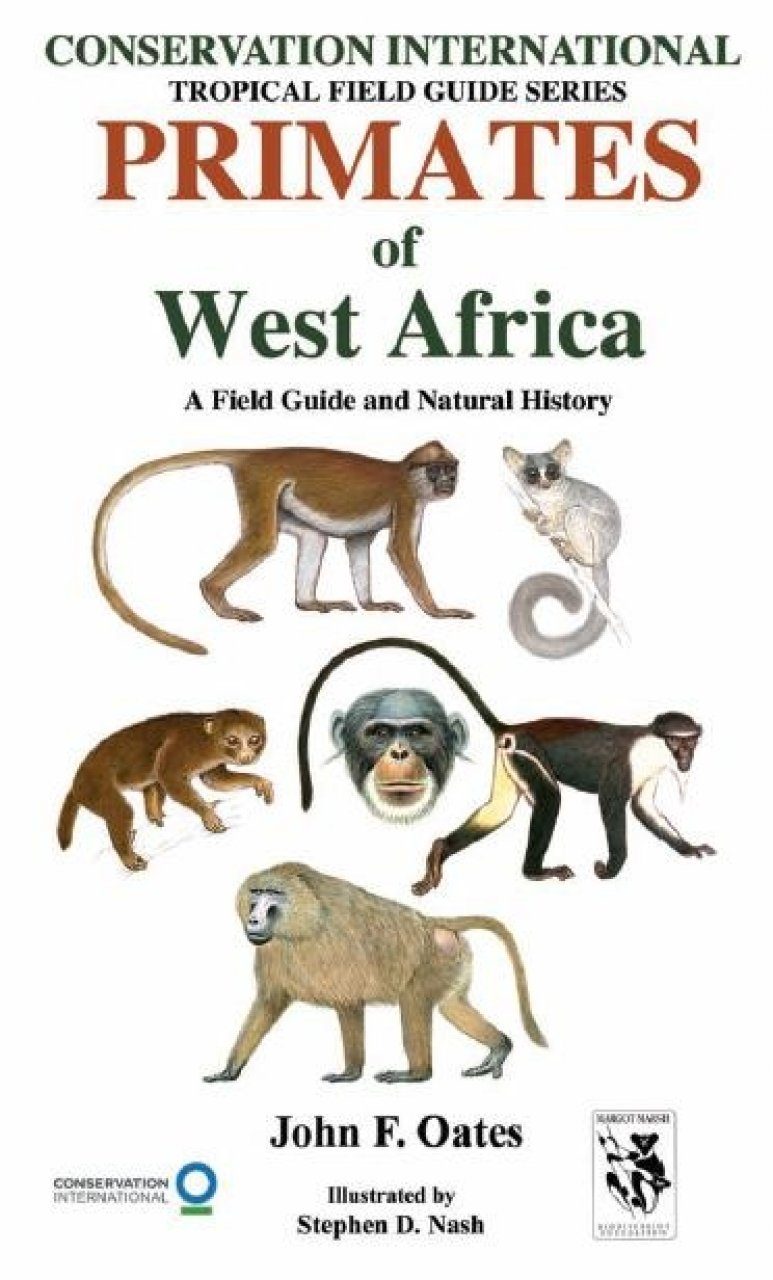
West Africa, from the coast of Senegal to Lake Chad and Cameroon's Sanaga River, is home to 60 primate species and subspecies, 46 of which - more than three-quarters - occur nowhere else. They range from the nocturnal angwantibo, pottos, and galagos, to the mangabeys, baboons, and the drill, to an extraordinary diversity of guenons and colobus monkeys.
In addition, no less the three of the great apes are restricted to this region, including two chimpanzees and the Cross River gorilla. The savannas and open woodlands in the north are home to baboons, vervets and patas monkey, but the main focus of this guide is the Guinean Forest, ranking high among the world's 35 Biodiversity Hotspots, the richest and most endangered of our planet's terrestrial systems. Forest loss, degradation and fragmentation, and widespread and intensive hunting for bushmeat mean that no less than 30 of the region's primates are now threatened.
This comprehensive guide provides a brief introduction to the region, its topography, climate, vegetation, native peoples and history, and includes as well essays on the classification and evolutionary history of the region's primates, and a review of conservation activities and primate field research projects since the 1960's.
The bulk of the book is dedicated to accounts for each primates species and subspecies, providing information not only on their identifying features and geographic distributions, but also on their natural history - their populations and habitats, locomotion, vocalizations, activity patterns, diets and feeding, ranging, and social behaviors.
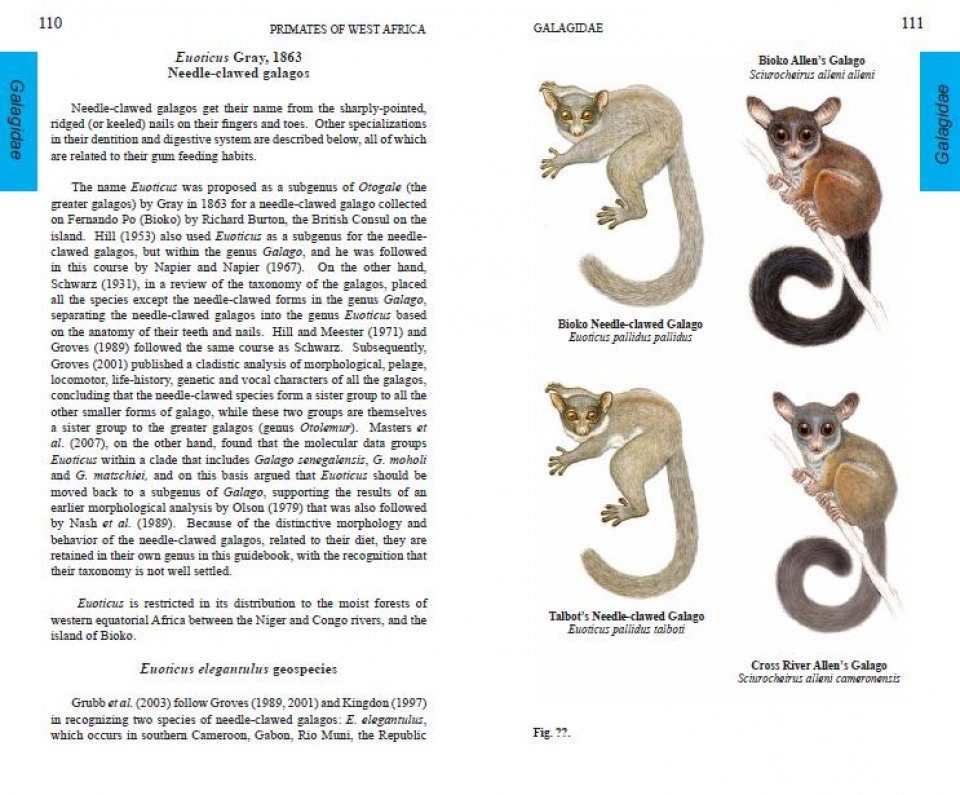
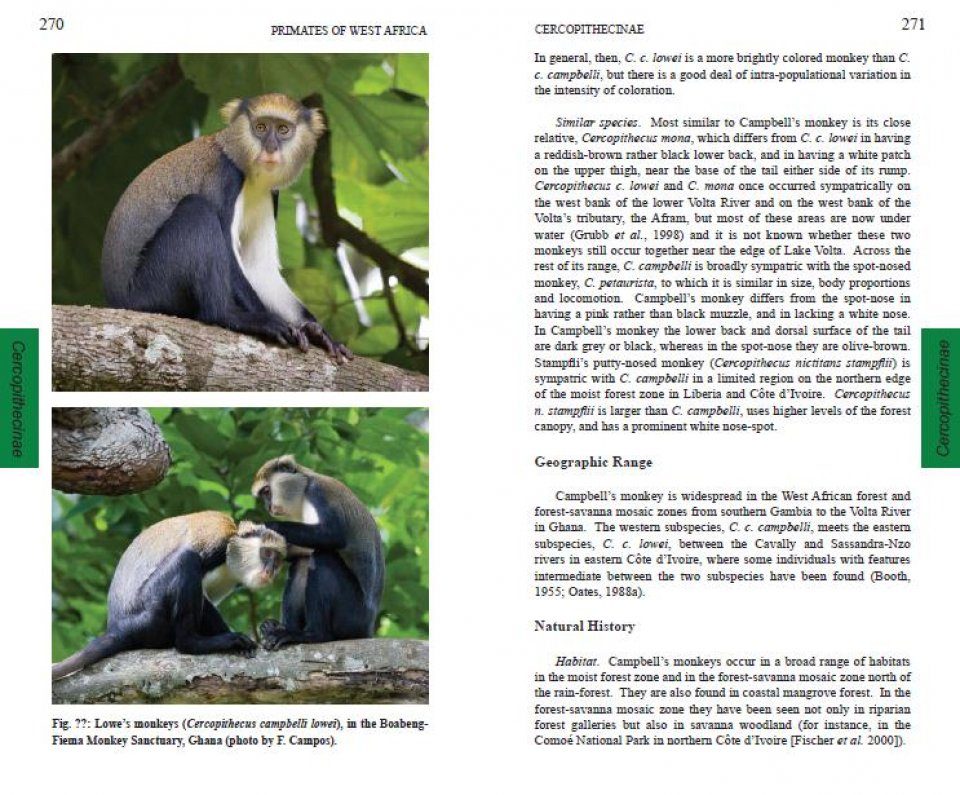
The guide is richly illustrated with full-color plates by Stephen D. Nash, distribution maps for every species and subspecies, and more than 140 color photographs of the primates and their habitats. An appendix describes key sites where these primates can be seen in the wild.
Contents
&b;Foreword
Preface
1. Introduction
2. West African Geography and Ecology: Topography, Drainage,
Climate and Vegetation
3. Classification of Living West African Primates
4. Evolutionary History of West African Primates
5. The People of West Africa and Their History
6. Conservation: Threats to Primate Survival, and Strategies for
Protection
7. Identifying and Studying West African Primates
8. The Primates of West Africa&o;
Galagoides: Dwarf galagos
G. demidovii, Demidoff's Galago
G. thomasi, Thomas's Galago
Galago: Lesser Galagos or Bushbabies
G. senegalensis, Senegal Bushbaby
G. senegalensis senegalensis, Senegal Bushbaby
Euoticus: Needle-clawed Galagos
E. pallidus, Northern Needle-clawed Galago
E. pallidus pallidus, Bioko Needle-clawed Galago
E. pallidus talboti, Talbot's Needle-clawed Galago
Sciurocheirus: Allen's Galagos
S. alleni, Allen's Galago
S. alleni alleni, Bioko Allen's Galago
S. alleni cameronensis, Cross River Allen's Galago
Arctocebus: Angwantibos
A. calabarensis, Angwantibo
Perodicticus: Pottos
P. potto, Potto
P. potto potto, Bosman's Potto
P. potto juju, Benin Potto
P. edwardsi, Milne-Edwards's Potto
Cercocebus: White-eyelid Mangabeys
C. atys, Sooty Mangabey
C. lunulatus, White-naped Mangabey
C. torquatus, Red-capped Mangabey
Mandrillus: Drills and Mandrills
M. leucophaeus, Drill
M. leucophaeus leucophaeus, Mainland Drill
M. leucophaeus poensis, Bioko Drill
Lophocebus: Crested mangabeys
L. albigena, Grey-cheeked Mangabey
Papio: Baboons
P. papio, Guinea Baboon
P. anubis, Olive Baboon
Miopithecus: Talapoins
M. ogouensis, Northern Talapoin
Erythrocebus, Patas Monkeys
E. patas, Patas Monkey
Chlorocebus: Green and Vervet Monkeys
C. aethiops, Grivets
C. aethiops sabaeus, Green Monkey
C. aethiops tantalus, Tantalus Monkey
Allochrocebus: Mountain Monkeys
A. preussi, Preuss's Monkey
A. preussi preussi, Preuss's Monkey
A. preussi insularis, Bioko Preuss's Monkey
Cercopithecus: Forest Guenons
C. diana, Diana and Roloway Monkeys
C. diana diana, Diana Monkey
C. diana roloway, Roloway Monkey
C. neglectus, De Brazza's Monkey
C. campbelli, Campbell's Monkey
C. campbelli campbelli, Campbell's Monkey
C. campbelli lowei, Lowe's Monkey
C. mona, Mona Monkey
C. pogonias, Crowned Monkey
C. pogonias pogonias, Bioko Crowned Monkey
C. pogonias ssp., Golden-bellied Crowned Monkey
C. petaurista, Lesser Spot-nosed Monkey
C. petaurista petaurista, Eastern Spot-nosed Monkey
C. petaurista buettikoferi, Western Spot-nosed Monkey
C. erythrogaster, White-throated Monkey
C. erythrogaster erythrogaster, Red-bellied Monkey
C. erythrogaster pococki, Nigerian White-throated Monkey
C. sclateri, Sclater's Monkey
C. erythrotis, Red-eared monkey
C. erythrotis erythrotis, Bioko Red-eared Monkey
C. erythrotis camerunensis, Cameroon Red-eared Monkey
C. cephus, Moustached Monkey
C. cephus cephus, Moustached Monkey
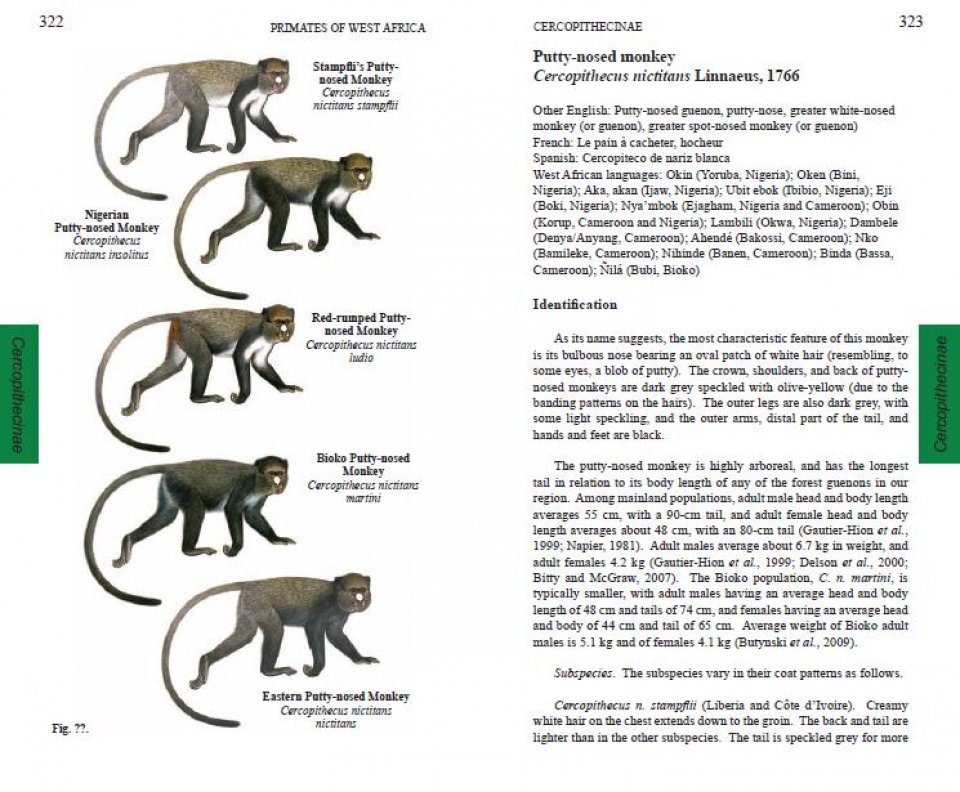
C. nictitans, Putty-nosed Monkey
C. nictitans stampflii, Stampfli's Putty-nosed Monkey
C. nictitans insolitus, Nigerian Putty-nosed Monkey
C. nictitans ludio, Red-rumped Putty-nosed Monkey
C. nictitans martini, Bioko Putty-nosed Monkey
C. nictitans nictitans, Eastern Putty-nosed Monkey
Procolobus: Olive Colobus and Red Colobus Monkeys
P. verus, Olive Colobus
P. badius, Western Red Colobus
P. badius temminckii, Temminck's Red Colobus
P. badius badius, Bay Colobus
P. waldroni, Miss Waldron's Red Colobus
P. epieni, Niger Delta red Colobus
P. pennantii, Pennant's Red Colobus
P. preussi, Preuss's Red Colobus
Colobus: Black-and-White and Black Colobus Monkeys
C. polykomos, Western Black-and-White Colobus
C. vellerosus, White-thighed Black-and-White colobus
C. guereza, Guereza
C. satanas, Black Colobus
C. satanas satanas, Bioko Black Colobus
Gorilla: Gorillas
Gorilla gorilla, Western Gorilla
G. gorilla diehli, Cross River Gorilla
G. gorilla ?gorilla, Ebo Forest Gorilla
Pan: Chimpanzees
P. troglodytes, Chimpanzee
P. troglodytes verus, Western chimpanzee
P. troglodytes ellioti, Elliot's chimpanzee
&b;Appendix: Key Sites for Watching and Conserving Primates in
West Africa
References
Species Index&o;
Customer Reviews
Biography
John Oates is Professor Emeritus of Anthropology at Hunter College, City University of New York, where he was a member of the teaching faculty from 1978 to 2008. He has a PhD in zoology from the University of London based on studies of the ecology and behavior of black-and-white colobus monkeys in Uganda, and has had research affiliations with Rockefeller University (New York), Cambridge University, the University of Benin (Nigeria), Njala University College (Sierra Leone) and Oxford Brookes University (England).
Oates first visited West Africa as an undergraduate at University College London in 1964, and since 1979 he has focused research and conservation efforts on that region. He has paid special attention to rainforest primates, undertaking field studies on a variety of prosimians, monkeys, and apes. In the 1980s, he played a major role in establishing a research and conservation site at Tiwai Island, Sierra Leone, and he has assisted in the creation of several other protected areas, including the Cross River and Okomu national parks in Nigeria. From 2001 to 2004 he worked with the Nigerian Conservation Foundation and the Wildlife Conservation Society to establish a biodiversity research program in Cross River State, Nigeria.
Oates has been a member of the IUCN-SSC Primate Specialist Group (PSG) since 1978 and on behalf of the PSG he compiled the "Action Plan for African Primate Conservation: 1986-90" (published in 1986); a revised version of that plan appeared in 1996 as "African Primates: Status Survey and Conservation Action Plan". Oates has also contributed to PSG conservation action plans for West African chimpanzees (2003), Cross River gorillas (2007), and Nigeria-Cameroon chimpanzees (2011). He is the author of "Myth and Reality in the Rain Forest: How Conservation Strategies are Failing in West Africa" (University of California Press, 1999). He now lives in Kent, England.









![Primatas do Amapá: Guia de Identificação de Bolso [Primates of Amapá: Pocket Identification Guide]](http://mediacdn.nhbs.com/jackets/jackets_resizer_medium/18/181441.jpg?height=150&width=66)


![Grenouilles de Madagascar du Genre Mantella: Guide d'Identification de Poche [Frogs of Madagascar, Genus Mantella: Pocket Identification Guide]](http://mediacdn.nhbs.com/jackets/jackets_resizer_medium/18/181535.jpg?height=150&width=67)
