

United States
£ GBP
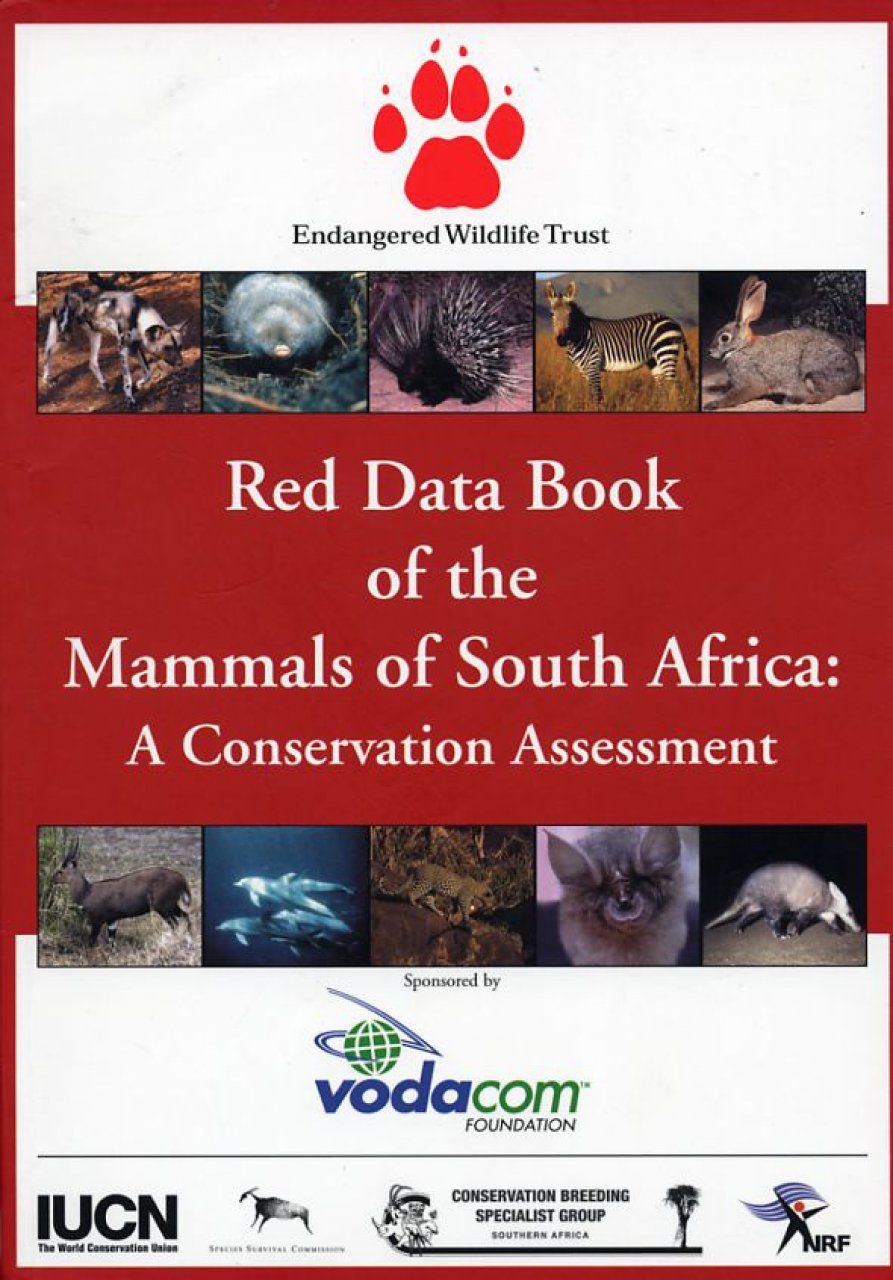
In the foreword to this publication, Dr. John Ledger, former director of the Endangered Wildlife Trust (EWT), notes the many advances made in the almost twenty years between the previous Red Data Book on South African mammals (published in 1986) and this latest edition. These advances have resulted in the new publication being more than three times the size of its predecessor and in covering 295 species and subspecies. It is indeed a tome and as Ledger points out "a quantum leap forward in South Africa's efforts to conserve its mammalian biodiversity, and to meet its obligations in terms of the Convention of Biodiversity."
The Red Data Books (RDBs) are designed to assess the status and threats to the animals occurring within a country or other specified area and to highlight biodiversity loss at the species level. The premise is that such knowledge is essential in managing natural resources and evaluating this success. As the third most biologically diverse country on Earth and as one of 12 'mega-diverse' countries that together contain more than 66% of the world's biodiversity, South Africa has a responsibility to measure and manage its natural heritage and this overdue publication is an important step in this regard.
As opposed to the previous RDB on South African mammals, which addressed only those terrestrial mammals which were considered to be at risk, the 2004 RDB includes a conservation assessment for every terrestrial and marine mammal in South Africa. Of the total 295 species and subspecies covered, 57 (19.3%) were assigned threat categories. 10 (3.4%; black rhino - arid ecotype; short-eared trident bat; Rendall's serotine bat; Visagie's golden mole; rough-haired golden mole; De Winton's golden mole; Van Zyl's golden mole; Juliana's golden mole - Pretoria subpopulation; riverine rabbit; Ongoye red squirrel.) were classified as Critically Endangered, 18 (6.1%) as Endangered, and 29 (9.8%) as Vulnerable.
Each species is comprehensively dealt with under 22 headings, some of the most important of which include: Habitat status; Threats; Trade; Population: numbers and trends; Recent field studies; Research recommended; Management recommendations; Captive breeding/cultivation recommendations. In the continued absence of a revised edition of the standard Mammals of the Southern African Subregion (last published in 1990), this publication also serves as the taxonomically most up to date reference to South Africa's mammals.
Despite the massive strides in knowledge and technology presented here, as current EWT director, Nick King notes "this publication is not the end, rather, it is just the beginning, for it is now how we use this powerful tool, which will ultimately determine its worth."









![How to Find and Identify Mammals [Revised Edition]](http://mediacdn.nhbs.com/jackets/jackets_resizer_medium/21/210208.jpg?height=150&width=106)


