About this book
Drawing from the best data available, this is an unprecedented guide to the state of the planet and the most pressing resource and environmental issues. Top scientists at The Nature Conservancy, the leading conservation organization working around the world to protect ecologically important lands and water, have joined forces to create this extraordinary reference.
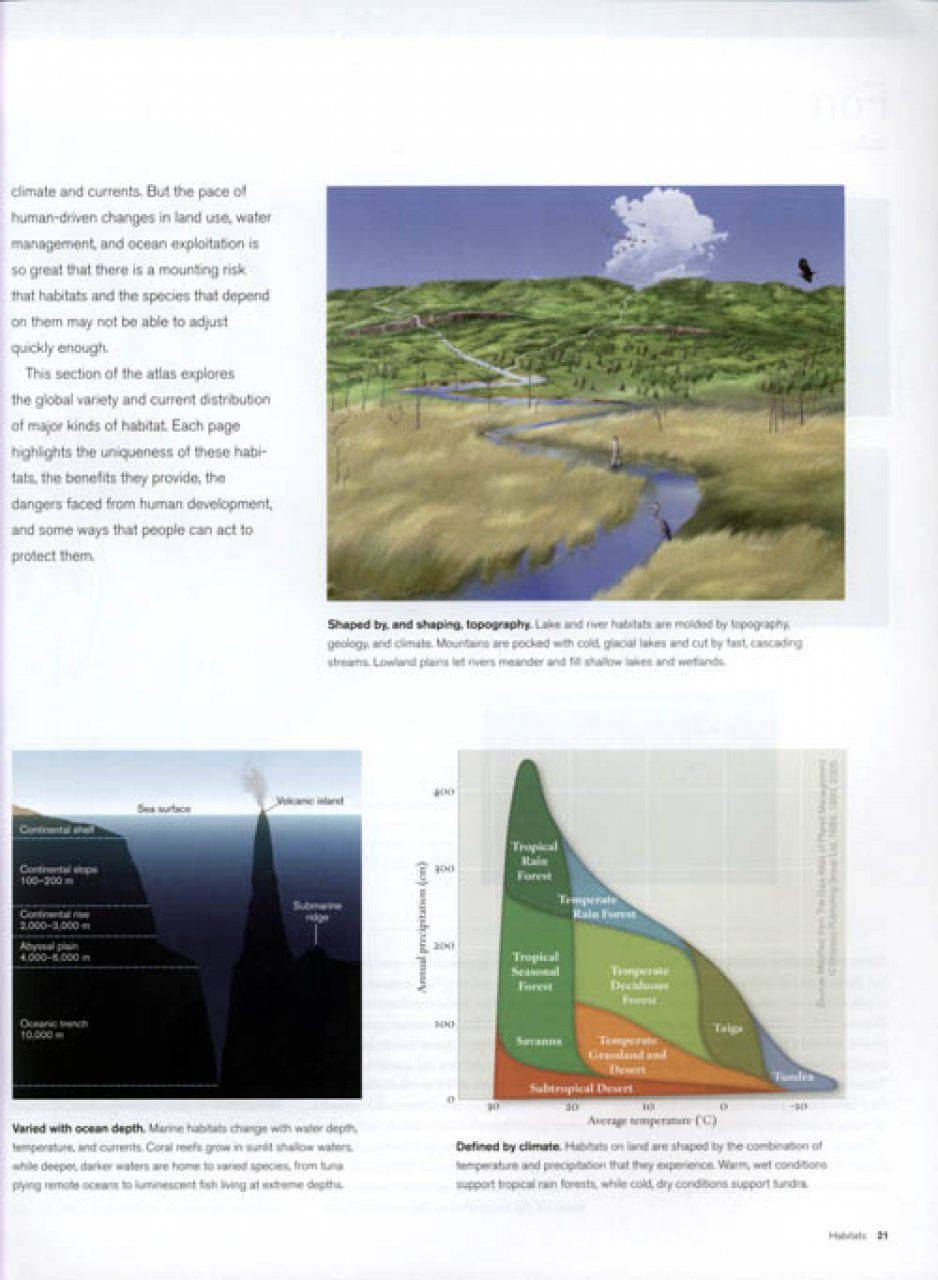
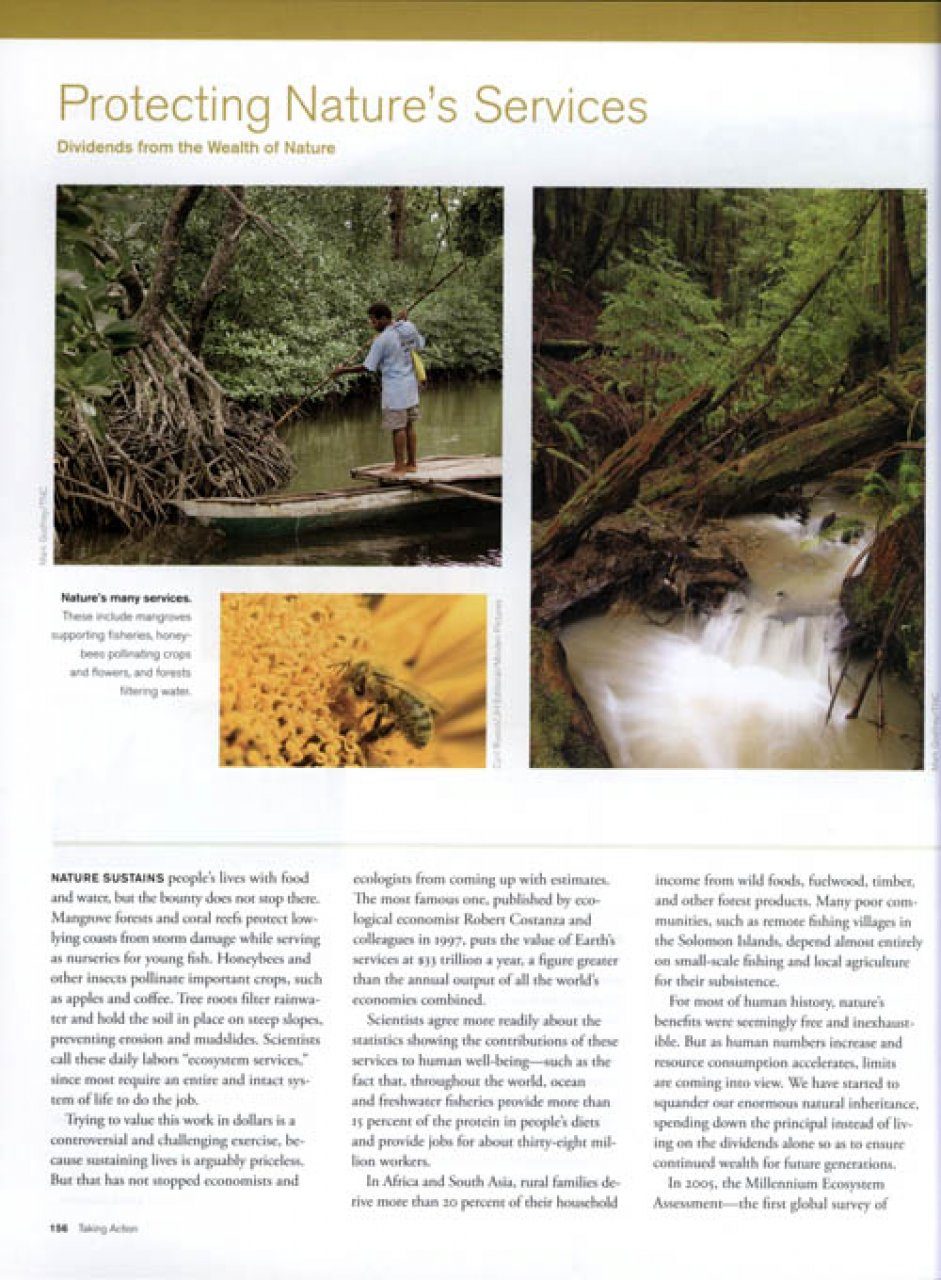
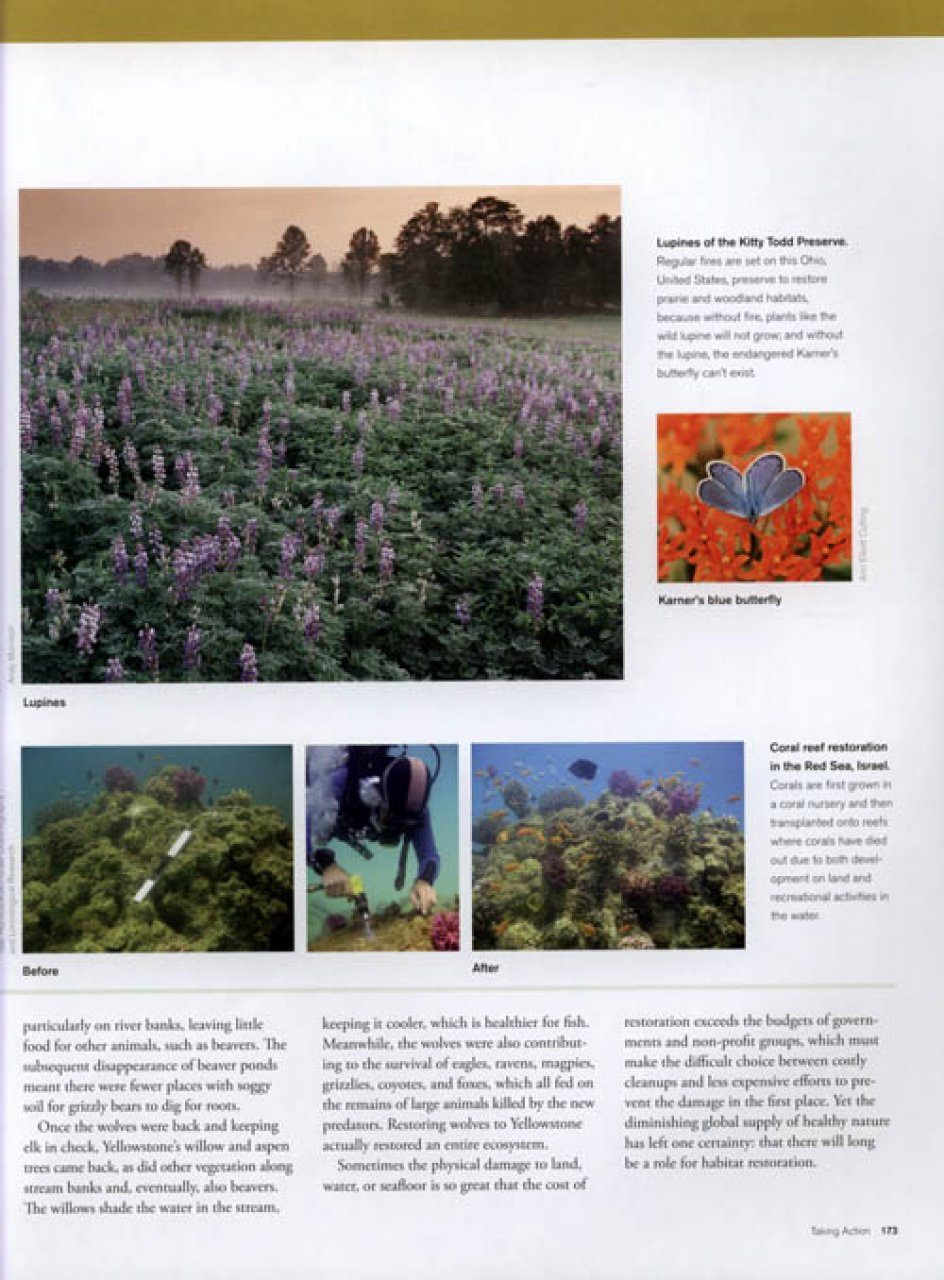
The book features over 100 richly-detailed, full-colour maps and other graphics paired with an informative discussion of major trends across the world's terrestrial, marine and freshwater environments. Interspersed throughout, essays by noted international authorities point the way forward in confronting some of the greatest conservation challenges.
Readers can take measure of their own place in the world, not only by longitude and latitude but also by the types of habitats surrounding them, by the species that flourish at home but not elsewhere, and by the amount of conservation that has been done - or could be.
The atlas breaks critical new ground in global mapping, for the first time delineating specific freshwater and marine systems such as salt marshes and kelp forests. It also includes first-ever maps of where high concentrations of freshwater birds, seabirds and marine mammals occur.
"For the first time, all this science is in one place," says lead author Jennifer Molnar. "We are putting global information in the hands of scientists and readers, to analyze and combine in new ways." And although the atlas documents widespread destruction of natural areas, it also highlights where the diversity of life continues to thrive. Perhaps most importantly, the atlas offers readers a chance to assess the natural world without the filter of someone else's opinion about what is or is not important. "You can see and judge the facts for yourself," says Jonathan Hoekstra. "This is it - take a look at your world."
Contents
Acknowledgments x FOREWORD * A NEW VIEW OF OUR HOME xii Mark Tercek, The Nature Conservancy FOREWORD * CONSERVATION CONNECTIONS xiv Paul R. Ehrlich, Stanford University, Stanford University 1. Introduction 1 WHY ECOREGIONS? 6 Taylor Ricketts, World Wildlife Fund Terrestrial Ecoregions, Realms, and Biomes 8 Freshwater Ecoregions and Basins 10 Marine Ecoregions, Provinces, and Realms 12 THE STORIES THAT MAPS TELL 14 Jon Christensen, Stanford University 2. Habitats 19 Forests and Woodlands: Giving Trees 22 Grasslands: Where the Buffalo Roamed 24 Deserts and Aridlands: Hardy Life under Harsh Conditions 26 Rivers and Wetlands: The Planet's Lifeblood 28 Lakes: Fragile Pools of Life 30 Caves and Karst: Troves of Subterranean Species 32 HOPE IN HABITATS 34 Steven J. McCormick, Gordon and Betty Moore Foundation Coasts and Shelves: The Sea's Sunlit Margins 36 Coral Reefs: Crown Jewels of the Ocean 38 Mangrove Forests: Bridging Land and Sea 40 Seagrass Beds: Marine Meadows 42 Salt Marshes: Living Filters along Our Coasts 44 High Seas and Deep Oceans: Earth's Uncharted "Inner Space" 46 3. Species 49 Plants: A Vital Variety 52 Freshwater Fish: A Diverse Cast 54 Amphibians: Fragile Markers of the Planet's Health 56 Reptiles: Prehistoric Survivors 58 MIGRATIONS 60 Martin Wikelski, Max Planck Institute for Ornithology and Konstaz University, and David S. Wilcove, Princeton University Birds: Everyday, Everywhere Wildlife 64 Mammals: Shared Destiny with Our Closest Kin 66 Endemic Species: In the Narrowest Niches 68 Evolutionary Distinction: Branches on the Tree of Life 70 PROMOTING LIVELIHOODS, SAVING NATURE 72 Greg Mock, former editor, World Resources Report 4. A World of Change 75 Human Population: Outnumbering Nature 78 Consuming Nature: Running Out of Planet? 80 Climate Change: The Planetary Emergency 82 ULTIMATE AGENTS OF GLOBAL CHANGE 84 Joel E. Cohen, Rockefeller and Columbia Universities Habitat Loss on Land: Going, Going,... 88 Coastal Development: Reshaping the Seashore 90 Bottom Trawling and Dredging: Scouring the Seafloor 92 Landscape Fragmentation: Going to Pieces 94 Thwarted Fish Runs: Up against a Wall 96 GLOBAL CONTAMINATION OF THE BIOSPHERE 98 John Peterson Myers, Environmental Health Sciences Freshwater Pollution: Clear but Hazardous 102 Nitrogen Pollution: Too Much of a Good Thing 104 Ruin of the Reefs: Fading Jewels, Lost Wealth 106 Into the Wild: The Cost of Expanding Human Access 108 POVERTY AND NATURE'S SERVICES 110 M. Sanjayan, The Nature Conservancy Forest Clearing: Uprooting Nature 112 Water Stress: Overused and Undermanaged 114 Overfishing: Emptying the Oceans 116 Wildlife Trade: Sold into Extinction 118 FUTURE OF FISHERIES 120 Jackie Alder, United Nations Environment Programme, and Daniel Pauly, University of British Columbia Fire: Healthy Doses of Destruction 122 Dams and Reservoirs: Clogging Earth's Arteries 124 Sediment Flow: Starving Some Habitats, Smothering Others 126 Melting Ice and Rising Seas: Squeezing the Coasts 128 Disappearing Glaciers: Ice Storage on a Slippery Slope 130 NATURE CONSERVATION AND CLIMATE CHANGE 132 Jonathan M. Hoekstra, The Nature Conservancy Terrestrial Invaders: Unwelcome Guests 134 Freshwater Invaders: Good Intentions with Costly Consequences 136 Marine Invaders: Stowaways Attacking Our Coasts 138 Terrestrial Animals at Risk: More in Jeopardy Each Year 140 Freshwater Animals at Risk: Are Their Futures Drying Up? 142 Marine Animals at Risk: Sea Life Unraveling 144 5. Taking Action 147 Protected Areas on Land: Triumph for Nature 150 Protecting Rivers, Lakes, and Wetlands: Thinking beyond Park Boundaries 152 Marine Protected Areas: Oases for Fish and People 154 Protecting Nature's Services: Dividends from the Wealth of Nature 156 CONVERGENT CONSERVATION 158 Scott A. Morrison, The Nature Conservancy International Cooperation: Saving the Whales--and More 160 Greening the Marketplace: Certifiably Profitable 162 Collaborative Solutions: Problem-Solving Partnerships 164 CONSERVATION ON OUR WATCH 166 Gretchen C. Daily, Marilyn Cornelius, and Charles J. Katz, Jr., Stanford University, and Brian Shillinglaw, New Forests, Inc. Rule of Law: Protecting the Commons 168 Individual Action: Parting the Waters 170 Restoring Nature: Mending the Web of Life 172 6. Conclusion Our Future, Our Choices 175 Appendix A: Ecoregions Index Maps 180 Appendix B: Technical Notes and References 200 Index 229 About the authors 234
Customer Reviews
Biography
Jonathan M. Hoekstra directs The Nature Conservancy's Climate Change Program and teaches at the University of Washington. Jennifer L. Molnar is a senior scientist on the Conservancy's Ecosystem Services Team. Michael Jennings is an adjunct professor at the University of Idaho. Carmen Revenga and Mark D. Spalding are senior scientists on the Conservancy's Marine Team. Timothy M. Boucher is a senior conservation geographer for the Conservancy's Ecosystem Services Team. James C. Robertson is GIS manager for the Conservancy's Colorado Program. Thomas J. Heibel is a technical research associate at BCS, Inc. Katherine Ellison is a Pulitzer-Prize winning investigative journalist and author of three books including The Economy of Nature.