

United States
£ GBP
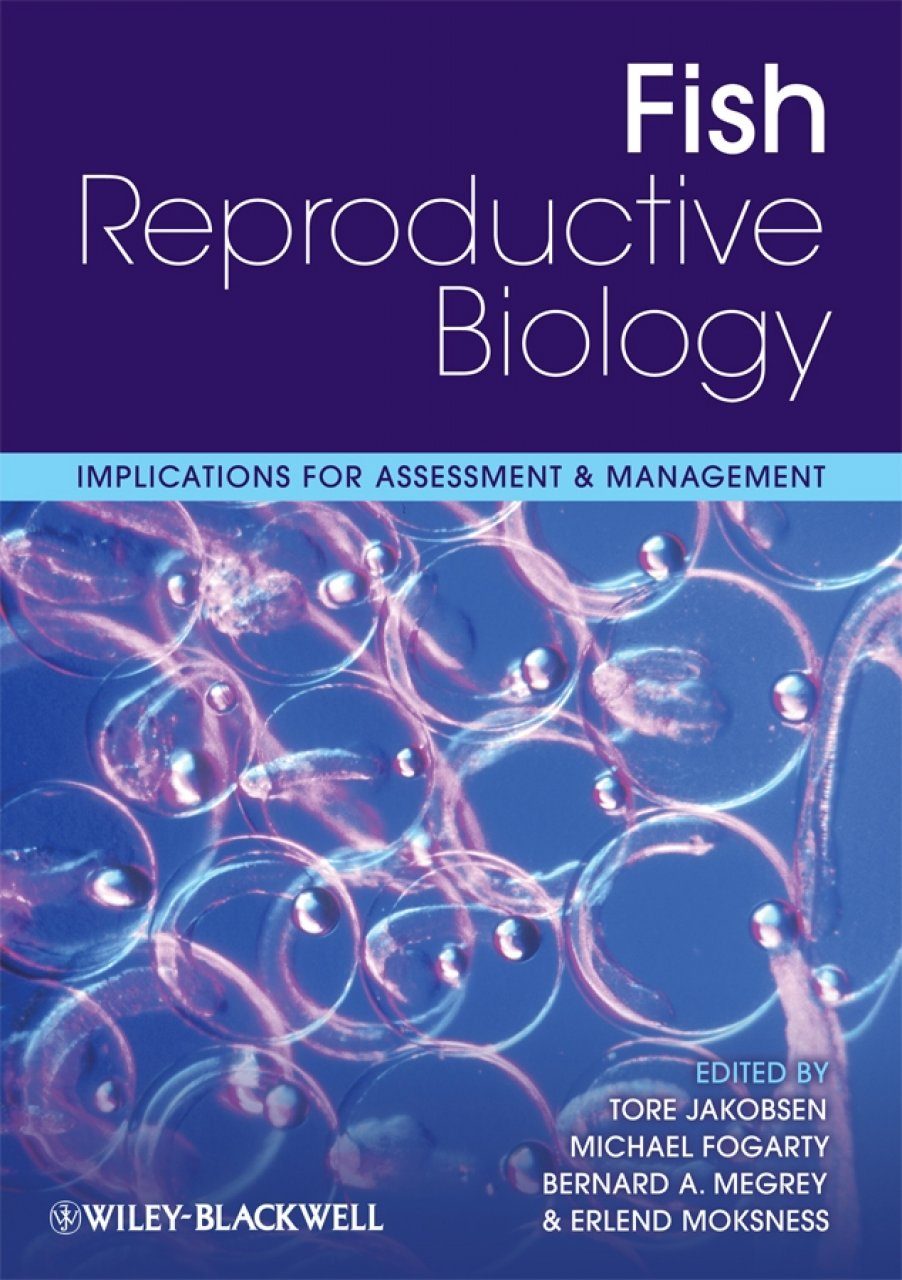
The reproductive success and recruitment of young fish into the exploitable population is the single most important factor for determining annual abundance levels of fishes in major commercial fisheries. The objective of this important new book is to argue for stronger linkages between basic and applied research on fisheries recruitment.
Contents include an introduction to recruitment, information on fisheries biology and population dynamics and how these relate to recruitment, information critical to the rational and successful management and assessment of fisheries, the incorporation of reproductive biology and recruitment considerations into management advice and strategies, and suggestions for future possibilities and new approaches. Fish Reproductive Biology is essential reading for all fisheries scientists.
Chapter 1. Introduction (Tore Jakobsen, Michael J. Fogarty, Bernard A. Megrey and Erlend Moksness).
Section 1. Biology, population dynamics, and recruitment.
Chapter 2. Recruitment in Marine Populations (Michael J. Fogarty and Loretta O’Brien).
Chapter 3. Reproductive dynamics (D. Pavlov, N. Emel’yanova and G.G. Novikov).
Chapter 4. Recruitment Variability (Edward D. Houde).
Chapter 5. Effects of fishing on the population (Marie-Joëlle Rochet).
Section 2: Information critical to successful assessment and management.
Chapter 6. Egg, larval and juvenile surveys (Nancy C.H. Lo, Paul E. Smith and Motomitsu Takahashi).
Chapter 7. Stock identification (Gavin A. Begg and Steven X. Cadrin).
Chapter 8. Stock assessment models and predictions of catch and biomass (John G. Pope).
Chapter 9. Applied fish reproductive biology: contribution of individual reproductive potential to recruitment and fisheries management (Olav S. Kjesbu).
Section 3: Incorporation of reproductive biology and recruitment considerations into management advice and strategies.
Chapter 10. Current paradigms and forms of advice (K. Cochrane).
Chapter 11. Management: New Approaches to Old Problems (Carl O'Brien).
Chapter 12. Implementing information on stock reproductive potential in fisheries management: the motivation, the challenges and the opportunities (C. Tara Marshall)
Tore Jakobsen, Senior scientist and marine biologist with experience from fish stock assessment and management advice. Employed by IMR since 1970. Head of Demersal Fish Section 1992-1998; Chair of the Advisory Committee on Fishery Management (ACFM) of the International Council for the Exploration of the Sea (ICES) 1999-2002; National Expert on Fisheries Research Projects at the European Commission (DG FISH) 2002-2006.
Michael J Fogarty, Senior Scientist, Northeast Fisheries Science Center, head of the Ecosystem Assessment Program. Research interests and experience include climate effects on marine systems, fisheries ecology, and the dynamics of exploited fish and invertebrate populations.
Bernard A. Megrey, NOAA, National Marine Fisheries Service, Alaska Fisheries Center, Seattle, USA. Research fisheries biologist with NOAA's Alaska Fisheries Science Center, where he has worked since 1982. Extensive experience studying the dynamics of exploited fish populations, relationships of the bio-physical environment to recruitment variability, stock assessment, and climate impacts on marine ecosystems.
Erlend Moksness, Research Director, Institute of Marine Research, Norway. Fisheries biologist with background in recruitment in marine fish, fish ageing, stock enhancement of marine fishes and aquaculture of marine fishes.
"This book would certainly be an excellent choice for a reading course. [...] This is the kind of book that challenges the dogma of introductory courses as well as the methods professionals use to address familiar problems. Each chapter provides personal perspectives, highlights emerging case histories, and illuminates the background conversations that go on at professional conferences and assessment workshops."
– Fisheries, March 2010













![Welcher Fisch ist das?: Die Susswasserfische Mitteleuropas [What Fish is That?: The Freshwater Fish of Central Europe]](http://mediacdn.nhbs.com/jackets/jackets_resizer_medium/20/209957.jpg?height=150&width=89)


![The Natural History of the Fishes of Japan [Japanese]](http://mediacdn.nhbs.com/jackets/jackets_resizer_medium/24/242707.jpg?height=150&width=98)


