Um genaue Preise zu sehen, wählen Sie bitte Ihr Lieferland.
 
 
United States
£ GBP
Alle Kategorien
Important Notice for US Customers

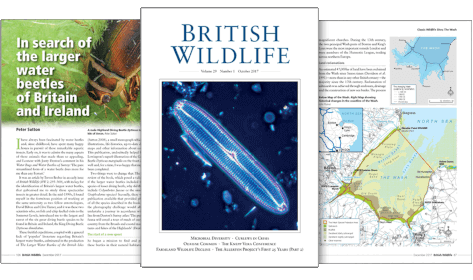
British Wildlife

8 issues per year 84 Seiten per Ausgabe Nur im Abonnement erhältlich

British Wildlife is the leading natural history magazine in the UK, providing essential reading for both enthusiast and professional naturalists and wildlife conservationists. Published eight times a year, British Wildlife bridges the gap between popular writing and scientific literature through a combination of long-form articles, regular columns and reports, book reviews and letters.

Abonnement ab £33 im Jahr

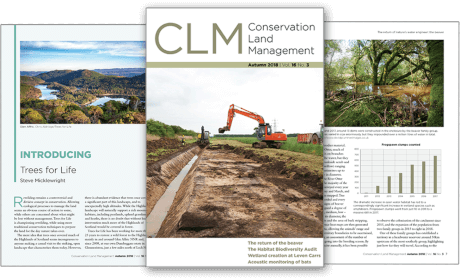
Conservation Land Management

4 Auflagen im Jahr 44 Seiten Nur im Abonnement erhältlich

Conservation Land Management (CLM) ist ein Mitgliedermagazin und erscheint viermal im Jahr. Das Magazin gilt allgemein als unverzichtbare Lektüre für alle Personen, die sich aktiv für das Landmanagement in Großbritannien einsetzen. CLM enthält Artikel in Langform, Veranstaltungslisten, Buchempfehlungen, neue Produktinformationen und Berichte über Konferenzen und Vorträge.

Subscriptions from £26 per year
Akademische und professionelle Bücher  Botany  Non-Vascular Plants  Algae

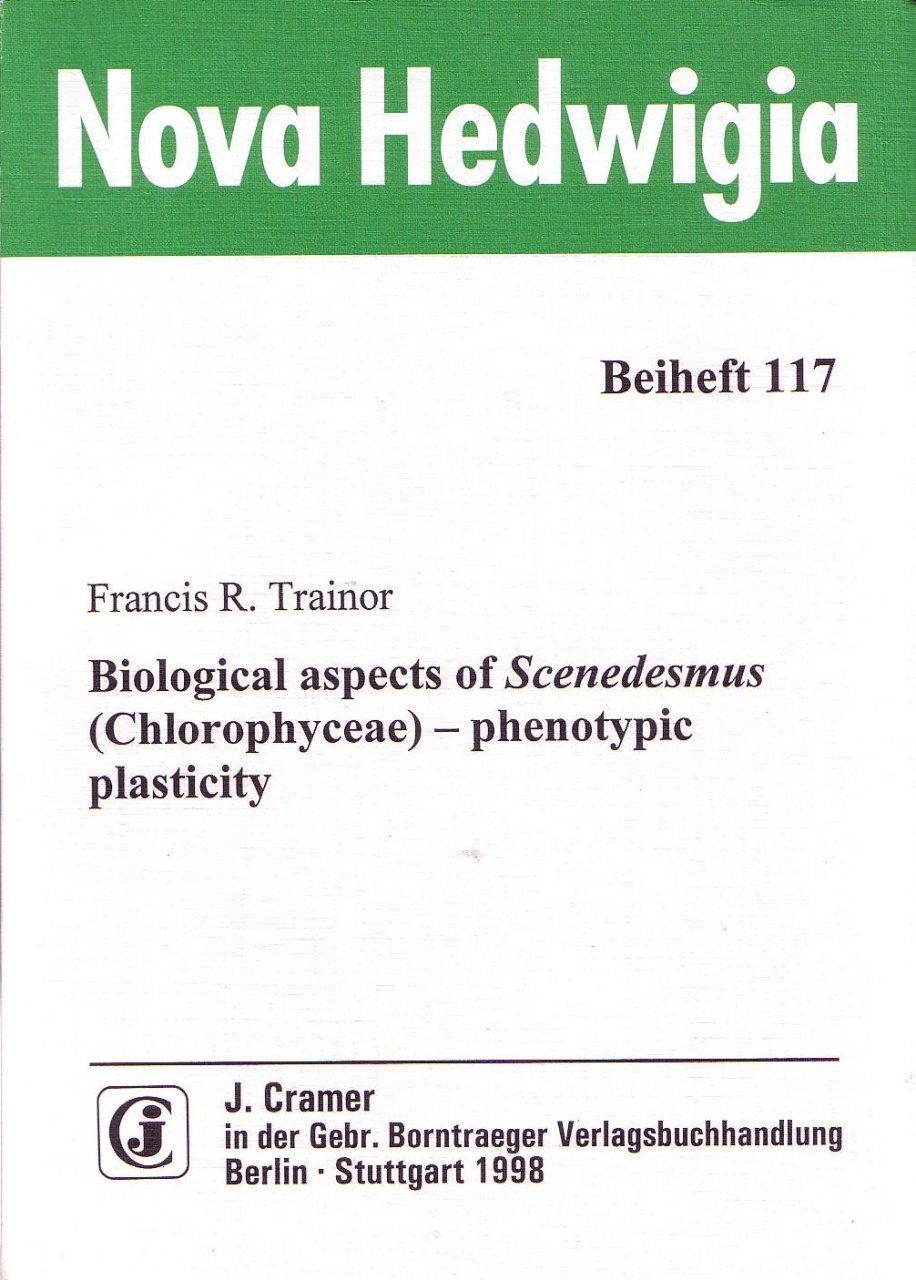
Biological Aspects of Scenedesmus (Chlorophyceae) - Phenotypic Plasticity

Series: Nova Hedwigia Beihefte Series Volume: 117
By: Francis R Trainor(Author)
367 pages, 71 b/w photos and illustrations, 58 tables
Biological Aspects of Scenedesmus (Chlorophyceae) - Phenotypic Plasticity
Click to have a closer look
  • Biological Aspects of Scenedesmus (Chlorophyceae) - Phenotypic Plasticity ISBN: 9783443510398 Paperback Dec 1997 Not in stock: Usually dispatched within 2-3 weeks
    £67.99
    #128550
Price: £67.99
About this book Customer reviews Related titles

About this book

Language: English

Scenedesmus is is a cosmopolitan green freshwater algae. Because of the colonial symmetry of Scenedesmus, its size/shape differences and abundant cytological features (both LM and EM), it first seemed that individuals could easily be distinguished and classified. Because biologists often examined samples of Scenedesmus taxa at only one point in time, they tacitly assumed that there was stability of form. Are there data confirming stability of form? On the other hand, preserved collections are not useful material to support an alternate hypothesis. The result: hundreds of species and innumerable subspecific taxa were identified and described.

In Biological Aspects of Scenedesmus (Chlorophyceae) - Phenotypic Plasticity the author presents:
– Early reports of variability or polymorphism, along with their routine dismissal as supposedly irrelevant observations.
– Chapters concerned with geographical distribution, culture techniques, history and the Scenedesmus unicell, indicating the need for the renaissance of the phenotype.

The concept of an ordered developmental sequence is developed and discussed. Data from numerous laboratories, whether cytological, morphological, biochemical, ecological or physiological, which lend support to the concept of plasticity in all strains. Numerous supposed taxa are but ecomorphs of rather complex taxa.

Customer Reviews

Series: Nova Hedwigia Beihefte Series Volume: 117
By: Francis R Trainor(Author)
367 pages, 71 b/w photos and illustrations, 58 tables
Current promotions
Great GiftsNew and Forthcoming BooksBritish Wildlife Magazine SubscriptionField Guide Sale 2025