Um genaue Preise zu sehen, wählen Sie bitte Ihr Lieferland.
 
 
United States
£ GBP
Alle Kategorien
Important Notice for US Customers

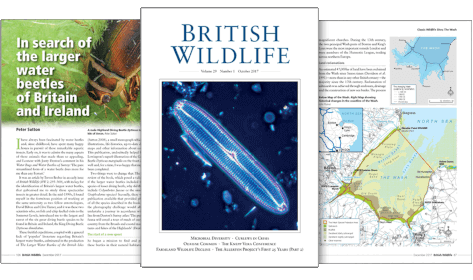
British Wildlife

8 issues per year 84 Seiten per Ausgabe Nur im Abonnement erhältlich

British Wildlife is the leading natural history magazine in the UK, providing essential reading for both enthusiast and professional naturalists and wildlife conservationists. Published eight times a year, British Wildlife bridges the gap between popular writing and scientific literature through a combination of long-form articles, regular columns and reports, book reviews and letters.

Abonnement ab £33 im Jahr

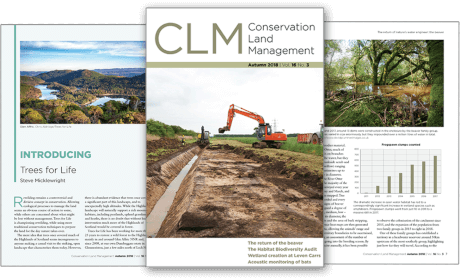
Conservation Land Management

4 Auflagen im Jahr 44 Seiten Nur im Abonnement erhältlich

Conservation Land Management (CLM) ist ein Mitgliedermagazin und erscheint viermal im Jahr. Das Magazin gilt allgemein als unverzichtbare Lektüre für alle Personen, die sich aktiv für das Landmanagement in Großbritannien einsetzen. CLM enthält Artikel in Langform, Veranstaltungslisten, Buchempfehlungen, neue Produktinformationen und Berichte über Konferenzen und Vorträge.

Subscriptions from £26 per year
Akademische und professionelle Bücher  Environmental & Social Studies  Economics, Politics & Policy  Sustainable Development: General

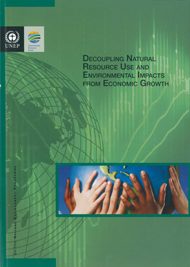
Decoupling Natural Resource Use and Environmental Impacts from Economic Growth

Report
152 pages
Publisher: UNEP
Decoupling Natural Resource Use and Environmental Impacts from Economic Growth
Click to have a closer look
  • Decoupling Natural Resource Use and Environmental Impacts from Economic Growth ISBN: 9789280731675 Paperback Dec 2011 Out of stock with supplier: order now to get this when available
    £41.50
    #192000
Price: £41.50
About this book Customer reviews Related titles

About this book

By 2050, humanity could devour an estimated 140 billion tons of minerals, ores, fossil fuels and biomass per year three times its current appetite unless the economic growth rate is decoupled from the rate of natural resource consumption. Developed countries citizens consume an average of 16 tons of those four key resources per capita (ranging up to 40 or more tons per person in some developed countries). By comparison, the average person in India today consumes four tons per year. With the growth of both population and prosperity, especially in developing countries, the prospect of much higher resource consumption levels is far beyond what is likely sustainable if realized at all given finite world resources, warns this report by UNEP's International Resource Panel.

Already the world is running out of cheap and high quality sources of some essential materials such as oil, copper and gold, the supplies of which, in turn, require ever-rising volumes of fossil fuels and freshwater to produce. Improving the rate of resource productivity (doing more with less) faster than the economic growth rate is the notion behind decoupling, the panel says. That goal, however, demands an urgent rethink of the links between resource use and economic prosperity, buttressed by a massive investment in technological, financial and social innovation, to at least freeze per capita consumption in wealthy countries and help developing nations follow a more sustainable path.

Customer Reviews

Report
152 pages
Publisher: UNEP
Current promotions
Great GiftsNew and Forthcoming BooksBritish Wildlife Magazine SubscriptionField Guide Sale 2025