: Morphology, Taxonomy & Phylogenetic Implications")
Click to have a closer look
About this book
Customer reviews
Related titles
About this book
Language: English with trilingual summary in English, German, and Spanish
Traditionally, the Diplomystidae have been recognized as the most primitive within the about thirty-two families of Siluroidei. Most knowledge of the group is based on few specimens of Diplomystes. Following detailed studies of many specimens of Diplomystidae, I propose one new genus and two new species. Diplomystes is restricted to central and south of Chile, and contains four species (D. chilensis [Molina], apparently now extinct, D. nahuelbutaensis n. sp., D. camposensis n. sp. and Diplomystes spec.). Olivaichthys n. gen. with the species viedmensis is distributed in Argentina (Subandino Cuyana and Patagonian provinces).
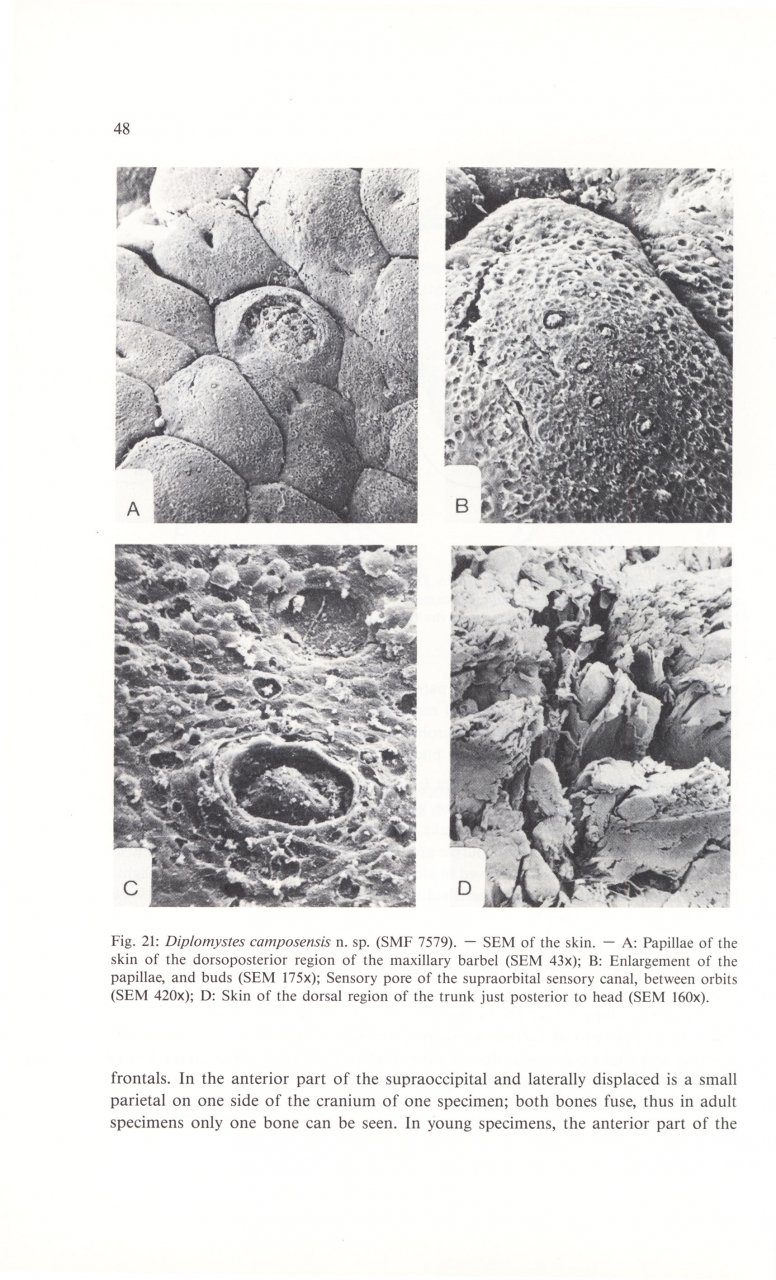
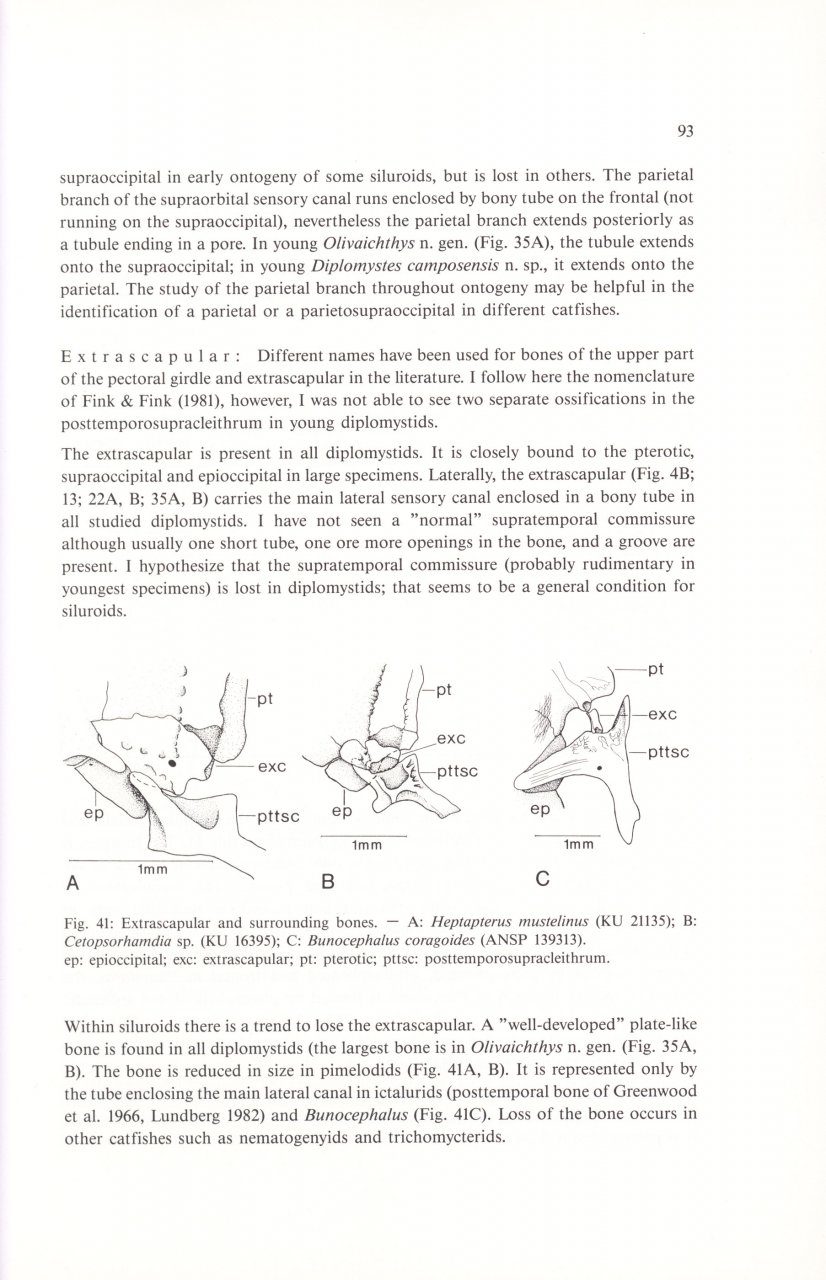
Ten unique derived features characterize the Diplomystidae: the skin of the whole body covered with large simple or lobulated papillae and buds embedded in a coloid-like substance; sagitta the largest otolith; pterosphenoid lacking a suture with the parasphenoid; large, broad rhomboidal vomer; dorsal margin of hyomandibula extending well onto the pterosphenoid; ”lap” joint between hyomandibula and metapterygoid; large coronomeckelian bone in adults; palatine with two articular facets anteriorly articulating with two facets of the maxilla; separate second ural centrum in young, lost in adult; maxilla with more than one functional row of teeth along most of its ventral margin. Several advanced features of diplomystids are shared with other siluroids, as for instance: nasal capsule bounded by mesethmoid, lateral ethmoid, cartilage of vomer, palatine, maxilla, and antorbital; presence of pectoral (1) and dorsal (2) spines; invasion of the adductor mandibulae on frontal, pterotic, sphenotic, extrascapular and supraoccipital; sphenotic longer than pterotic; sphenotic spine absent; six to nine infraorbital bones present, etc. Five primitive features are apparently unique to diplomystids within recent siluroids: presence of a dentate maxilla; long maxilla, broad posteriorly and with a long medial process; presence of four ossified pharyngobranchials of similar length; presence of ossified supraneurals 3—4; 9/9 principal caudal rays. In addition, many primitive features are shared with other siluroids (e. g. one pair of maxillary barbels; moderately large extrascapular bone; dorsal and
ventral hypohyals present; complex vertebra not fused with fifth vertebra and lacking lateral lamellae bone; six hypurals).
A comparative analysis of features of the Diplomystidae and other catfishes is presented. Siluroids are characterized by high morphological diversification (e. g.: in the structure of the skin, of the barbels, of the pterygoid bones, of the supraneurals when they are present, of the auditory region; in the structure and relationships of bones forming the circumorbital series, bones framing the nasal capsule, of the bones framing the optical and trigeminofacial foramina, of the bones of upper and lower jaws, of the bones forming the suspensorium), and knowledge of most families is not adequate for complete phylogenetic resolution.
Customer Reviews













![Untersuchungen zur Systematik und Phylogenese der Holarktischen Sesiiden (Insecta, Lepidoptera) [Investigations on the Systematics and Phylogenetics of the Holarctic Sesidis (Insecta, Lepidoptera)]](http://mediacdn.nhbs.com/jackets/jackets_resizer_medium/17/170946.jpg?height=150&width=101)