Um genaue Preise zu sehen, wählen Sie bitte Ihr Lieferland.
 
 
United States
£ GBP
Alle Kategorien
Important Notice for US Customers

British Wildlife

8 issues per year 84 Seiten per Ausgabe Nur im Abonnement erhältlich

British Wildlife is the leading natural history magazine in the UK, providing essential reading for both enthusiast and professional naturalists and wildlife conservationists. Published eight times a year, British Wildlife bridges the gap between popular writing and scientific literature through a combination of long-form articles, regular columns and reports, book reviews and letters.

Abonnement ab £33 im Jahr

Conservation Land Management

4 Auflagen im Jahr 44 Seiten Nur im Abonnement erhältlich

Conservation Land Management (CLM) ist ein Mitgliedermagazin und erscheint viermal im Jahr. Das Magazin gilt allgemein als unverzichtbare Lektüre für alle Personen, die sich aktiv für das Landmanagement in Großbritannien einsetzen. CLM enthält Artikel in Langform, Veranstaltungslisten, Buchempfehlungen, neue Produktinformationen und Berichte über Konferenzen und Vorträge.

Subscriptions from £26 per year
Akademische und professionelle Bücher  Marine & Freshwater Biology  Fishes  Fishes: General

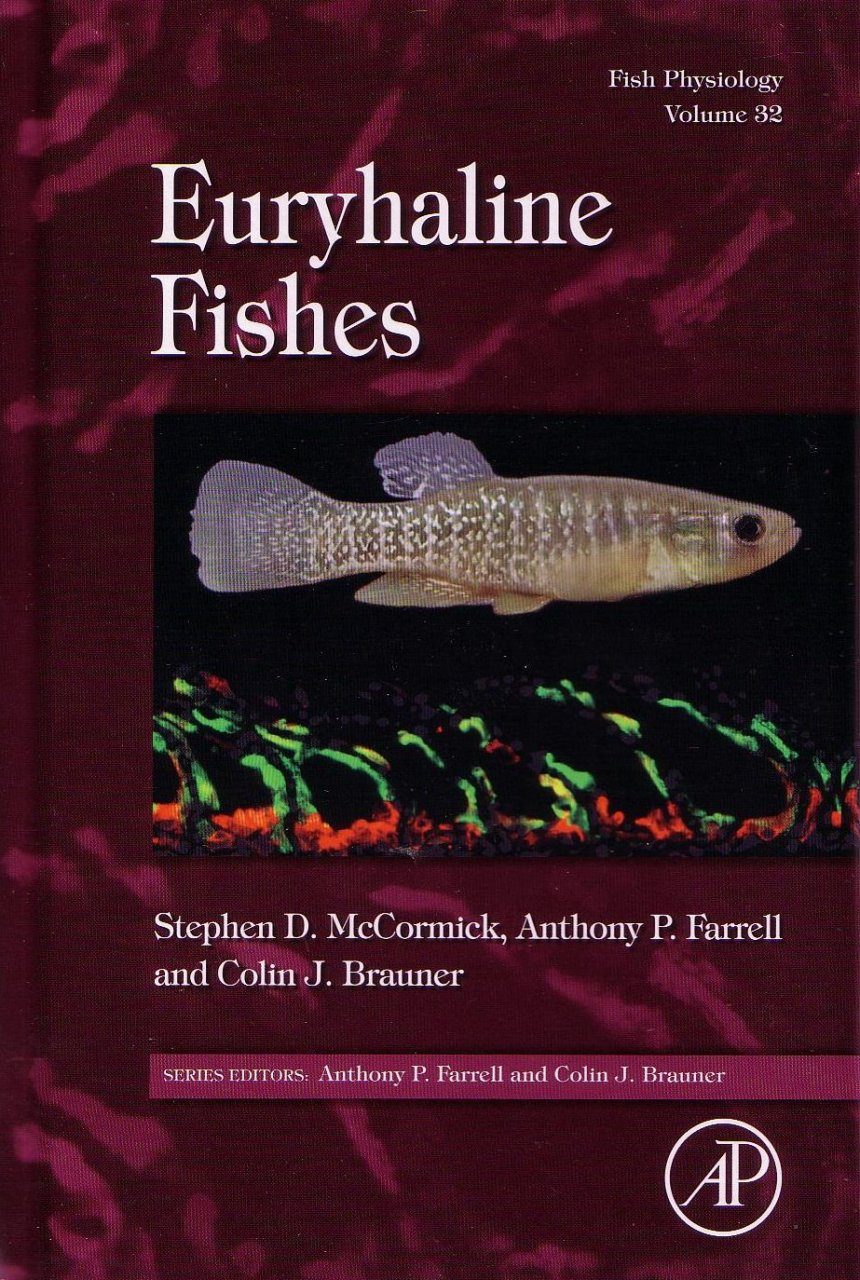
Fish Physiology, Volume 32 Euryhaline Fishes

Series: Fish Physiology Volume: 32
By: Stephen D Mccormick(Editor), Anthony P Farrell(Editor), Colin J Brauner(Editor)
571 pages, 12 plates with colour photos and colour illustrations; b/w photos, b/w illustrations, tables
Publisher: Academic Press
Fish Physiology, Volume 32
Click to have a closer look
  • Fish Physiology, Volume 32 ISBN: 9780123969514 Hardback Mar 2013 In stock
    £132.00
    #204523
Price: £132.00
About this book Contents Customer reviews Related titles

About this book

The need for ion and water homeostasis is common to all life. For fish, ion and water homeostasis is an especially important challenge because they live in direct contact with water and because of the large variation in the salt content of natural waters (varying by over 5 orders of magnitude). Most fish are stenohaline and are unable to move between freshwater and seawater. Remarkably, some fishes are capable of life in both freshwater and seawater. These euryhaline fishes constitute an estimated 3 to 5 per cent of all fish species. Euryhaline fishes represent some of the most iconic and interesting of all fish species, from salmon and sturgeon that make epic migrations to intertidal mudskippers that contend with daily salinity changes. With the advent of global climate change and increasing sea levels, understanding the environmental physiology of euryhaline species is critical for environmental management and any mitigative measures.

Fish Physiology, Volume 32: Euryhaline Fishes will provide the first integrative review of euryhalinity in fish. There is no other book that focuses on fish that have the capacity to move between freshwater and seawater. The different challenges of salt and water balance in different habitats have led to different physiological controls and regulation, which heretofore has not been reviewed in a single volume. It collects and synthesizes the literature covering the state of knowledge of the physiology of euryhaline fish. It provides the foundational information needed for researchers from a variety of fields, including fish physiology, conservation and evolutionary biology, genomics, ecology, ecotoxicology, and comparative physiology. All authors are the leading researchers and emerging leaders in their fields.

Contents

1. Principles and patterns of osmoregulation and euryhalinity in fish
Sue Edwards

2. Osmosensing and autoregulation of euryhalinity
Dietmar Kueltz

3. Hormonal Control of euryhalinity
Yosio Takei and Stephen D. McCormick

4. Euryhaline Elasmobranchs
James S. Ballantyne and David I. Fraser

5. Smolt Physiology: the freshwater-seawater transitions in salmonids
Stephen D. McCormick

6. Freshwater-Seawater transitions in migratory fish
Joseph Zydlewski

7. Seawater-Freshwater transitions in migratory fish
J. Mark Shrimpton

8. Euryhalinity: Intertidal fish
William Marshall

9. Euryhalinity: extreme environments
Colin Brauner and Jonathan Wilson

10. Evolution of euryhalinity
Eric Schultz and Stephen D. McCormick

Customer Reviews

Series: Fish Physiology Volume: 32
By: Stephen D Mccormick(Editor), Anthony P Farrell(Editor), Colin J Brauner(Editor)
571 pages, 12 plates with colour photos and colour illustrations; b/w photos, b/w illustrations, tables
Publisher: Academic Press
Current promotions
January SaleNew and Forthcoming BooksBritish Wildlife Magazine SubscriptionField Guide Sale 2025