Um genaue Preise zu sehen, wählen Sie bitte Ihr Lieferland.
 
 
United States
£ GBP
Alle Kategorien
Important Notice for US Customers

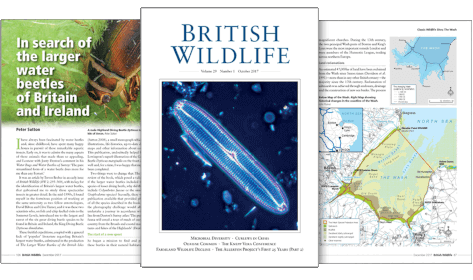
British Wildlife

8 issues per year 84 Seiten per Ausgabe Nur im Abonnement erhältlich

British Wildlife is the leading natural history magazine in the UK, providing essential reading for both enthusiast and professional naturalists and wildlife conservationists. Published eight times a year, British Wildlife bridges the gap between popular writing and scientific literature through a combination of long-form articles, regular columns and reports, book reviews and letters.

Abonnement ab £33 im Jahr

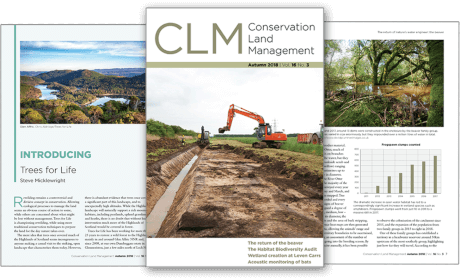
Conservation Land Management

4 Auflagen im Jahr 44 Seiten Nur im Abonnement erhältlich

Conservation Land Management (CLM) ist ein Mitgliedermagazin und erscheint viermal im Jahr. Das Magazin gilt allgemein als unverzichtbare Lektüre für alle Personen, die sich aktiv für das Landmanagement in Großbritannien einsetzen. CLM enthält Artikel in Langform, Veranstaltungslisten, Buchempfehlungen, neue Produktinformationen und Berichte über Konferenzen und Vorträge.

Subscriptions from £26 per year
Akademische und professionelle Bücher  Environmental & Social Studies  Economics, Politics & Policy  Aid & North/South Issues

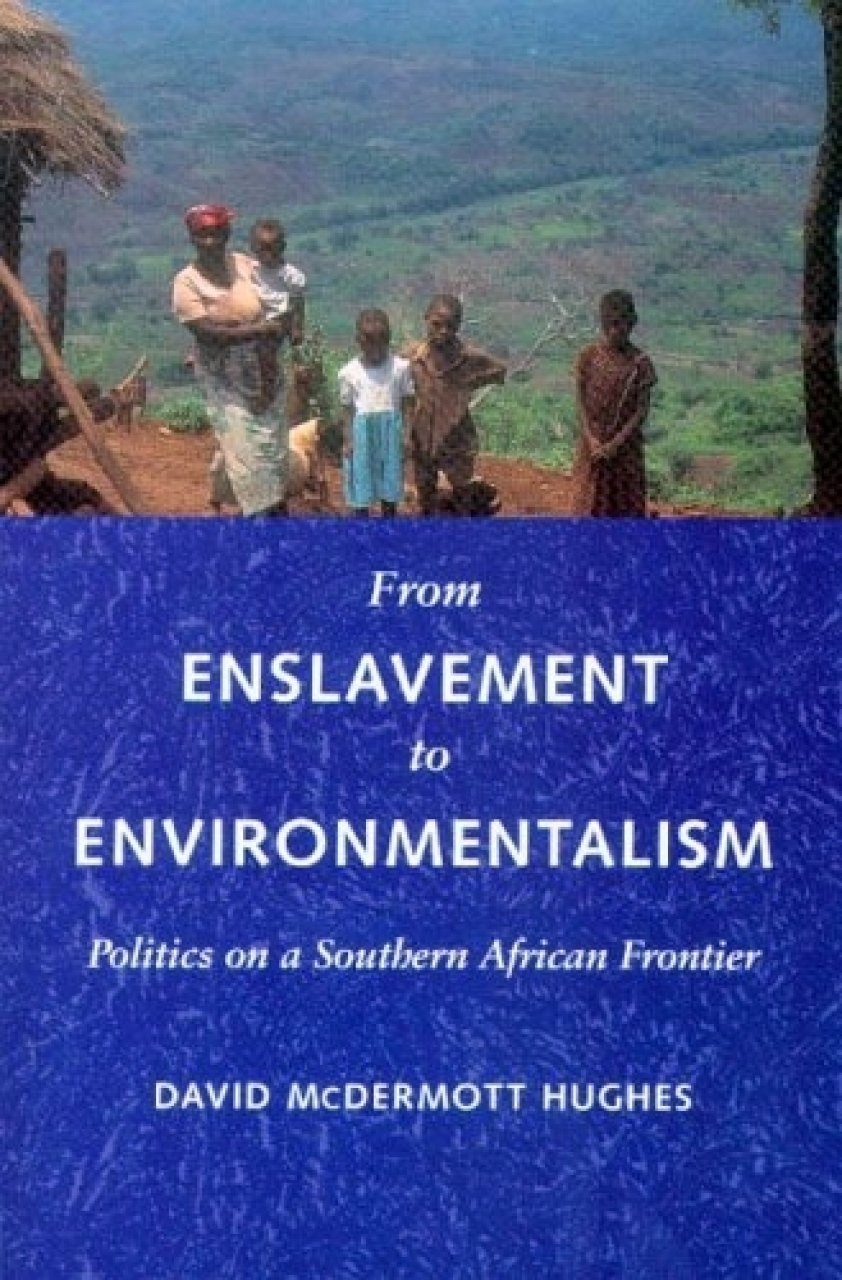
From Enslavement to Environmentalism Politics on a Southern African Frontier

By: David McDermott Hughes
288 pages, 13 illus., notes, bibliog.
From Enslavement to Environmentalism
Click to have a closer look
  • From Enslavement to Environmentalism ISBN: 9780295985909 Hardback Mar 2006 Out of stock with supplier: order now to get this when available
    £88.00
    #159137
Price: £88.00
About this book Customer reviews Related titles

About this book

From Enslavement to Environmentalism takes a challenging ethnographic and historical look at the politics of eco-development in the Zimbabwe-Mozambique border zone. David Hughes argues that European colonization in southern Africa has profoundly reshaped rural politics and culture and continues to do so, as neo-liberal developers commoditize the lands of African peasants in the name of conservation and economic progress.

Hughes builds his engaging analysis around a sort of natural experiment: in the past, whites colonized British Zimbabwe but avoided Portuguese Mozambique almost entirely. In Zimbabwe, chiefdoms that had historically focused on controlling people began to follow the English example of consolidating political power by dividing and controlling land. Meanwhile, in Mozambique, Portugal perpetuated traditional practices of recruiting and distributing forced labour as the primary means of securing power. For almost the entire twentieth century, a sharp disjuncture in the politics of land, leadership, labour, and resource use marked the border zone. In the late 1990s, white South Africans began to establish timber plantations in Mozambique, and that difference began to be effaced. Under the banner of environmentalism and economic progress, tourism firms were allowed to claim peasant farmland. Likewise, southern African policymakers supported this new form of colonization as a form of racial integration between white investors and black peasants, paving the way for an ironic and contentious situation in which ethnic tolerance, gentrification, and land-grabbing have gone hand in hand.

Customer Reviews

By: David McDermott Hughes
288 pages, 13 illus., notes, bibliog.
Current promotions
Great GiftsNew and Forthcoming BooksBritish Wildlife Magazine SubscriptionField Guide Sale 2025