Um genaue Preise zu sehen, wählen Sie bitte Ihr Lieferland.
 
 
United States
£ GBP
Alle Kategorien
Important Notice for US Customers

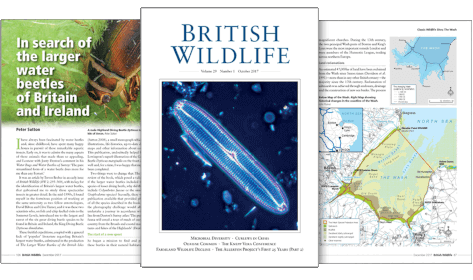
British Wildlife

8 issues per year 84 Seiten per Ausgabe Nur im Abonnement erhältlich

British Wildlife is the leading natural history magazine in the UK, providing essential reading for both enthusiast and professional naturalists and wildlife conservationists. Published eight times a year, British Wildlife bridges the gap between popular writing and scientific literature through a combination of long-form articles, regular columns and reports, book reviews and letters.

Abonnement ab £33 im Jahr

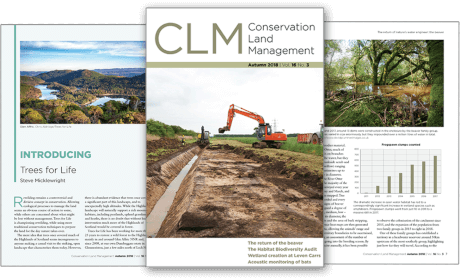
Conservation Land Management

4 Auflagen im Jahr 44 Seiten Nur im Abonnement erhältlich

Conservation Land Management (CLM) ist ein Mitgliedermagazin und erscheint viermal im Jahr. Das Magazin gilt allgemein als unverzichtbare Lektüre für alle Personen, die sich aktiv für das Landmanagement in Großbritannien einsetzen. CLM enthält Artikel in Langform, Veranstaltungslisten, Buchempfehlungen, neue Produktinformationen und Berichte über Konferenzen und Vorträge.

Subscriptions from £26 per year
Akademische und professionelle Bücher  Botany  Economic Botany & Ethnobotany

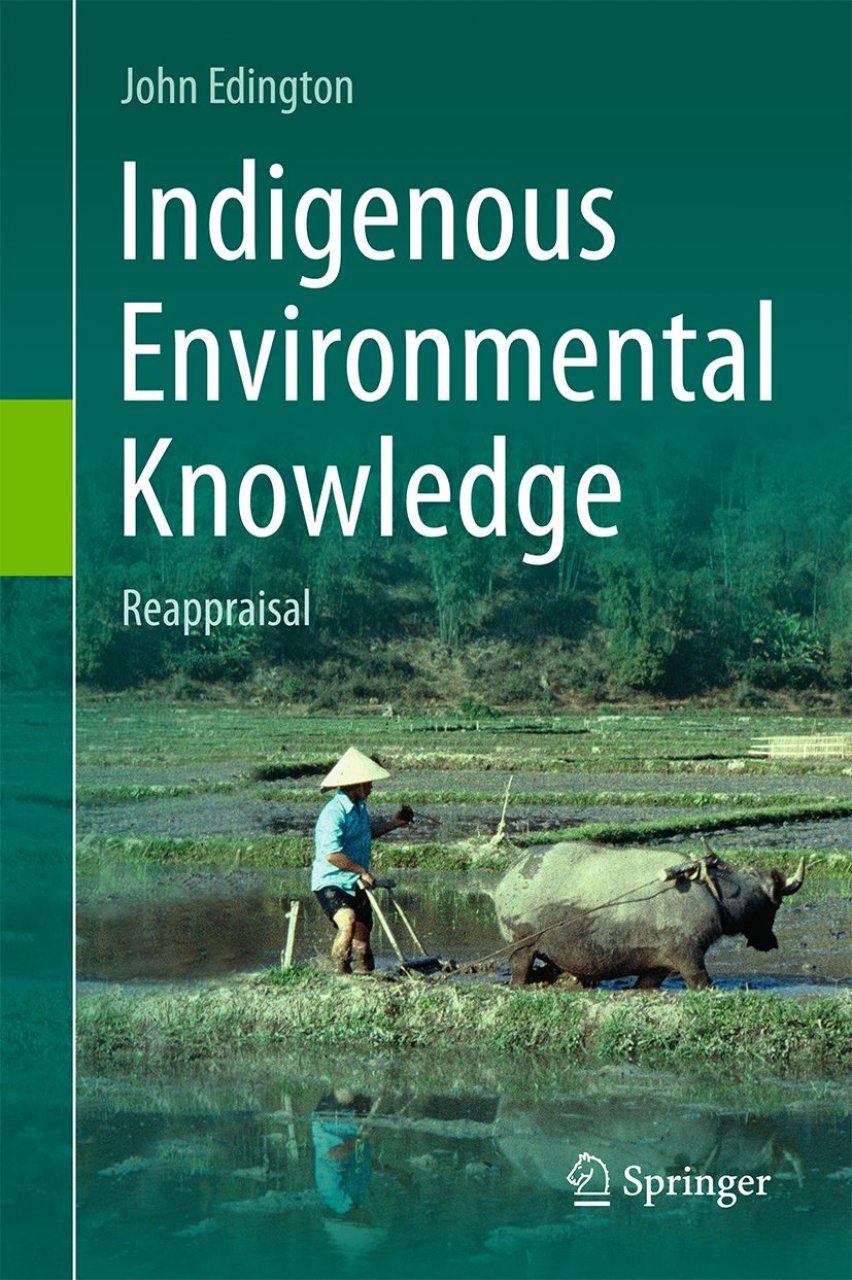
Indigenous Environmental Knowledge Reappraisal

By: John Edington(Author)
263 pages, 100 b/w photos and b/w Illustrations, tables
Publisher: Springer Nature
Indigenous Environmental Knowledge
Click to have a closer look
Select version
  • Indigenous Environmental Knowledge ISBN: 9783319873268 Paperback Aug 2018 Not in stock: Usually dispatched within 1-2 weeks
    £109.99
    #259146
  • Indigenous Environmental Knowledge ISBN: 9783319624907 Hardback Sep 2017 Not in stock: Usually dispatched within 1-2 weeks
    £149.99
    #243822
Selected version: £109.99
About this book Contents Customer reviews Related titles

About this book

This book examines comprehensively for the first time, the scope and accuracy of indigenous environmental knowledge. It shows that in some spheres, including agriculture, house design, fuel and water manipulation, the high reputation of local observers is well deserved and often sufficiently insightful to warrant wider imitation. However it also reveals that in certain matters, notably some aspects of health care and wild-species population management, local knowledge systems are conspicuously unsound. Not all the difficulties are of the communities own making, some stem from external factors outside their control. However in either case, remedial measures can be suggested and Indigenous Environmental Knowledge describes, especially for the benefit of practitioners, what steps might be taken in rural communities to improve the quality of life. The possibility of useful transfers of information from local settings to Western ones is not ignored and forms the subject of the book's final chapter.

Contents

1. Preface
2. Farming
      Origins
      Responding to site and soil variations
      Coping with seasonal variations
      Maintaining soil fertility
      Coping with weeds and pests
      Cultural and religious factors
      Pressures for change
3. Food supplies and nutrition
      Traditional diets
      Insights from nutritional science
      Input patterns for different classes of nutrients
      Starvation and malnutrition
      The paradoxical efficacy of traditional diets
4. House design and construction
      Design criteria
      The humid tropics
      The tropical highlands
      The desert fringe
      The temperate zone
      Pressures for change
      A future for traditional designs?
5. Fuel supplies
      Traditional wood harvesting
      Disruptive influences
      Alternative energy sources
      Better ways of burning wood
      Rehabilitating forests
      Overall sustainability of firewood production systems
6. Herbal medicine
      Mixed expectations
      Patterns of village use
      Residual difficulties
      Remedial strategies
7. Water supply and waste disposal
      Water use
      Water quality issues
      Other water and waste related hazards
      Remedial strategies
8. Prospects for village development
      Quality of life shortfalls
      External factors
      Influences arising from within communities
      Constructive interventions
      Augmenting incomes
      Comprehensive development plans
9. Lessons for the world at large
      Contemporary issues
      Energy economies in agriculture and food distribution
      Energy economies in architecture and household management
      Protecting crop diversity
      Lessons from traditional medicine
      Improving dietary balance
      Attitudes to wild species
      
References

Customer Reviews

By: John Edington(Author)
263 pages, 100 b/w photos and b/w Illustrations, tables
Publisher: Springer Nature
Current promotions
Great GiftsNew and Forthcoming BooksBritish Wildlife Magazine SubscriptionField Guide Sale 2025