Click to have a closer look
About this book
Related titles
About this book
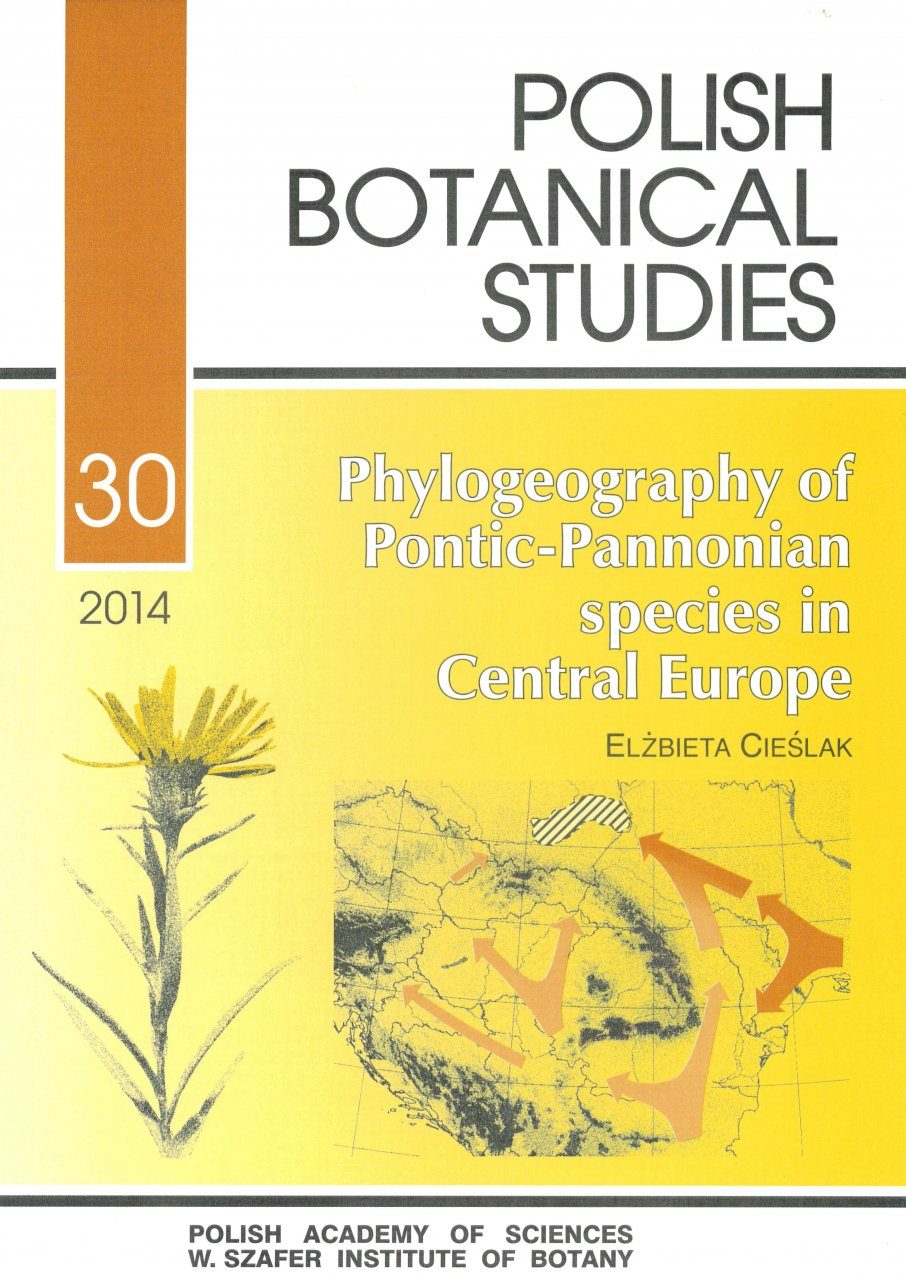
This phylogeographical study concentrates on five species representing the Pontic-Pannonian subelement of the Polish flora: Carlina onopordifolia Besser ex Szafer, Cirsium pannonnicum, Inula ensifolia (L. fil.) Link, Linum flavum L. and Linum hirsutum L. Material was collected from populations in the following geographical regions of Central and Eastern Europe: the Wyżyna Małopolska upland (Poland); Wyżyna Lubelska upland (including Volhynian Polissya and the western part of the Volhynian Upland, Poland); the Podolian Upland (Ukraine); the southern (Hungary, Romania) and northwestern (Czech Republic, Slovakia, Austria) parts of the Panonnian area; the Balkan Peninsula (Bulgaria) and the northern Adriatic coast (Italy, Slovenia). The aim of the study was to verify hypotheses regarding migration routes, the time of migration of these species to southern Poland and more broadly to Central Europe, and the historical role of eastern and southern Poland in these processes. The 1434 samples collected in this work were analyzed after amplified fragment length polymorphism genotyping. Genetic variation was analyzed on the level of populations, population groups from specific geographical areas, and all sampled populations per species. The level of genetic variation was determined based on Nei’s gene diversity index, Shannon’s diversity index, frequency-downweighted marker values, and the number of polymorphic, private and discriminating bands. To test for isolation by distance between populations, the correlations between pairwise FST and geographical distances, were examined with the Mantel test. The relationships between individuals for each species were analyzed based on principal coordinate analysis, neighbor-joining, molecular variance and Bayesian analysis. Analysis of the genetic variation of this selected group of steppe species showed it to be at similar levels in all the studied populations, and revealed location-dependent differences in the distribution of genetic lineages in the populations. Examination of individual migration routes of the five species from the south to the north of Central Europe, including the uplands of southern Poland, indicated that the main migration route ran westward along the northern side of the Carpathian Mts. The analysis did not support the existence of a direct route from the south via the Moravian Gate and/or passes and valleys of the Carpathians as a major pathway of northward migration. The divergence of genetic lineages identified in the study suggests that the populations from the Wyżyna Małopolska upland had an independent history and are older than those from the Wyżyna Lubelska upland, and indicates more than one migration wave of the steppe element in the southern uplands of Poland. Thus the populations from the Wyżyna Małopolska upland may represent remnants of a more ancient migration wave which may have arrived immediately after the Sanian 1, Sanian 2 glaciation, when the steppe element could penetrate southern Poland. For these species it may be the only migration wave that reached the Wyżyna Małopolska upland. They would then be relicts of the Pleistocene glacial period in the Wyżyna Małopolska upland. The range of the subsequent migration wave(s) in the late glacial and/or postglacial period would have been limited to the Wyżyna Lubelska upland.
Customer Reviews