Click to have a closer look
About this book
Contents
Customer reviews
Biography
Related titles
About this book
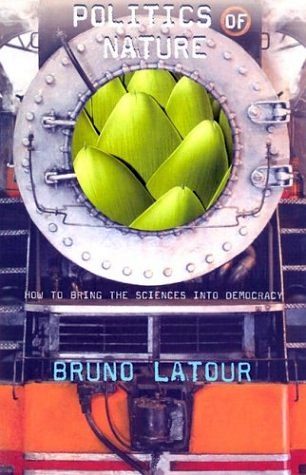
A major work by one of the more innovative thinkers of our time, Politics of Nature does nothing less than establish the conceptual context for political ecology - transplanting the terms of ecology into more fertile philosophical soil than its proponents have thus far envisioned. Bruno Latour announces his project dramatically: "Political ecology has nothing whatsoever to do with nature, this jumble of Greek philosophy, French Cartesianism and American parks." Nature, he asserts, far from being an obvious domain of reality, is a way of assembling political order without due process. Thus, his book proposes an end to the old dichotomy between nature and society - and the constitution, in its place, of a collective, a community incorporating humans and non-humans and building on the experiences of the sciences as they are actually practiced. In a critique of the distinction between fact and value, Latour suggests a re-description of the type of political philosophy implicated in such a "commonsense" division - which here reveals itself as distinctly un-commonsensical and in fact fatal to democracy and to a healthy development of the sciences. Moving beyond the modernist institutions of "mononaturalism" and "multiculturalism," Latour develops the idea of "multinaturalism," a complex collectivity determined not by outside experts claiming absolute reason but by "diplomats" who are flexible and open to experimentation.
Contents
Introduction: What Is to Be Done with Political Ecology? 1. Why Political Ecology Has to Let Go of Nature First, Get Out of the Cave Ecological Crisis or Crisis of Objectivity? The End of Nature The Pitfall of "Social Representations" of Nature The Fragile Aid of Comparative Anthropology What Successor for the Bicameral Collective? 2. How to Bring the Collective Together Difficulties in Convoking the Collective First Division: Learning to Be Circumspect with Spokespersons Second Division: Associations of Humans and Nonhumans Third Division between Humans and Nonhumans: Reality and Recalcitrance A More or Less Articulated Collective The Return to Civil Peace 3. A New Separation of Powers Some Disadvantages of the Concepts of Fact and Value The Power to Take into Account and the Power to Put in Order The Collective's Two Powers of Representation Verifying That the Essential Guarantees Have Been Maintained A New Exteriority 4. Skills for the Collective The Third Nature and the Quarrel between the Two "Eco" Sciences Contribution of the Professions to the Procedures of the Houses The Work of the Houses The Common Dwelling, the Oikos 5. Exploring Common Worlds Time's Two Arrows The Learning Curve The Third Power and the Question of the State The Exercise of Diplomacy War and Peace for the Sciences Conclusion: What Is to Be Done? Political Ecology! Summary of the Argument (for Readers in a Hurry...) Glossary Notes Bibliography Index
Customer Reviews
Biography
Bruno Latour is Professor in the Center for the Study of Innovation at the School of Mines in Paris. His other books include Science in Action, Aramis, or the Love of Technology, and Pandora's Hope: Essays on the Reality of Science Studies, published by Harvard University Press.