Um genaue Preise zu sehen, wählen Sie bitte Ihr Lieferland.
 
 
United States
£ GBP
Alle Kategorien
Important Notice for US Customers

British Wildlife

8 issues per year 84 Seiten per Ausgabe Nur im Abonnement erhältlich

British Wildlife is the leading natural history magazine in the UK, providing essential reading for both enthusiast and professional naturalists and wildlife conservationists. Published eight times a year, British Wildlife bridges the gap between popular writing and scientific literature through a combination of long-form articles, regular columns and reports, book reviews and letters.

Abonnement ab £33 im Jahr

Conservation Land Management

4 Auflagen im Jahr 44 Seiten Nur im Abonnement erhältlich

Conservation Land Management (CLM) ist ein Mitgliedermagazin und erscheint viermal im Jahr. Das Magazin gilt allgemein als unverzichtbare Lektüre für alle Personen, die sich aktiv für das Landmanagement in Großbritannien einsetzen. CLM enthält Artikel in Langform, Veranstaltungslisten, Buchempfehlungen, neue Produktinformationen und Berichte über Konferenzen und Vorträge.

Subscriptions from £26 per year
Akademische und professionelle Bücher  History & Other Humanities  Literary & Media Studies

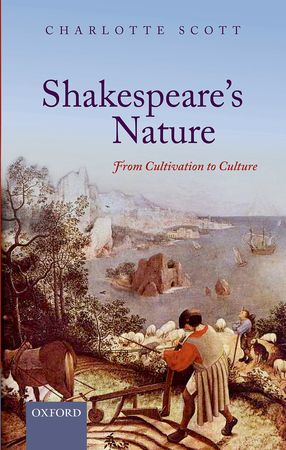
Shakespeare's Nature From Cultivation to Culture

By: Charlotte Scott(Author)
272 pages
Shakespeare's Nature
Click to have a closer look
  • Shakespeare's Nature ISBN: 9780199685080 Hardback Jan 2014 Not in stock: Usually dispatched within 6 days
    £107.50
    #214756
Price: £107.50
About this book Contents Customer reviews Biography Related titles

About this book

Shakespeare's Nature offers the first sustained account of the impact of the language and practice of husbandry on Shakespeare's work. It shows how the early modern discourse of cultivation changes attitude to the natural world, and traces the interrelationships between the human and the natural worlds in Shakespeare's work through dramatic and poetic models of intervention, management, prudence and profit. Ranging from the Sonnets to The Tempest, Shakespeare's Nature explains how cultivation of the land responds to and reinforces social welfare, and reveals the extent to which the dominant industry of Shakespeare's time shaped a new language of social relations. Beginning with an examination of the rise in the production of early modern printed husbandry manuals, Shakespeare's Nature draws on the varied fields of economic, agrarian, humanist, Christian and literary studies, showing how the language of husbandry redefined Elizabethan attitudes to both the human and non-human worlds. In a series of close readings of specific plays and poems, Shakespeare's Nature explains how cultivation forms and develops social and economic value systems, and how the early modern imagination was dependent on metaphors of investment, nurture and growth. By tracing this language of intervention and creation in Shakespeare's work, Shakespeare's Nature reveals a fundamental discourse in the development of early modern social, political and personal values.

Contents

Introduction
The Sonnets, Early Modern Husbandry Manuals, and the Cultivation of Value
Henry V, Humanism, and Husbandry
Darkness Visible: Macbeth and the Poetics of the unnatural
Even better than the real thing? Art and Nature in The Winter's Tale
Prospero's Husbandry and the Cultivation of Anxiety
Conclusion

Customer Reviews

Biography

Charlotte Scott, Senior Lecturer in Shakespeare, Goldsmiths' College, University of London Charlotte Scott is a Senior Lecturer in Shakespeare at Goldsmiths College, University of London. She has written widely on Shakespeare, including Shakespeare and the Idea of the Book (OUP, 2007). She has published many essays on Shakespeare, book history and the natural world. She is currently working on Shakespeare's portrayal of the family and children.

By: Charlotte Scott(Author)
272 pages
Current promotions
January SaleNew and Forthcoming BooksBritish Wildlife Magazine SubscriptionField Guide Sale 2025