About this book
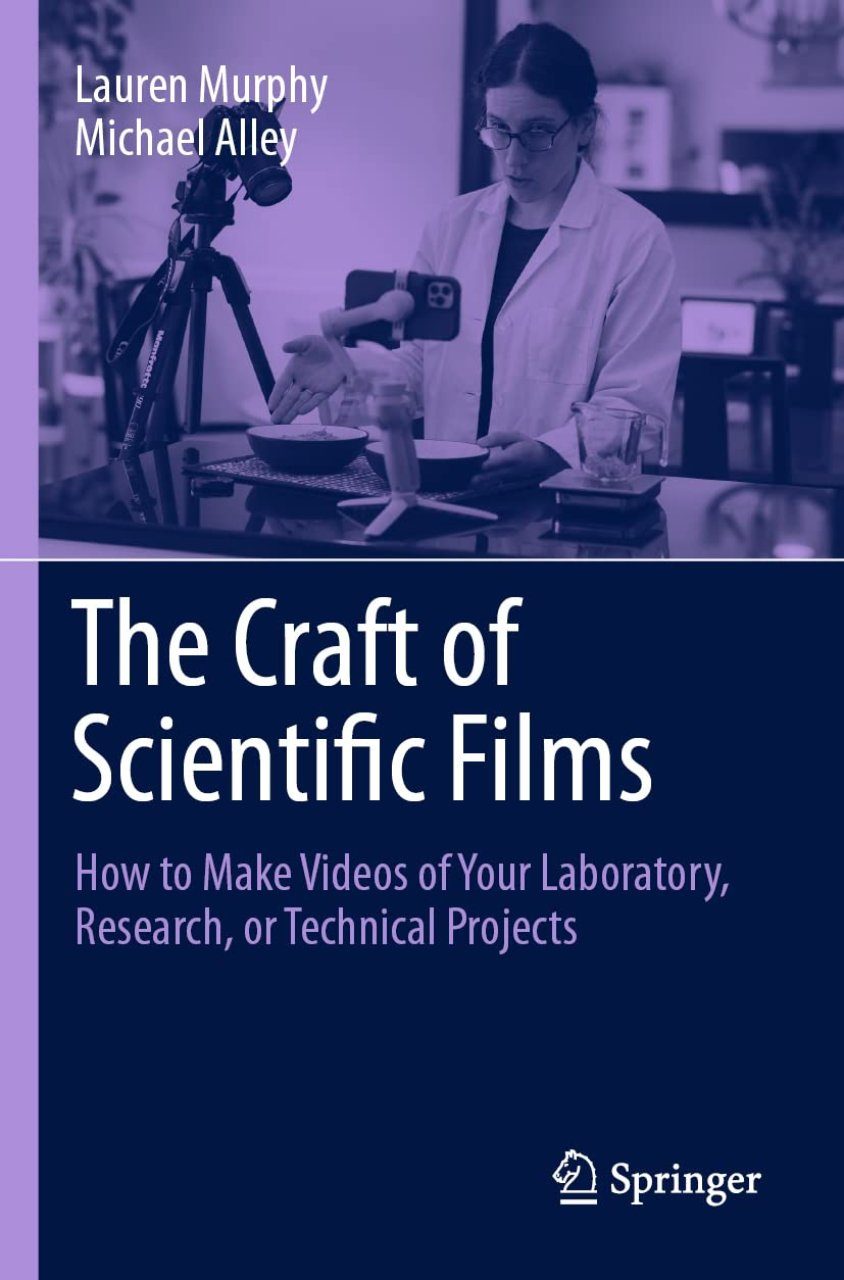
This book, the first of its kind, helps scientists and engineers of all stages and disciplines share their work in a new way – with movies. Today, much of scientific communication is embedded in papers and presentations, but these documents don't often extend outside of a specific academic field. By adding movies as a medium of communication, scientists and engineers can better communicate with their colleagues while also increasing their reach to students, professors, peers, potential collaborators, and the public. Scientific films help translate complex technical topics into more accessible and consumable messages. By following Lauren Murphy's filmmaking formula – planning, shooting, and editing – readers will create their very own scientific films that look professional and polished. Using tools as simple as a smartphone, readers can develop short, personal stories with no cost or experience needed. This book will guide readers through all steps of the movie-making process to a finished product. Readers will evolve their creative thinking skills and use their movies to improve classroom presentations, network across student organizations, present at conferences, recruit students for their labs, secure grant money, and more. Adding a movie to your body of work can be the tool that sparks interest in audiences to learn more – driving traffic to your publications, research projects, and websites. This book will help you develop new skills to become a better communicator while spreading your ideas and research to new audiences.
Contents
1. Introduction
1.1 Story: Connect people with science through movies
1.2 Reach: Show new audiences your research and work
1.3 Growth: Look at your work in a different way with creative thinking
1.4 Preparation: Get in a film maker's mindset
2. Planning
2.1 Experiences and ideas: List the who, what, where, and when
2.2 Audience: Target a specific group or person
2.3 Main message: Develop a one-sentence story
2.4 Script: Create a script, storyboard, or outline
3. Shooting
3.1 Equipment: Use the gear that's available to you
3.2 Interview: Shoot professional footage with simple tricks
3.3 B-Roll: Shoot the visual evidence to support your main message
3.4 Other media: Collect supporting b-roll from other sources
4. Editing
4.1 Techniques: Adopt methods to use with any editing program
4.2 Video: Assemble and create your story
4.3 Audio: Edit with your ears and set the mood
4.4 Length: Keep the story concise to engage an audience
5. Conclusion
Customer Reviews
Biography
Lauren Murphy is a professional in the film and television industry and a mechanical engineer through schooling-a unique combination of skills used to empower scientists and engineers to communicate their research through video. She has taught workshops on the creation of scientific films to hundreds of participants internationally including recent courses with Penn State University, Rochester Polytechnic Institute, the Engineering Ambassadors, and Simula Research Laboratory in Norway. While Lauren also works as a freelance cinematographer and camera operator on TV, films, and commercials in New York City, she is a leader in advancing video as a communication tool for all STEM students, professors, and professionals.
Michael Alley, an associate professor of Engineering Communication at Pennsylvania State University, holds a Master of Science in electrical engineering and Masters in Fine Arts in writing degrees. He is the author of three popular textbooks: The Craft of Scientific Presentations (2013), The Craft of Editing (2000), and The Craft of Scientific Writing (2018). He has taught scientific writing and presentations to engineers and scientists on four continents, in sixteen countries, and for more than 150 companies, universities, organizations, and agencies.