Um genaue Preise zu sehen, wählen Sie bitte Ihr Lieferland.
 
 
United States
£ GBP
Alle Kategorien
Important Notice for US Customers

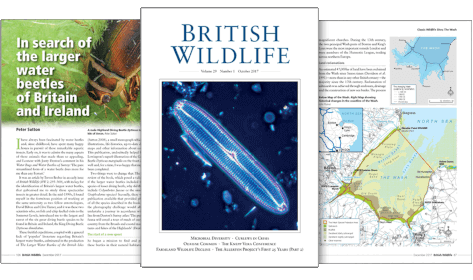
British Wildlife

8 issues per year 84 Seiten per Ausgabe Nur im Abonnement erhältlich

British Wildlife is the leading natural history magazine in the UK, providing essential reading for both enthusiast and professional naturalists and wildlife conservationists. Published eight times a year, British Wildlife bridges the gap between popular writing and scientific literature through a combination of long-form articles, regular columns and reports, book reviews and letters.

Abonnement ab £33 im Jahr

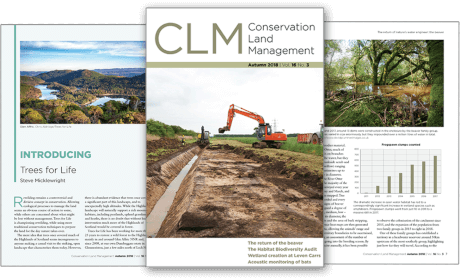
Conservation Land Management

4 Auflagen im Jahr 44 Seiten Nur im Abonnement erhältlich

Conservation Land Management (CLM) ist ein Mitgliedermagazin und erscheint viermal im Jahr. Das Magazin gilt allgemein als unverzichtbare Lektüre für alle Personen, die sich aktiv für das Landmanagement in Großbritannien einsetzen. CLM enthält Artikel in Langform, Veranstaltungslisten, Buchempfehlungen, neue Produktinformationen und Berichte über Konferenzen und Vorträge.

Subscriptions from £26 per year
Akademische und professionelle Bücher  Mycology

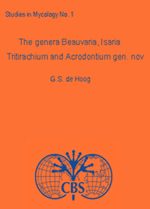
The Genera Beauveria, Isaria, Tritirachium and Acrodontium gen.

Monograph Journal / Magazine
Series: Studies in Mycology Volume: 1
By: GS de Hoog(Author)
41 pages, illustrations
The Genera Beauveria, Isaria, Tritirachium and Acrodontium gen.
Click to have a closer look
  • The Genera Beauveria, Isaria, Tritirachium and Acrodontium gen. Paperback Jan 1972 Not in stock: Usually dispatched within 1-2 weeks
    £13.99
    #201681
Price: £13.99
About this book Customer reviews Related titles

About this book

The genus Beauveria Vuill. is restricted to three species, of which descriptions and figures are provided: B. bassiana, B. brongniartii and B. alba. The genus Isaria Fr. is described with two species, I. felina and I. orthopterorum. The species formerly placed in Tritirachium Limber are arranged in two genera: Tritirachium, based on T. dependens, characterized by the zig-zag shape of the fertile portions of the conidiogenous cells and the absence of distinct denticles, and Acrodontium gen. nov., based on Chloridium crateriforme van Beyma, characterized by the straight, denticulate fertile portions of the conidiogenous cells.

Descriptions and figures are presented of two species of Tritirachium and seven species of Acrodontium. In the latter genus two sections are distinguished: in section Acrodontium the conidia are formed on solitary conidiogenous cells, in section Grisea, based on Tritirachium heimii (Saccas) Langer. var. griseum Fassatiová, compound erect or suberect conidiophores are present which are mostly stiff and pigmented. A list of doubtful and excluded species is given.

Customer Reviews

Monograph Journal / Magazine
Series: Studies in Mycology Volume: 1
By: GS de Hoog(Author)
41 pages, illustrations
Current promotions
January SaleNew and Forthcoming BooksBritish Wildlife Magazine SubscriptionField Guide Sale 2025