Um genaue Preise zu sehen, wählen Sie bitte Ihr Lieferland.
 
 
United States
£ GBP
Alle Kategorien
Important Notice for US Customers

British Wildlife

8 issues per year 84 Seiten per Ausgabe Nur im Abonnement erhältlich

British Wildlife is the leading natural history magazine in the UK, providing essential reading for both enthusiast and professional naturalists and wildlife conservationists. Published eight times a year, British Wildlife bridges the gap between popular writing and scientific literature through a combination of long-form articles, regular columns and reports, book reviews and letters.

Abonnement ab £33 im Jahr

Conservation Land Management

4 Auflagen im Jahr 44 Seiten Nur im Abonnement erhältlich

Conservation Land Management (CLM) ist ein Mitgliedermagazin und erscheint viermal im Jahr. Das Magazin gilt allgemein als unverzichtbare Lektüre für alle Personen, die sich aktiv für das Landmanagement in Großbritannien einsetzen. CLM enthält Artikel in Langform, Veranstaltungslisten, Buchempfehlungen, neue Produktinformationen und Berichte über Konferenzen und Vorträge.

Subscriptions from £26 per year
Akademische und professionelle Bücher  Earth System Sciences  Geosphere  Earth & Planetary Sciences: General

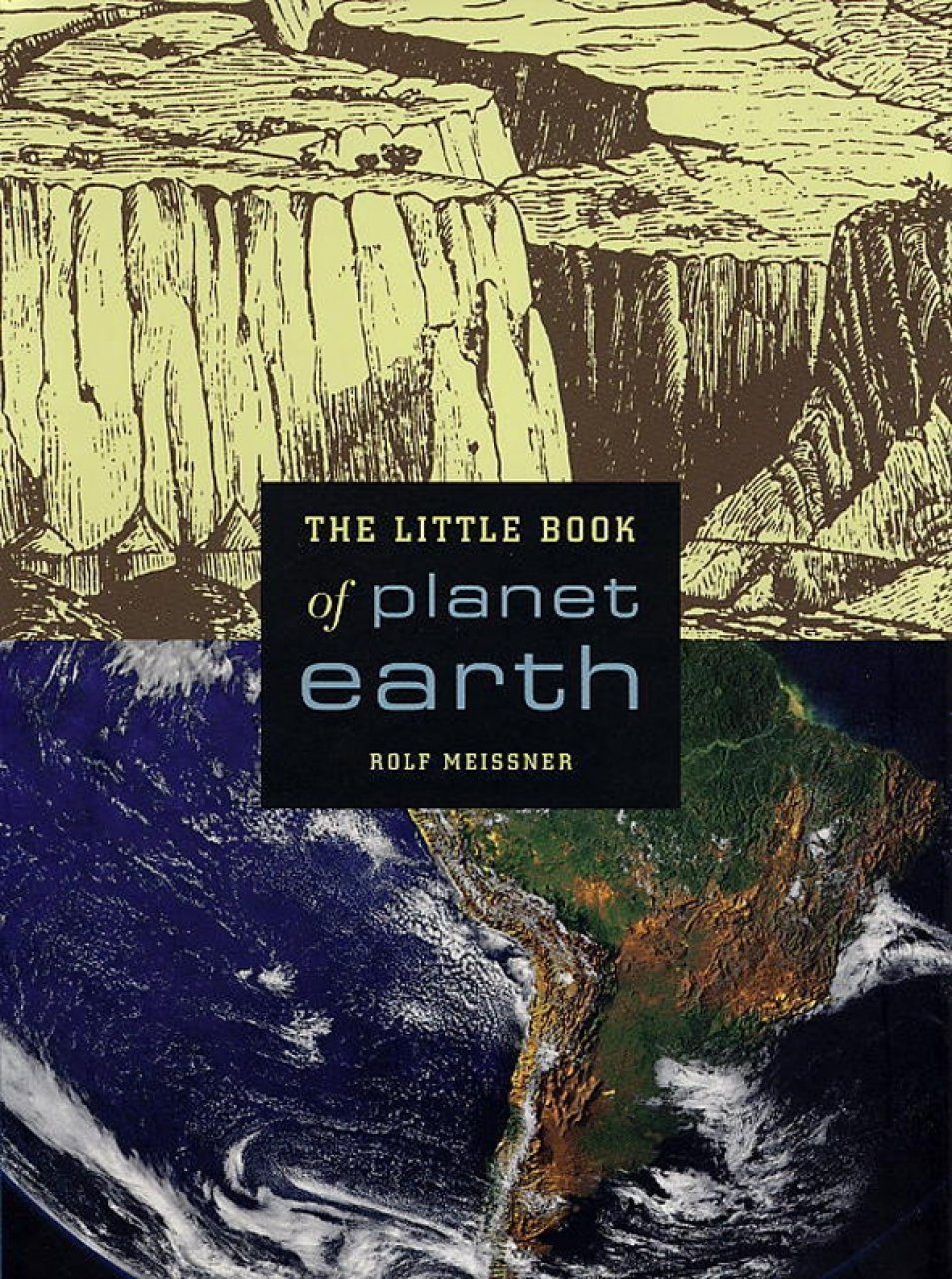
The Little Book of Planet Earth

Popular Science
By: Rolf Meissner
195 pages, Figs
Publisher: Springer Nature
The Little Book of Planet Earth
Click to have a closer look
  • The Little Book of Planet Earth ISBN: 9780387952581 Hardback Mar 2002 Not in stock: Usually dispatched within 1-2 weeks
    £17.99
    #121840
Price: £17.99
About this book Contents Customer reviews Related titles

About this book

Introduces readers to the key topics in modern earth and planetary science: the creation of Earth and its moon, the role of seismology in analysing Earth's structure, the formation of mountain ranges and basins, the role of plate tectonics, the significance of Earth's magnetic field, and the relationship of our planets geology to its life forms.

Contents

The Roots: An Introduction.- The Origins of Planet Earth.- Formation of the Earth and the Moon.- The Earth's Structure and the Role of Seismology.- Movement and Form, Weight and Tides of the Earth.- The Earth's Magnetic Field.- From Atom to Mineral and from Mineral to Rock.- The Early History of Earth.- Radioactive Age Determination and Its Meaning.- Plate Tectonics.- The Earth's Crust.- The Formation of Mountain Ranges and Basins.- New Insights - New Terms.- The Phanerozoic: Tectonic Events and the Role of Paleontology.- The Origins of Life.- Our Limited Natural Resources.

Customer Reviews

Popular Science
By: Rolf Meissner
195 pages, Figs
Publisher: Springer Nature
Media reviews
From the reviews: |"[The Little Book of Planet Earth] provides critical insights into the nature of Earth's composition, our understanding of Earth's magnetic field, and plate tectonics." Science News "How did life on our planet evolve? How old is Earth? How was our solar system formed and, with it, our planet? These are big questions, but the answers are found in this small book that gives broad insights into earth science." Science News "An amazing introduction to what scientific research through the past centuries up to the modern day has learned about our planet." The Bookwatch "The book is a small miracle." New Scientist "The Little Book of Planet Earth describes the geological evolution of Earth from its formation. ! In this concise and engaging little book, the author introduces lay readers to the key topics in modern earth and planetary science: the creation of Earth and its moon, the role of seismology in analyzing Earth's structure, the formation of mountain ranges and basins, the significance of Earth's magnetic field, and more." (Science in Africa, October, 2002) "The Little Book of Planet Earth by meteorologist and geophysicist Rolf Meissner is an amazing introduction to what scientific research through the past centuries up to the modern day has learned about our planet. From the origin of the solar system to plate tectonics to earth's magnetic field and much more, chapters teach all about the Earth in straightforward, easy-to-understand language accessible to lay readers. Highly recommended for all readers ! ." (Circulation, June, 2002) "This small but delightful book should interest anyone curious about the planet he or she lives on. ! Meissner treats this material in an interesting and easy-to-read style. But he does much more -- he also describes the formation of Earth and its development. ! There are numerous illustrations and photographs throughout, along with a section on further reading. ! Strongly recommended. General readers; lower- and upper-division undergraduates." (B. R. Parker, Choice, October, 2002) "It is an up-to-date account of great breakthroughs in the earth sciences during the second half of the 20th century, that were published in top journals. ! A very interesting work that satisfies one's taste for understanding the basics of the science his professional occupation is based upon." (Michiel Dusar, Geologica Belgica, Vol. 5 (1-2), 2002) "It's a simple plan and excellently carried out, exploring early ideas about the origin of the Earth, then describing the Solar System and gradually narrowing the focus until reaching the core of the Earth itself. Meissner then retraces his path with fascinating explanations ! . There are admirable illustrations, too. ! the book is a small miracle." (Roy Herbert, New Scientist, May, 2002)
Current promotions
Great GiftsNew and Forthcoming BooksBritish Wildlife Magazine SubscriptionField Guide Sale 2025