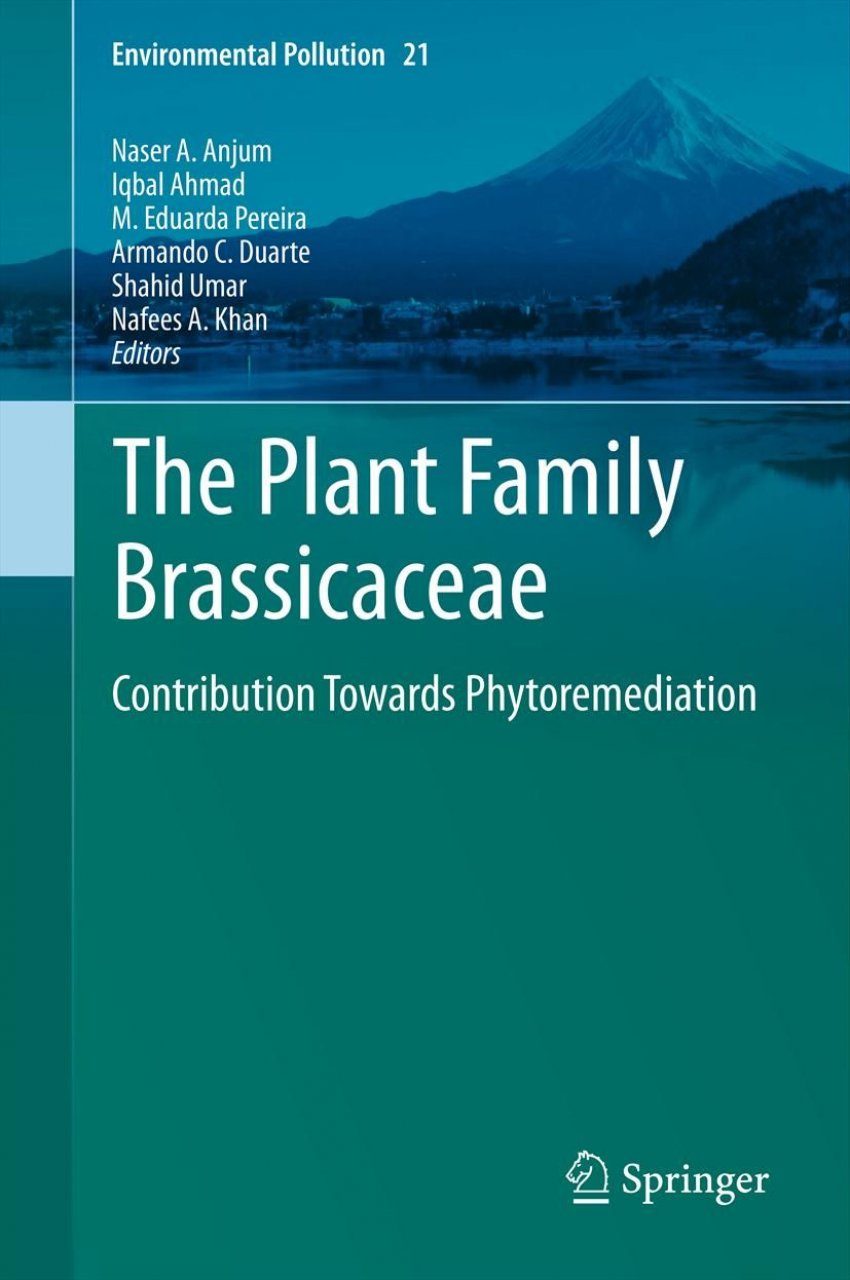
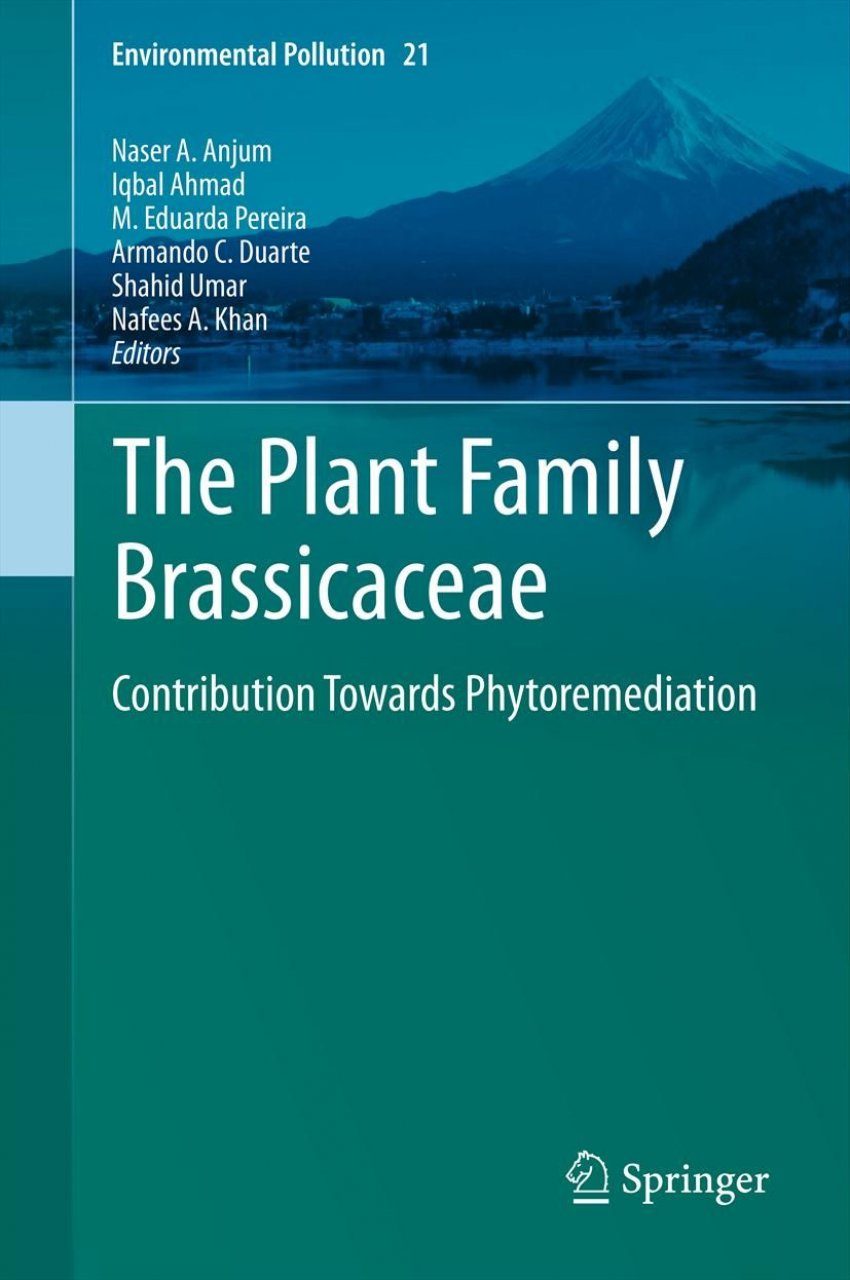
By: Naser A Anjum(Editor), Iqbal Ahmad(Editor), M Eduarda Pereira(Editor), Armando C Duarte(Editor), Shahid Umar(Editor), Nafees A Khan(Editor)
359 pages, 14 colour & 6 b/w illustrations

Click to have a closer look
About this book
Contents
Customer reviews
Biography
Related titles
About this book
With the advent of the industrial revolution, the biosphere has been continuously polluted with a myriad of contaminants that urgently need global attention. In this perspective, most of the genera of the plant family Brassicaceae (Crucifereae or the mustard family) are a significant part of the plants- and associated microbes-based strategies adopted for the cleanup of varied contaminants from environmental compartments. Important genus such as Alyssum, Arabidopsis, Brassica and Thlaspi from Brassicaceae which, besides acting as an attractive genetic model, well-represent the metal hyperaccumulation among approximately 0.2% of all angiosperms and thus, play a key role in the phytoremediation technology.
The Plant Family Brassicaceae i) provides an exhaustive evaluation of the current status of contaminants (metals/metalloids)-addition to varied environmental compartments and its consequences, ii) offers comprehensive and state-of-the-art information on the significance of the plants from the family Brassicaceae in solving environmental pollution issues, iii) examines the physiological, biochemical and molecular-genetic strategies adopted by the plants from Brassicaceae for the remediation of and tolerance to varied environmental contaminants, and iv) supplies a broad reference to the field of environmental science and related disciplines. As a pioneer work and significant addition to the Environmental Pollution book series, the current volume promises to be a useful asset for researchers, students, other academicians and policy makers involved in sustainable remediation of varied environmental compartments.
Contents
1. The Plant Family Brassicaceae: An Introduction
2. Current Status of Toxic Metals-Addition to Environment and Its Consequences
3. Cadmium Accumulation by Plants of Brassicaceae Family and Its Connection with Their Primary and Secondary Metabolism
4. Metal Hyperaccumulation and Tolerance in Alyssum, Arabidopsis and Thlaspi: An Overview
5. Brassica Rhizosphere-Microbe Interactions and their Role in Phytoremediation
6. Phytoremediation of Heavy Metals by Brassica juncea in Aquatic and Terrestrial Environment
7. Toxic Metals Accumulation, Tolerance and Homeostasis in Brassicaoilseed Species: Overview of Physiological, Biochemical and Molecular Mechanisms
8. The Role of Plant Growth-Promoting Rhizosphere Bacteria in Toxic Metal Extraction by Brassica spp
9. Biochemical and Functional Responses of Arabidopsis thaliana Exposed to Cadmium, Copper and Zinc
10. Brassicas in Turkey and Their Potential Role for Degraded Habitats' Remediation
11. Chelate Assisted Phytoextraction Using Oilseed Brassicas
12. Roles of Rhizospheric Processes and Plant Physiology in Applied Phytoremediation of Contaminated Soils using Brassica Oilseeds
Customer Reviews
Biography
Naser A. Anjum and Iqbal Ahmad are Scientists at Centre for Environmental and Marine Studies & Department of Chemistry, University of Aveiro.
M. Edurada Pereira and Armando C. Duarte are Professors in the Department of Chemistry, University of Aveiro, and Researchers at Centre for Environmental and Marine Studies, University of Aveiro.
Shahid Umar is Associate Professor in the Department of Botany, Division of Plant Stress Physiology, Hamdard University, New Delhi, India.
Nafees A. Khan is a Professor of Plant Physiology in the Department of Botany, Division of Plant Physiology and Biochemistry, Faculty of Life Sciences, Aligarh Muslim University, Aligarh, U.P., India.
By: Naser A Anjum(Editor), Iqbal Ahmad(Editor), M Eduarda Pereira(Editor), Armando C Duarte(Editor), Shahid Umar(Editor), Nafees A Khan(Editor)
359 pages, 14 colour & 6 b/w illustrations