Um genaue Preise zu sehen, wählen Sie bitte Ihr Lieferland.
 
 
United States
£ GBP
Alle Kategorien
Important Notice for US Customers

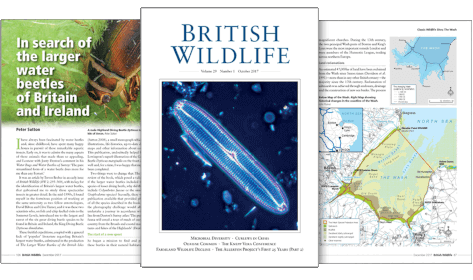
British Wildlife

8 issues per year 84 Seiten per Ausgabe Nur im Abonnement erhältlich

British Wildlife is the leading natural history magazine in the UK, providing essential reading for both enthusiast and professional naturalists and wildlife conservationists. Published eight times a year, British Wildlife bridges the gap between popular writing and scientific literature through a combination of long-form articles, regular columns and reports, book reviews and letters.

Abonnement ab £33 im Jahr

Conservation Land Management

4 Auflagen im Jahr 44 Seiten Nur im Abonnement erhältlich

Conservation Land Management (CLM) ist ein Mitgliedermagazin und erscheint viermal im Jahr. Das Magazin gilt allgemein als unverzichtbare Lektüre für alle Personen, die sich aktiv für das Landmanagement in Großbritannien einsetzen. CLM enthält Artikel in Langform, Veranstaltungslisten, Buchempfehlungen, neue Produktinformationen und Berichte über Konferenzen und Vorträge.

Subscriptions from £26 per year
Akademische und professionelle Bücher  Natural History  Cryptozoology

The Science of Monsters Why Monsters Came to Be and What Made Them so Terrifying

Popular Science
By: Matt Kaplan(Author)
256 pages, b/w photos
Publisher: Constable
The Science of Monsters
Click to have a closer look
  • The Science of Monsters ISBN: 9781472101150 Paperback Mar 2013 Not in stock: Usually dispatched within 5 days
    £16.99
    #204014
Price: £16.99
About this book Customer reviews Biography Related titles

About this book

Modern audiences do not find dragons frightening. Fascinating as mythical creatures, yes, but terrifying, no. Yet, present them with a story about a virus that can kill a healthy adult in hours and they will have nightmares for weeks. The difference between the two is believability. Monsters are at their most frightening when they carry characteristics that tie them to the real world in some way.

Preposterous as they might seem today, dragons were no different in ancient times. Humans long ago stumbled upon skeletons that had sharp teeth and talon-like claws. These fossils were real and some were frighteningly large. Those who looked at them could only guess at how dangerous the animals that they belonged to must have been. From such interactions, dragons were born. Yet, in spite of ample physical evidence that dragons existed, none were ever seen in the flesh. Dragon bones were ultimately proven to be the bones of huge predatory dinosaurs like Tyrannosaurus Rex, but before the mystery was solved, they were the makings of frightening beasts that managed to evade human sight by lurking deep within the shadows of the wild.

The Science of Monsters will explore monsters that have haunted humanity throughout the ages, from Medusa to sea serpents, giants, and vampires. In each chapter Kaplan uses scientific principles, current research, and his thorough knowledge of the natural world to explain why specific monsters came to be and what it was about them that was so terrifying to the people who brought them to life.

Customer Reviews

Biography

Matt Kaplan is a professional science writer who covers everything from psychology to parasitology. He writes for The Economist and regularly contributes to Nature, National Geographic, New Scientist and Scientific American. He is also the author of David Attenborough's First Life. He divides his time between London and Los Angeles.

Popular Science
By: Matt Kaplan(Author)
256 pages, b/w photos
Publisher: Constable
Current promotions
Great GiftsNew and Forthcoming BooksBritish Wildlife Magazine SubscriptionField Guide Sale 2025