Um genaue Preise zu sehen, wählen Sie bitte Ihr Lieferland.
 
 
United States
£ GBP
Alle Kategorien
Important Notice for US Customers

British Wildlife

8 issues per year 84 Seiten per Ausgabe Nur im Abonnement erhältlich

British Wildlife is the leading natural history magazine in the UK, providing essential reading for both enthusiast and professional naturalists and wildlife conservationists. Published eight times a year, British Wildlife bridges the gap between popular writing and scientific literature through a combination of long-form articles, regular columns and reports, book reviews and letters.

Abonnement ab £33 im Jahr

Conservation Land Management

4 Auflagen im Jahr 44 Seiten Nur im Abonnement erhältlich

Conservation Land Management (CLM) ist ein Mitgliedermagazin und erscheint viermal im Jahr. Das Magazin gilt allgemein als unverzichtbare Lektüre für alle Personen, die sich aktiv für das Landmanagement in Großbritannien einsetzen. CLM enthält Artikel in Langform, Veranstaltungslisten, Buchempfehlungen, neue Produktinformationen und Berichte über Konferenzen und Vorträge.

Subscriptions from £26 per year
Akademische und professionelle Bücher  Earth System Sciences  Hydrosphere  Water Resources & Management  Water Resources & Management: General

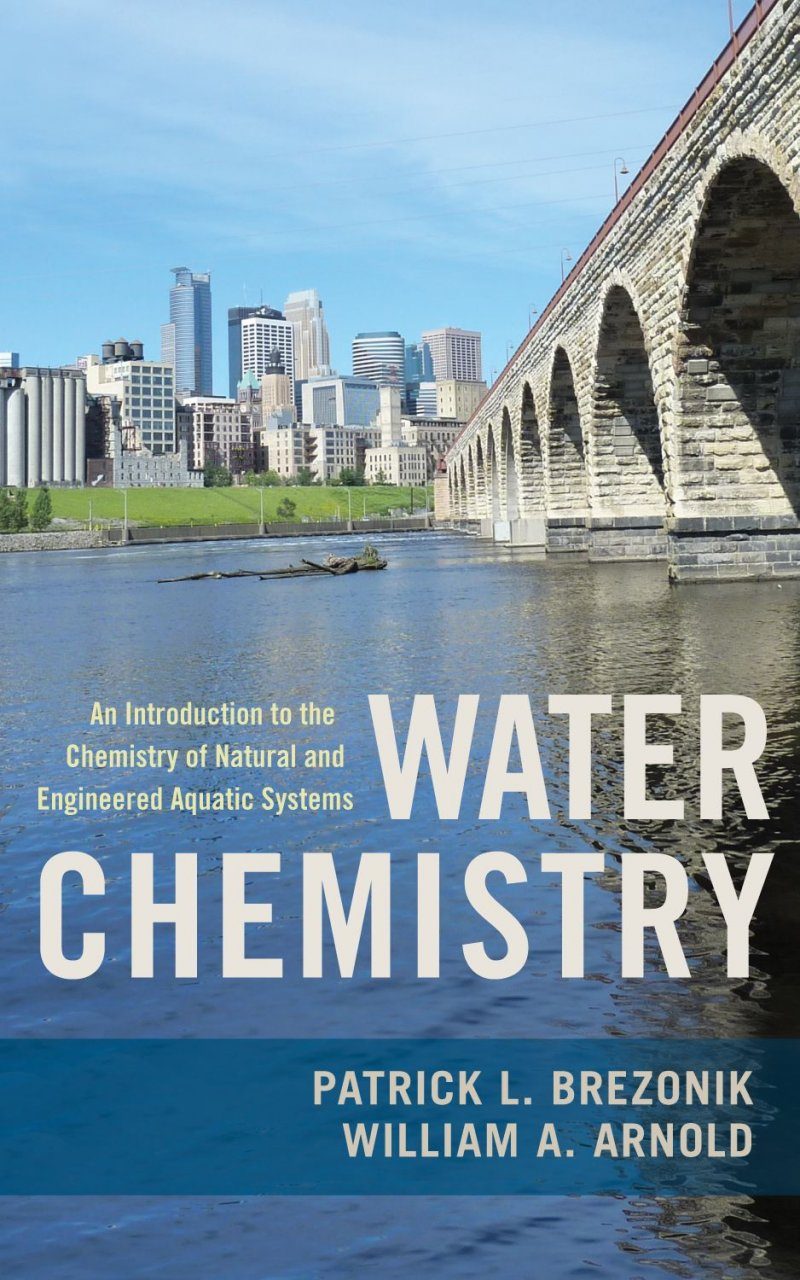
Water Chemistry An Introduction to the Chemistry of Natural and Engineered Aquatic Systems

By: Patrick L Brezonik and William Arnold
752 pages, 200 illustrations
Water Chemistry
Click to have a closer look
  • Water Chemistry ISBN: 9780199730728 Hardback May 2011 Not in stock: Usually dispatched within 1-2 months
    £170.00
    #191995
Price: £170.00
About this book Contents Customer reviews Related titles

About this book

This book provides students with the tools necessary to understand the processes that control the chemical species present in waters of both natural and engineered systems. After providing basic information about water itself and the chemical composition of water in environmental systems, the text covers the necessary theory (thermodynamics, activity, and kinetics) and background material to solve problems. It emphasizes that both equilibrium and kinetic processes are important in aquatic systems.

The book does not merely focus on inorganic constituents, but also on the fate and reactions of organic chemicals. The solving of quantitative equilibrium and kinetic problems using mathematical, graphical, and computational tools is emphasized throughout presentations on acid-base chemistry, complexation of metal ions, solubility of minerals, and oxidation-reduction reactions. The use of these problem-solving tools is then extended in the presentation of topics relevant to natural systems, including dissolved oxygen, nutrient chemistry, geochemical controls on chemical composition, photochemistry, and natural organic matter.

The kinetics and equilibria relevant to engineered systems (e.g. , chlorination and disinfection chemistry, sorption and surface chemistry) and organic contaminant chemistry are also discussed. Numerous in-chapter examples that show the application of theory and demonstrate how problems are solved using algebraic, graphical, and computer-based techniques are included. Examples are relevant to both natural waters and engineered systems.

Contents

PART I. PROLOGUE; 1. Introductory matters; 2. Inorganic chemical composition of natural waters: elements of aqueous geochemistry; PART II. THEORY, FUNDAMENTALS AND IMPORTANT TOOLS; 3. The thermodynamic basis for equilibrium chemistry; 4. Activity-concentration relationships; 5. Chemical kinetics; 6. Fundamentals of organic chemistry for environmental systems; 7. Solving ionic equilibria problems; PART III. INORGANIC CHEMICAL EQUILIBRIA AND KINETICS; 8. Acid-base systems in natural waters; 9. Complexation reactions and metal ion speciation; 10. Solubility: reactions of solid phases with water; 11. Redox equilibria and kinetics; PART IV. CHEMISTRY OF NATURAL WATERS AND ENGINEERED SYSTEMS; 12. Dissolved oxygen; 13. Chemistry of chlorine and other disinfectants; 14. Surface chemistry and sorption processes; 15. Aqueous geochemistry II: minor metals (Al, Fe, Mn), silica, minerals and weathering; 16. Nutrient cycles and chemistry: nitrogen and phosphorus; 17. Fundamentals of photochemistry and some applications in aquatic systems; 18. Natural organic matter and aquatic humic substances; 19. Chemical behavior of organic pollutants

Customer Reviews

By: Patrick L Brezonik and William Arnold
752 pages, 200 illustrations
Current promotions
Great GiftsNew and Forthcoming BooksBritish Wildlife Magazine SubscriptionField Guide Sale 2025