Um genaue Preise zu sehen, wählen Sie bitte Ihr Lieferland.
 
 
United States
£ GBP
Alle Kategorien
Important Notice for US Customers

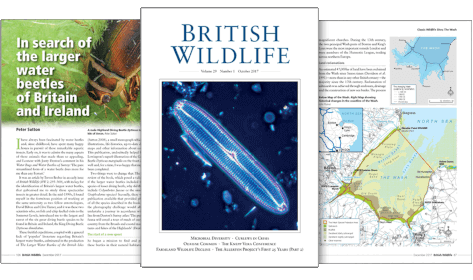
British Wildlife

8 issues per year 84 Seiten per Ausgabe Nur im Abonnement erhältlich

British Wildlife is the leading natural history magazine in the UK, providing essential reading for both enthusiast and professional naturalists and wildlife conservationists. Published eight times a year, British Wildlife bridges the gap between popular writing and scientific literature through a combination of long-form articles, regular columns and reports, book reviews and letters.

Abonnement ab £33 im Jahr

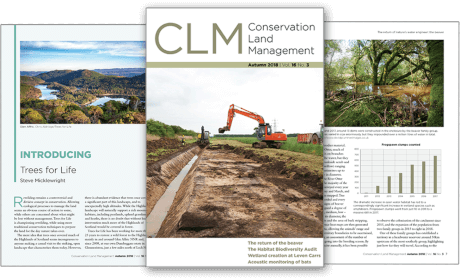
Conservation Land Management

4 Auflagen im Jahr 44 Seiten Nur im Abonnement erhältlich

Conservation Land Management (CLM) ist ein Mitgliedermagazin und erscheint viermal im Jahr. Das Magazin gilt allgemein als unverzichtbare Lektüre für alle Personen, die sich aktiv für das Landmanagement in Großbritannien einsetzen. CLM enthält Artikel in Langform, Veranstaltungslisten, Buchempfehlungen, neue Produktinformationen und Berichte über Konferenzen und Vorträge.

Subscriptions from £26 per year
Akademische und professionelle Bücher  History & Other Humanities  Archaeology

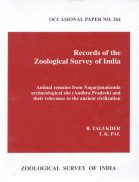
Animal Remains from Nagarjunakonda Archaeological Site (Andhra Pradesh) and their Relevance to the Ancient Civilization

By: B Talukder and TK Pal
92 pages, plates, tables
Animal Remains from Nagarjunakonda Archaeological Site (Andhra Pradesh) and their Relevance to the Ancient Civilization
Click to have a closer look
  • Animal Remains from Nagarjunakonda Archaeological Site (Andhra Pradesh) and their Relevance to the Ancient Civilization Paperback Dec 2007 Not in stock: Usually dispatched within 2-4 weeks
    £16.99
    #198693
Price: £16.99
About this book Contents Customer reviews Related titles

About this book

Nagarjunakonda, the famous Buddhist site of Andhra Pradesh drew attention of the people in early twenties of the twentieth century and had been the point of attraction of the archaeologists, historians and pilgrims since then. The archaeological importance of the site was first brought to the notice by R. Saraswati in 1926, after learning about interesting findings from the place by the local people. Explorations at different times had initially created an impression about the site as one Buddhist settlement that came up during the rule of the Ikshavakus. But the large scale excavations, that commenced in 1954 and continued till 1960, subsequent to the decision of turning the valley into a reservoir of the Nagarjunasagar Dam, revealed cultural sequences from the lower Paleolithic to Medieval times. It also unearthed the remains of the township of Vijaypuri that flourished in the third and the fourth centuries A.D.

Contents

1. Introduction
2. Topography and habitat
3. History of excavation
4. Site of excavation and succession of human cultures
5. Age of cultures
6. Systematic account of animal remains
7. Faunal diversity
8. Discussion
9. Summary

Acknowledgements
References

Customer Reviews

By: B Talukder and TK Pal
92 pages, plates, tables
Current promotions
January SaleNew and Forthcoming BooksBritish Wildlife Magazine SubscriptionField Guide Sale 2025