Click to have a closer look
About this book
Contents
Customer reviews
Related titles
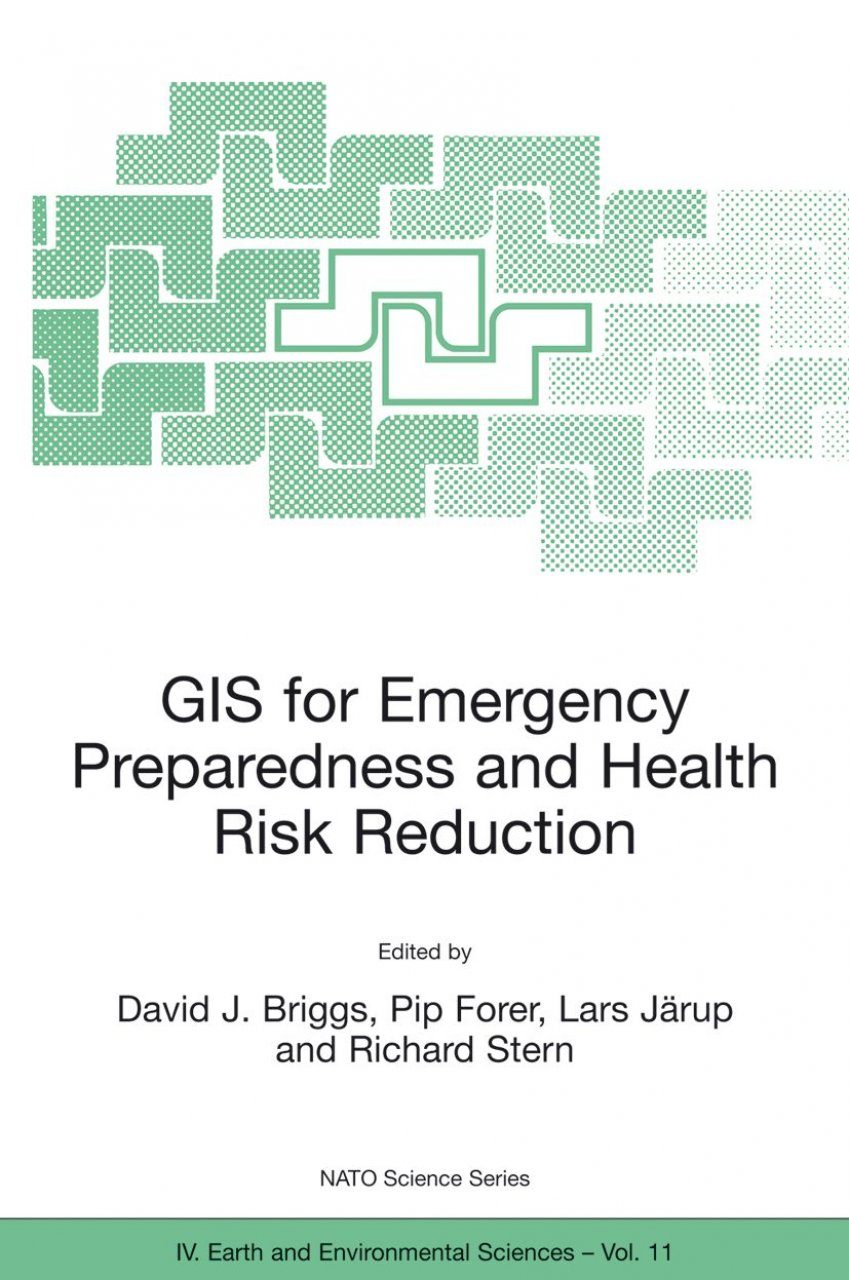
About this book
Proceedings of the NATO Advanced Research Workshop, held in Budapest, Hungary, 22-25 April 2001.
Geographical Information Systems (GIS) have developed rapidly in recent years and now provide powerful tools for the capture, manipulation, integration, interrogation, modelling, analysis and visualisation of data - tools that are already used for policy support in a wide range of areas at almost all geographic and administrative levels. This holds especially for emergency preparedness and health risk reduction, which are all essentially spatial problems. To date, however, many initiatives have remained disconnected and uncoordinated, leading to less powerful, less compatible and less widely implemented systems than might otherwise have been the case.
The important matters discussed here include the probabilistic nature of most environmental hazards and the semi-random factors that influence interactions between these and human exposures; the effects of temporal and spatial scales on hazard assessment and imputed risk; the effects of measurement error in risk estimation and the stratification of risks and their impacts according to socioeconomic characteristics; and the quantification of socioeconomic differences in vulnerability and susceptibility to environmental hazards.
GIS are powerful analytical tools in their own right, but what is needed is much more effective communication between the many disciplines, professions and stakeholders concerned - something which this book helps to achieve.
Contents
Part One GIS for emergency preparedness and health risk reduction - concepts and principles: Preparing for environmental health emergencies - the role of GIS, D. Briggs, L. Beale; Timelines, environments and issues of risk in health - the practical algebra of (x, y, t, a), P. Forer; Social models of disaster - vulnerability and empowerment, A. Staines; Uncertainty in the application of GIS for predictive health risk assessment for a radioactive waste repository in Slovenia, B. Kontic, et al. Part Two GIS for emergency preparedness: Evaluation of volcanic fallout impact from Vesuvius using GIS, M.T. Pareschi; Volcanic risk assessment and spatial planning policies in the island of Hawaii, U.F. Paleo, F. Trusdell; The risk assessment of hazardous materials transporting using GIS, A. Lovett, et al; A GIS-aided frequency planning for terrestrial broadcasting and land mobile services, S. Topcu, et al; Progress towards harmonised European industrial risk management information systems, C. Kirchsteiger, F. Mushtaq; Application of the Seveso II Directive in Slovenia with the support of GIS, M. Gerbec, B. Kontic. Part Three GIS for health risk reduction: A European health and environment information system for exposure and disease mapping and risk assessment (EUROHEIS), S. Cockings, L. Jarup; Address geocoding for small area en environmental health studies in Denmark, H. Hansen, A. Poulstrup. (Part contents).
Customer Reviews