Um genaue Preise zu sehen, wählen Sie bitte Ihr Lieferland.
 
 
United States
£ GBP
Alle Kategorien
Important Notice for US Customers

British Wildlife

8 issues per year 84 Seiten per Ausgabe Nur im Abonnement erhältlich

British Wildlife is the leading natural history magazine in the UK, providing essential reading for both enthusiast and professional naturalists and wildlife conservationists. Published eight times a year, British Wildlife bridges the gap between popular writing and scientific literature through a combination of long-form articles, regular columns and reports, book reviews and letters.

Abonnement ab £33 im Jahr

Conservation Land Management

4 Auflagen im Jahr 44 Seiten Nur im Abonnement erhältlich

Conservation Land Management (CLM) ist ein Mitgliedermagazin und erscheint viermal im Jahr. Das Magazin gilt allgemein als unverzichtbare Lektüre für alle Personen, die sich aktiv für das Landmanagement in Großbritannien einsetzen. CLM enthält Artikel in Langform, Veranstaltungslisten, Buchempfehlungen, neue Produktinformationen und Berichte über Konferenzen und Vorträge.

Subscriptions from £26 per year
Akademische und professionelle Bücher  History & Other Humanities  Environmental History

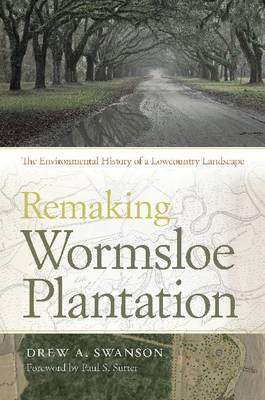
Remaking Wormsloe Plantation The Environmental History of a Lowcountry Landscape

By: Drew A Swanson(Author), Paul S Sutter(Foreword By)
320 pages, 34 b/w photos, 2 illustrations, 6 maps
Remaking Wormsloe Plantation
Click to have a closer look
  • Remaking Wormsloe Plantation ISBN: 9780820347448 Paperback Oct 2014 Not in stock: Usually dispatched within 1 week
    £24.95
    #215638
Price: £24.95
About this book Customer reviews Biography Related titles

About this book

Why do we preserve certain landscapes while developing others without restraint? Drew A. Swanson's in-depth look at Wormsloe plantation, located on the salt marshes outside of Savannah, Georgia, explores that question while revealing the broad historical forces that have shaped the lowcountry South. Wormsloe is one of the most historic and ecologically significant stretches of the Georgia coast. It has remained in the hands of one family from 1736, when Georgia's Trustees granted it to Noble Jones, through the 1970s, when much of Wormsloe was ceded to Georgia for the creation of a state historic site. It has served as a guard post against aggression from Spanish Florida; a node in an emerging cotton economy connected to far-flung places like Lancashire and India; a retreat for pleasure and leisure; and a carefully maintained historic site and green space. Like many lowcountry places, Wormsloe is inextricably tied to regional, national, and global environments and is the product of transatlantic exchanges.

Swanson argues that while visitors to Wormsloe value what they perceive to be an "authentic", undisturbed place, this landscape is actually the product of aggressive management over generations. He also finds that Wormsloe is an ideal place to get at hidden stories, such as African American environmental and agricultural knowledge, conceptions of health and disease, the relationship between manual labor and views of nature, and the ties between historic preservation and natural resource conservation. Remaking Wormsloe Plantation connects this distinct Georgia place to the broader world, adding depth and nuance to the understanding of our own conceptions of nature and history.

Customer Reviews

Biography

Drew A. Swanson is assistant professor of history at Wright State University in Dayton, Ohio. He has previously taught at Millsaps College in Jackson, Mississippi, and holds a Ph.D. from the University of Georgia.

By: Drew A Swanson(Author), Paul S Sutter(Foreword By)
320 pages, 34 b/w photos, 2 illustrations, 6 maps
Media reviews

"This is a really fine book, rich in the kind of detail that explains the lived-in quality of a place, deeply researched and broadly contextualized, with writing that is often graceful and a pleasure to read. Remaking Wormsloe Plantation is a contribution to scholarship on the environmental history of plantations and place as well as a book that will appeal to a popular audience."
– Mart A. Stewart, author of What Nature Suffers to Groe: Life, Labor, and Landscape on the Georgia Coast, 1680-1920

"A compelling read with the plantation as the star on a stage whose supporting cast features not only the men and women who established, owned, and labored on it, reinventing it in each generation, but the processes linking it with lowcountry, Atlantic, and global arenas. Lucidly conceptualized and elegantly written, this is environmental history at its best."
– Shepard Krech III, author of Spirits of the Air: Birds and American Indians in the South


"Remaking Wormsloe Plantation connects this distinct Georgia place to the broader world, adding depth and nuance to the understanding of our own conception of nature and history."
– Bob Edmonds, McCormick Messenger

"This detailed study of Wormsloe Plantation in coastal Georgia reflects the macro-history of settlement, land development, and reinvention of the past in the coastal Deep South and, by extension, the constant and universal reinvention of the past [...] Swanson, an authorized historian of Wormsloe, presents a history that includes all players, from humans to microbes. He reminds readers that history is never a snapshot of the past, but rather the top layer of fathomless strata of physical and psychological influences."
– T. S. Martin, Choice

"Remaking Wormsloe Plantation connects this distinct Georgia place to the broader world, adding depth and nuance to the understanding of our own conceptions of nature and history."
 – Southeastern Naturalist

"More than a microhistory [...] Swanson's story is blessed with, as he says, an interesting 'cast' of humans and nonhuman characters, including 'live oaks, oysters, European and African colonists, mosquitos, viruses, government officials, hogs, chickens, historians, cotton plants, silkworms, and cattle ticks.' The interactions of these, and the competing roles of human agents and the forces of nature, are the basis for this rich and compelling history."
– Mark R. Finlay, Georgia Historical Quarterly

"Rich in detail, nuanced, and compelling, Drew A. Swanson's history of Wormsloe State Historic Site represents an important contribution to the growing field of southern environmental history. Intended as much for a popular audience as a scholarly one, the book highlights the potential value of environmental history as an interpretative tool for public historians and offers a model for future studies of historic places."
– Mark D. Hersey, Journal of Southern History

Current promotions
January SaleNew and Forthcoming BooksBritish Wildlife Magazine SubscriptionField Guide Sale 2025