Um genaue Preise zu sehen, wählen Sie bitte Ihr Lieferland.
 
 
United States
£ GBP
Alle Kategorien
Important Notice for US Customers

British Wildlife

8 issues per year 84 Seiten per Ausgabe Nur im Abonnement erhältlich

British Wildlife is the leading natural history magazine in the UK, providing essential reading for both enthusiast and professional naturalists and wildlife conservationists. Published eight times a year, British Wildlife bridges the gap between popular writing and scientific literature through a combination of long-form articles, regular columns and reports, book reviews and letters.

Abonnement ab £33 im Jahr

Conservation Land Management

4 Auflagen im Jahr 44 Seiten Nur im Abonnement erhältlich

Conservation Land Management (CLM) ist ein Mitgliedermagazin und erscheint viermal im Jahr. Das Magazin gilt allgemein als unverzichtbare Lektüre für alle Personen, die sich aktiv für das Landmanagement in Großbritannien einsetzen. CLM enthält Artikel in Langform, Veranstaltungslisten, Buchempfehlungen, neue Produktinformationen und Berichte über Konferenzen und Vorträge.

Subscriptions from £26 per year
Akademische und professionelle Bücher  Environmental & Social Studies  Economics, Politics & Policy  Science & Technology  Science & Technology: General

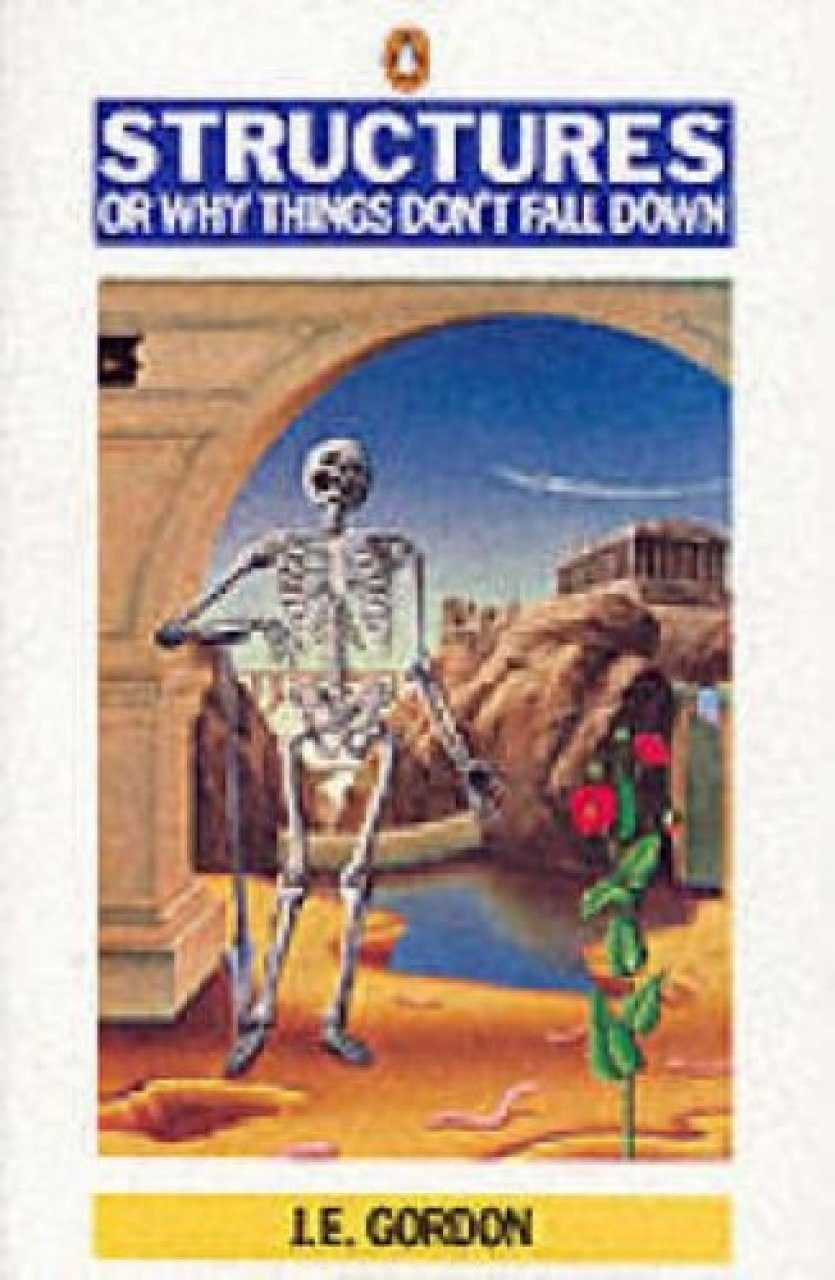
Structures: Or Why Things Don't Fall Down

By: JE Gordon
395 pages, 24 b/w plates, illus, figs, tabs
Publisher: Penguin Books
Structures: Or Why Things Don't Fall Down
Click to have a closer look
  • Structures: Or Why Things Don't Fall Down ISBN: 9780140136289 Paperback Sep 1991 Not in stock: Usually dispatched within 5 days
    £12.99
    #87640
Price: £12.99
About this book Customer reviews Biography Related titles

About this book

In "The New Science of Strong Materials" the author made plain the secrets of materials science. In this volume he explains the importance and properties of different structures.

Customer Reviews

Biography

James Edward Gordon was born in 1913. He took a degree in naval architecture at Glasgow University and worked in wood and steel shipyards, intending to design sailing ships. On the outbreak of the Second World War he moved to the Royal Aircraft Establishment at Farnborough, where he worked on wooden aircraft, plastics and unorthodox materials of all kinds. He designed the sailing rescue dinghies carried at one time by most bomber aircraft. He later became head of the plastic structures sections at Farnborough and developed a method of construction in reinforced plastics which is now used for a number of purpose in aircraft and rockets. For several frustrating years he worked in industry on the strength of glass and the growth of strong 'whisker' crystals. In 1962 he returned to government service as superintendent of an experimental branch at Waltham Abbey concerned with research and development of entirely new structural materials, most of which were based on 'whiskers'. He was Industrial Fellow Commoner at Churchill College, Cambridge, and became Professor of Materials Technology at the University of Reading, where he was later Professor Emeritus. He was awarded the British Silver Medal of the Royal Aeronautical Society for work on aircraft plastics and also the Griffith Medal of the Materials Science Club for contributions to material science. His book, Structures or Why Things Don't Fall Down, is also published in Penguin. Professor Gordon died in 1998. In its obituary The Times wrote of him that he was 'one of the founders of materials science' and that he wrote 'two books of outstanding literary quality ... at once entertaining and informative, providing absorbing interest for both expert and student'.
By: JE Gordon
395 pages, 24 b/w plates, illus, figs, tabs
Publisher: Penguin Books
Current promotions
Great GiftsNew and Forthcoming BooksBritish Wildlife Magazine SubscriptionField Guide Sale 2025