Um genaue Preise zu sehen, wählen Sie bitte Ihr Lieferland.
 
 
United Kingdom
£ GBP
Alle Kategorien

British Wildlife

8 issues per year 84 Seiten per Ausgabe Nur im Abonnement erhältlich

British Wildlife is the leading natural history magazine in the UK, providing essential reading for both enthusiast and professional naturalists and wildlife conservationists. Published eight times a year, British Wildlife bridges the gap between popular writing and scientific literature through a combination of long-form articles, regular columns and reports, book reviews and letters.

Abonnement ab £33 im Jahr

Conservation Land Management

4 Auflagen im Jahr 44 Seiten Nur im Abonnement erhältlich

Conservation Land Management (CLM) ist ein Mitgliedermagazin und erscheint viermal im Jahr. Das Magazin gilt allgemein als unverzichtbare Lektüre für alle Personen, die sich aktiv für das Landmanagement in Großbritannien einsetzen. CLM enthält Artikel in Langform, Veranstaltungslisten, Buchempfehlungen, neue Produktinformationen und Berichte über Konferenzen und Vorträge.

Subscriptions from £26 per year
Akademische und professionelle Bücher  Mammals  Insectivores to Ungulates  Antelopes, Giraffes & other Ungulates (Giraffidae - Bovidae)

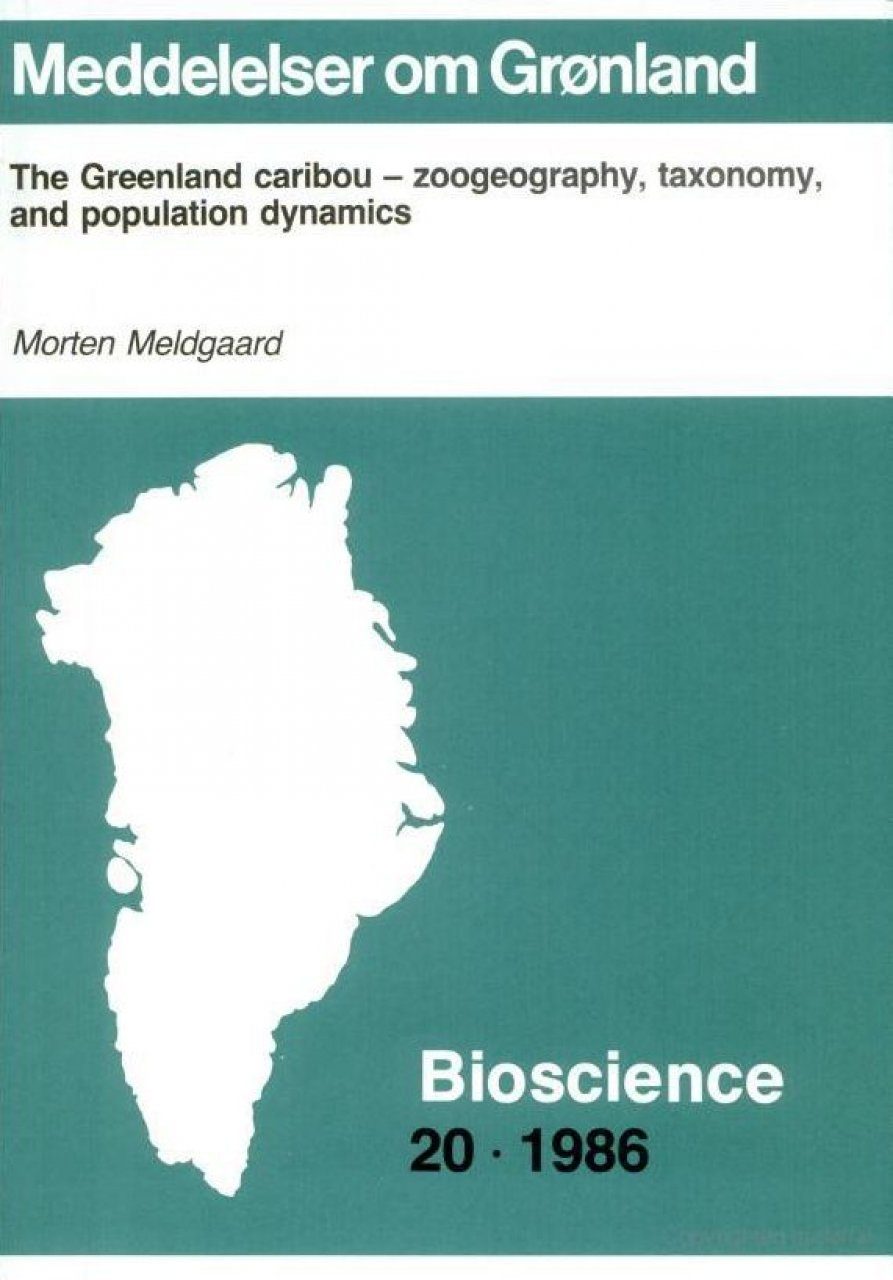
The Greenland Caribou - Zoogeography, Taxonomy, and Population Dynamics

Monograph
By: Morten Meldgaard(Author)
88 pages, 65 b/w photos, b/w illustrations and b/w distribution maps; 2 tables
The Greenland Caribou - Zoogeography, Taxonomy, and Population Dynamics
Click to have a closer look
  • The Greenland Caribou - Zoogeography, Taxonomy, and Population Dynamics ISBN: 9788763511803 Paperback Jan 1986 Not in stock: Usually dispatched within 1-2 weeks
    £24.99
    #212200
Price: £24.99
About this book Contents Customer reviews Related titles

About this book

The Greenland Caribou - Zoogeography, Taxonomy, and Population Dynamics is a comprehensive survey of all available geological, archaeological, historical, ethnohistorical, statistical, and game-biological data concerning the past and present status and distribution of the Greenland caribou is given. Based on this information a reconstruction of postglacial caribou zoogeography is presented. The main conclusions are: (1) Prior to c. 6000 BC small (Rangifer tarandus pearyi sized) caribou migrated from Ellesmere Island into greenland (three new C-14 datings are presented), (2) prior to c. 2000 BC large (Rangifer tarandus groenlandicus sized) caribou migrated across Nares Strait and/or across Davis Strait to the northern parts of West Greenland, (3) c. 1500 BC West Greenland was inhabited by both large and small caribou separated by Sukkertoppen Iskappe, (4) between c. 1500 BC and c. 1000 AD the small West Greenland caribou disappeared, (5) from c. 6000 BC to c. 1300 AD caribou have periodically inhabited North Greenland, (6) prior to c. 300 AD the isolated Ammassalik region was colonized by caribou either frrom Northeast Greenland or from Southwest Greenland. The Ammassalik caribou were quite dwarfish and they became extinct after c. 1100 AD (7 new C-14 datings are presented), 7) c. 1900 AD the small Northeast Greenland caribou became extinct, (8) through the last 1000 years the range of the Greenland caribou has been reduced through population extinctions starting in Southeast Greenland and progressing north and south along the coasts leading to the present concentrations in central West Greenland and Inglefield Land.

These major zoogeographical events are the result of recurring population fluctuations and related distributional changes. In West Greenland these fluctuations have been recorded through the last 250 years. A number of features characterize changes in population size and distribution: (1) The duration of a population cycle varies from 65 to 115 years, (2) population decrease (and increase) is drastic often exceeding 90% of the population, and in some cases extinction is the end result, (3) fluctuations in different caribou populations in major geographical areas appear to be synchronized, (4) when the populations increase in numbers they expand their ranges while range contraction is associated with population declines.

The population fluctuations are primarily caused by climatic changes and secondarily by predation, overgrazing, and other factors.

Contents

Abstract
Introduction
Descriptive part
Analytical part
Conclusion
Acknowledgements
References
Appendices

Customer Reviews

Monograph
By: Morten Meldgaard(Author)
88 pages, 65 b/w photos, b/w illustrations and b/w distribution maps; 2 tables
Current promotions
January SaleNew and Forthcoming BooksBritish Wildlife Magazine SubscriptionField Guide Sale 2025