Um genaue Preise zu sehen, wählen Sie bitte Ihr Lieferland.
 
 
United States
£ GBP
Alle Kategorien
Important Notice for US Customers

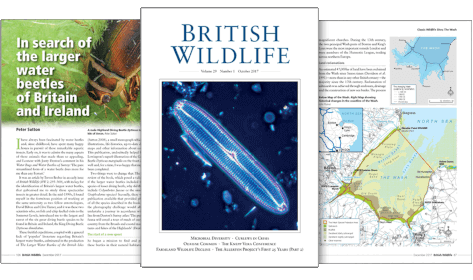
British Wildlife

8 issues per year 84 Seiten per Ausgabe Nur im Abonnement erhältlich

British Wildlife is the leading natural history magazine in the UK, providing essential reading for both enthusiast and professional naturalists and wildlife conservationists. Published eight times a year, British Wildlife bridges the gap between popular writing and scientific literature through a combination of long-form articles, regular columns and reports, book reviews and letters.

Abonnement ab £33 im Jahr

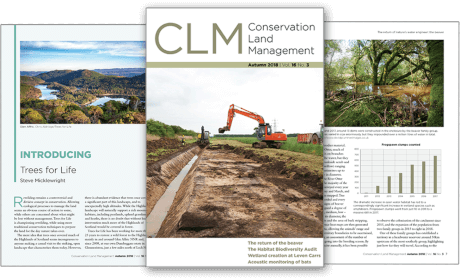
Conservation Land Management

4 Auflagen im Jahr 44 Seiten Nur im Abonnement erhältlich

Conservation Land Management (CLM) ist ein Mitgliedermagazin und erscheint viermal im Jahr. Das Magazin gilt allgemein als unverzichtbare Lektüre für alle Personen, die sich aktiv für das Landmanagement in Großbritannien einsetzen. CLM enthält Artikel in Langform, Veranstaltungslisten, Buchempfehlungen, neue Produktinformationen und Berichte über Konferenzen und Vorträge.

Subscriptions from £26 per year
Akademische und professionelle Bücher  Organismal to Molecular Biology  Microbiology

Biologically Active Substances of Protozoa

By: Natalia N Sukhareva
112 pages
Biologically Active Substances of Protozoa
Click to have a closer look
  • Biologically Active Substances of Protozoa ISBN: 9781402012815 Hardback Jul 2003 Expected delivery 23rd March - 25th March
    £89.99
    #141604 | Stock: 0
Price: £89.99
About this book Contents Customer reviews Related titles

About this book

This book outlines one of the vast and fruitful fields in protozoan microbiology and formulates the principles of obtaining biologically active substances from cultures of Protozoa. The correlation between composition of selected flagellates' cell components and their biological effects in experimental animals, is the main topic of the book.

Contents

1 Protozoa as producers of biologically active substances: Trypanosoma cruzi as the source of medications; Selection of other species among flagellates; Toxins and detoxification substances; Biologically active substances of soil Protozoa. 2 Cultivation of flagellates: Media for cultivation of flagellates. Physiological role of main media components in the cultures of flagellates; Conditions for flagellates growth and stimulated biosynthesis of lipids; Inoculum quality and quantity; pH and osmolarity regulation; Influence of temperature; Passive and active aeration. 3 Lipids of flagellates: Phospholipids and sterols. Fatty acids and conditions for stimulated biosynthesis; Biosynthesis of lipids by flagellates. 4 Glycosylated lipids of flagellates: Glycosyl-phosphatidylinositol (GPI) and related GIPL, LPG and LPPG; Biological functions of GPI and related glycophospholipids. 5 Surface membrane glycoproteins of flagellates: Variant surface glycoproteins (VSGs) and their genes rearrangement; Sialic acids and trans-sialidases; Membrane mucins and mucin-like glycoproteins. 6 Cytokines, eicosanoids and nitric oxide as effector molecules against parasitic flagellates: Cytokines; Eicosanoids; Nitric oxide. 7 Biologically active substances of selected flagellates: Total lipid fraction - correlation between its composition and biological activity; Astasilid, its composition and biological activity; Membrane glycophospholipid (GPL) and its biological activity; Reserve polysaccharide from Astasia longa and its biological activity.

Customer Reviews

By: Natalia N Sukhareva
112 pages
Current promotions
New and Forthcoming BooksBritish Wildlife Magazine SubscriptionField Guide Sale 2025