Um genaue Preise zu sehen, wählen Sie bitte Ihr Lieferland.
 
 
United States
£ GBP
Alle Kategorien
Important Notice for US Customers

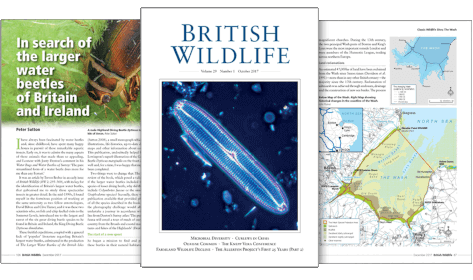
British Wildlife

8 issues per year 84 Seiten per Ausgabe Nur im Abonnement erhältlich

British Wildlife is the leading natural history magazine in the UK, providing essential reading for both enthusiast and professional naturalists and wildlife conservationists. Published eight times a year, British Wildlife bridges the gap between popular writing and scientific literature through a combination of long-form articles, regular columns and reports, book reviews and letters.

Abonnement ab £33 im Jahr

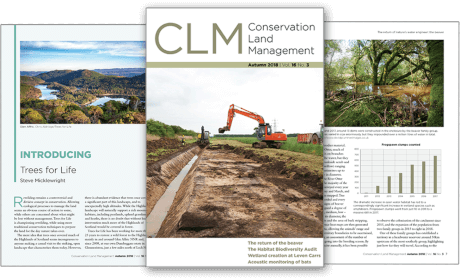
Conservation Land Management

4 Auflagen im Jahr 44 Seiten Nur im Abonnement erhältlich

Conservation Land Management (CLM) ist ein Mitgliedermagazin und erscheint viermal im Jahr. Das Magazin gilt allgemein als unverzichtbare Lektüre für alle Personen, die sich aktiv für das Landmanagement in Großbritannien einsetzen. CLM enthält Artikel in Langform, Veranstaltungslisten, Buchempfehlungen, neue Produktinformationen und Berichte über Konferenzen und Vorträge.

Subscriptions from £26 per year
Akademische und professionelle Bücher  Reference  Collections Management  Care & Conservation

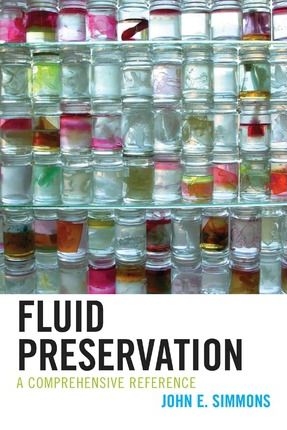
Fluid Preservation A Comprehensive Reference

Handbook / Manual New Edition
By: John Edward Simmons(Author)
328 pages, 31 bw images, 24 tables
Fluid Preservation
Click to have a closer look
  • Fluid Preservation ISBN: 9798216366720 Edition: 2 Hardback Jan 2026 Available for pre-order
    £123.00
    #270056
Price: £123.00
About this book Contents Customer reviews Biography Related titles

About this book

This revised edition of Fluid Preservation: A Comprehensive Reference has been updated with a wealth of new research published during the last decade on preserving specimens in alcohol, formaldehyde, and other fluids. The text includes an expanded comprehensive bibliography and sections on managing fluid-preserved collections, determining preservative concentration, storage environments, preservation history and techniques, anatomical preparations, health and safety, fluid-preserved specimens in art and history museums, and cultural interpretations of fluid preservation in art, literature, and film. Although fluid preservation has been practised for more than 350 years, Fluid Preservation: A Comprehensive Reference remains the only reference that thoroughly summarises current knowledge about this complex and often confusing topic.

Contents

Table of Contents
List of Figures
List of Boxes
List of Tables
Preface
Acknowledgements

Chapter 1. History of Fluid Preservation
      History of Ethyl Alcohol
      The Discovery of Preservation of Specimens in Ethyl Alcohol
      Instructions for Preserving Specimens in Fluids up to 1800
      Instructions for Preserving Specimens in Fluids 1800 to 1900
      The Introduction of Formaldehyde
      Botanical Fluid Preservation after about 1900
      Instructions for Preserving Specimens in Fluids after 1900
      Other Fluid Preservatives
      Summary

Chapter 2. Fixation
      Formaldehyde
      Commercial Formaldehyde
      Formaldehyde as a Fixative and Preservative
      Factors that Affect Fixation
            Time and Penetration Rate and Depth
            Temperature
            Tissue Structure and Composition
            Buffering and Fixative pH Range
            Concentration
      Formaldehyde and the Preservation of DNA
      Botanical Fixatives
      Narcotization
      Fixatives for Botanical Specimens
      Lipids and Fixation
      Formaldehyde and Field Work
      Post-Formaldehyde Fixation Washing
      Unwanted Effects of Formaldehyde
      Gluteraldehyde
      Aldehyde Safety
      Alternative and Proprietary Fixatives
      Summary

Chapter 3. Preservation
      Preservation without Fixation
      Transfer between Fluids
      Preservative Quality
      Botanical Uses of Fluid Preservation
      Glycerin
      Isopropyl Alcohol
      Fluid Preservation of DNA
      Evaporation
      Anatomical and Histological Fluid Preparations
      Mounting Specimens Inside Containers
      Glycol, Phenol, and Phenoxetol as Preservatives
      Mineral Oil
      Universal Fixatives
      Criteria for Evaluating Alternative Fixative and Preservative Fluids

Chapter 4. Effects of Fixatives and Preservatives on Specimens
      Changes in Body Dimensions and Biomass
      Changes in Color
      Solvent Extraction by Fixatives and Preservatives

Chapter 5. Managing Fluid-preserved Collections
      Standard Operating Procedures
      Monitoring Containers, Specimens, and Fluid Preservatives
      Monitoring the Storage Environment
      Integrated Pest Management
      Curators, Collection Managers, and Others
      Fluid-Preserved Collection Facilities
      Identification of Fluid Preservatives
      Determining Fluid Concentration
      pH of Preservative Solutions
      Preparing Fixatives and Preservatives
      Containers and Seals
      Labeling
      The Storage Environment
      Use of Specimens
      Topping Up and Replacing Preservatives
      Why do Closures Fail?
      Microbial Growth in Fluid Collections-Detection and Remediation
      Rehabilitation of Fluid-Preserved Collections
      Rehydration of Fluid-Preserved Specimens
      Moving Fluid-Preserved Collections
      Exhibition of Fluid-Preserved Specimens
      Old Containers and Old Specimens
      Repair of Damaged Fluid-Preserved Specimens
      Health and Safety
            Alcohol Safety
            Formaldehyde Safety
      Fire Prevention and Detection
      Disaster Preparedness Plans for Fluid-Preserved Collections
      Summary

Chapter 6. Fluid-preserved Collections as Cultural Patrimony
      Why Preserve Specimens in Fluid?
      The Fluid-preserved Human
      Fond Memories of Fluid Preservation
      Fluid Preservation in Visual Art
      Fluid Preservation in Literature
      Fluid Preservation in Film
      Fluid Preservation in Popular Culture
      The Aesthetics and Importance of Fluid Preservation

Literature Cited
Reference Tables
Appendix: Other Fluid Preservation LiteratureIndex
About the Author

Customer Reviews

Biography

John E. Simmons (B.S., Systematics and Ecology; M.A., Museum Studies) worked as a zoo keeper before becoming a collection manager at the California Academy of Sciences and later at the Natural History Museum at the University of Kansas, where he also served as Director of the Museum Studies Program until 2007. He has published more than 150 papers and books on museology and the care of collections, particularly for natural history. Since 2008, Simmons has run Museologica, an international museum consulting service, and has taught workshops and university classes on the care of collections in the U.S. and abroad.

Handbook / Manual New Edition
By: John Edward Simmons(Author)
328 pages, 31 bw images, 24 tables
Media reviews

Reviews of the first edition:

"This examination of the science behind the fluid preservation of biological specimens is essential reading for curators and conservators alike. There is a wealth of information in this exceptionally well-researched book which is worth buying for the comprehensive reference list alone! John Simmons has also collected anecdotes and misconceptions about fluid preservation which makes his book a suitable read for those outside the small world of museum professionals."
– Simon Moore, Conservator of Natural Sciences and Cutlery Historian, The National Trust, United Kingdom

"Filled with practical references and recommendations and a bibliography embracing sources from the very beginning of fluid preservation in the early 17th century to DNA preservation, this book summarizes the written knowledge on fixation, preservation, secondary interactions of preservatives and gives valuable information on collection care by exploring available literature far beyond Anglo-American sources. It is more than just a comprehensive reference, it embodies our knowledge of fluid preservation and conveys the most comprehensive practical advice that can be offered, from an author truly devoted to collection care."
– Dirk Neumann, Ichthyology section, The Bavarian State Collection of Zoology, Munich, Germany

"John Simmons has created the ultimate reference on the science and mythology of fluid preservation. Thoroughly researched and written with wry wit, it is an indispensable and highly readable resource."
– Catharine Hawks, adjunct faculty, Museum Studies Program, The George Washington University

Current promotions
January SaleNew and Forthcoming BooksBritish Wildlife Magazine SubscriptionField Guide Sale 2025