To see accurate pricing, please choose your delivery country.
 
 
United States
£ GBP
All Shops
Important Notice for US Customers

British Wildlife

8 issues per year 84 pages per issue Subscription only

British Wildlife is the leading natural history magazine in the UK, providing essential reading for both enthusiast and professional naturalists and wildlife conservationists. Published eight times a year, British Wildlife bridges the gap between popular writing and scientific literature through a combination of long-form articles, regular columns and reports, book reviews and letters.

Subscriptions from £33 per year

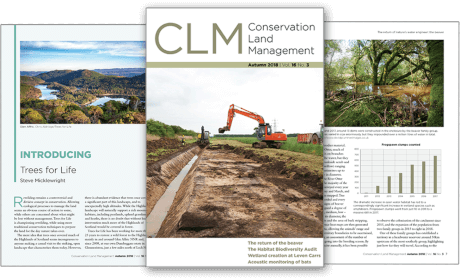
Conservation Land Management

4 issues per year 44 pages per issue Subscription only

Conservation Land Management (CLM) is a quarterly magazine that is widely regarded as essential reading for all who are involved in land management for nature conservation, across the British Isles. CLM includes long-form articles, events listings, publication reviews, new product information and updates, reports of conferences and letters.

Subscriptions from £26 per year
Academic & Professional Books  Habitats & Ecosystems  Forests & Wetlands

Global Forest Visualization From Green Marbles to Storyworlds

By: Lynda Olman(Author), Birgit Schneider(Author)
106 pages, 14 colour illustrations
Publisher: Routledge
Global Forest Visualization
Click to have a closer look
  • Global Forest Visualization ISBN: 9781032454009 Hardback Feb 2024 Expected delivery 23rd March - 25th March
    £54.99
    #266455 | Stock: 0
Price: £54.99
About this book Contents Customer reviews Biography Related titles

About this book

This book project examines global forest monitoring as a means to understand the promises and problems of global visualization for climate management.

Specifically, the book focuses on Global Forest Watch, the most developed and widely available forest-monitoring platform, created in 1997 by the World Resource Institute. Forest maps are always political as they visualize power relations and form the grid within which forests become commodities. This dislocation of the idea of the forest from its literal roots in the ground has generated problems for forest visualization efforts designed to empower local communities. This book takes a critical humanistic approach to this problem, combining methods from the fields of rhetoric and media studies to suggest solutions to these problems for designers and users of platforms like the Global Forest Watch. To explain why global views of forests can be disempowering, the book relies on biopolitical and rhetorical theories of panopticism and how these views unfold a different violence on different regions of the Earth in relation to colonial history. Using this theoretical framework, the book explains the historical process by which forests came to be classified, quantified, and mapped on a global scale. Interviews with end-users of global forest visualization platforms reveal if and how these platforms support local action. Lastly, the book provides rhetorical solutions to articulate global and local views of forests without reducing one view to the other. These solutions involve looking to forests themselves for clues about how to generate more broadly effective and resilient visualizations.

This book will be of great interest to students and scholars of forest studies, climate change, science communication, visualization studies, environmental communication, and environmental conservation.

Contents

Chapter 1. The Promises and Problems of Global Forest Visualization
Chapter 2. Forest Maps: The Datafication of Forests From a Media Theory Perspective
Chapter 3. Zooming Into Google Gaia Maps: From Globalization to Glocalization of Forests
Chapter 4. Forests as Stories: Storyworld Networks as Alternatives to Google Gaia
Chapter 5. Case Study: Global Forest Watch
Chapter 6. Insights From Developers and Users of GFW
Chapter 7. From Green Marbles to Storyworlds

Customer Reviews

Biography

Lynda Olman is a Professor of English at the University of Nevada, Reno, USA. She is the author of Scientists as Prophets (2013) and the editor of Global Rhetorics of Science (2023), as well as other books on the rhetoric of science. Her current work focuses on improving risk visualizations to support robust decision-making on environmental and climatic issues.

Birgit Schneider is Professor of Knowledge Cultures and Media Environments at the Potsdam University Institute for Arts and Media, Germany. Her current research concentrates on the visual communication of climate since 1800 and a genealogy of climate change visualization between science, aesthetics, and politics.

By: Lynda Olman(Author), Birgit Schneider(Author)
106 pages, 14 colour illustrations
Publisher: Routledge
Current promotions
New and Forthcoming BooksBritish Wildlife Magazine SubscriptionField Guide Sale 2025