Click to have a closer look
About this book
Contents
Customer reviews
Related titles
About this book
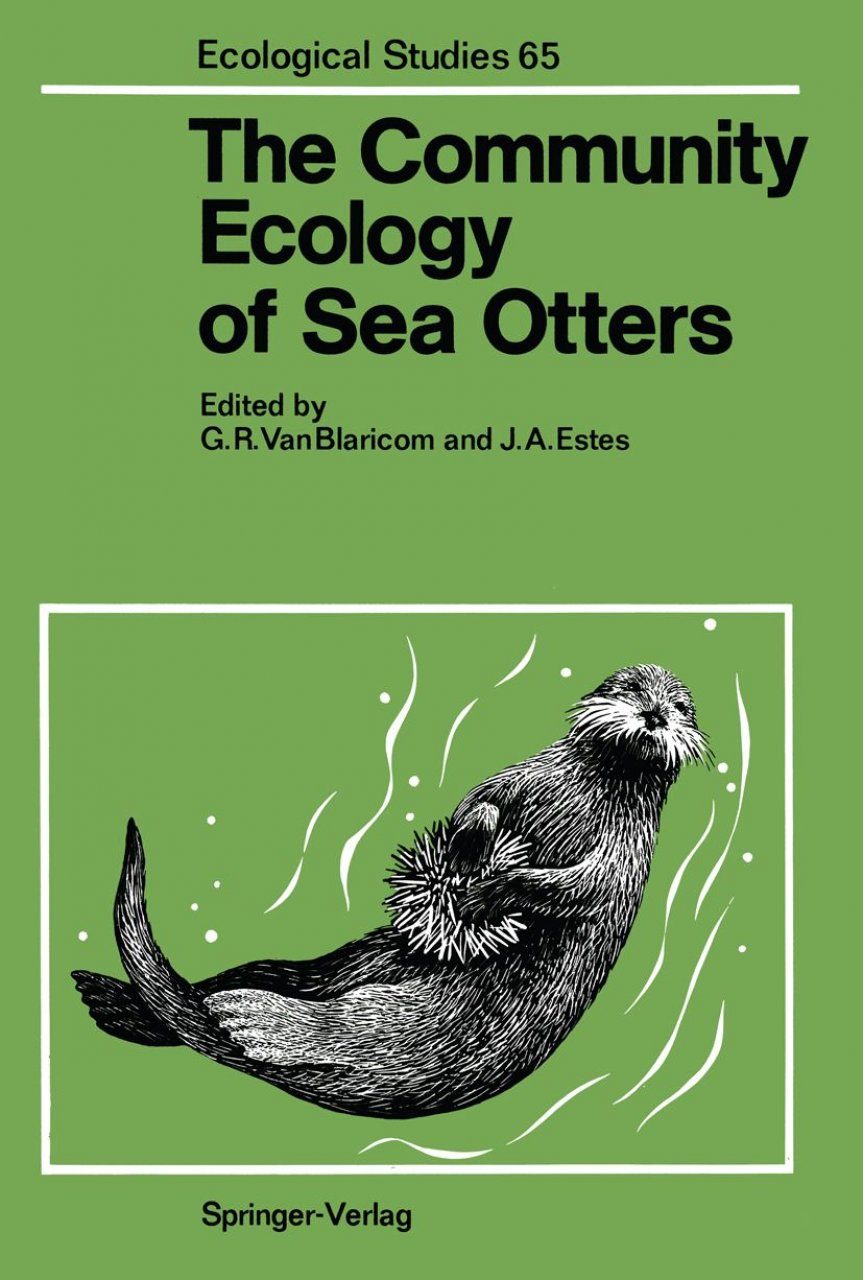
The impetus for Community Ecology of Sea Otters comes from two sources. The first is scientific: by virtue of a preference for certain large benthic invertebrates as food, sea otters have interesting and significant effects on the structure and dynamics of nearshore communities in the North Pacific. The second is political: be- cause of the precarious status of the sea otter population in coastal California, the U.S. Fish and Wildlife Service (USFWS) announced, in June 1984, a proposal to establish a new population of sea otters at San Nicolas Island, off southern California. The proposal is based on the premise that risks of catastrophic losses of sea otters, due to large oil spills, are greatly reduced by distributing the population among two geographically separate locations. The federal laws of the U.S. require that USFWS publish an Environmental Impact Statement (ElS) regarding the proposed translocation of sea otters to San Nicolas Island. The EIS is intended to be an assessment of likely bio- logical, social, and economic effects of the proposal. In final form, the EIS has an important role in the decision of federal management authority (in this case, the Secretary of the Interior of the U.S.) to accept or reject the proposal.
Contents
1 Introduction
2 A Review of the History, Distribution and Foraging Ecology of Sea Otters
2.1 Introduction
2.2 Evolution
2.3 History, Distribution and Present Status of Populations
2.4 Diet and Foraging Behavior
2.4.1 Habitat
2.4.2 Diet
2.4.3 Foraging Behavior
2.4.4 Activity
2.4.5 Class and Individual Variation
2.5 Summary
3 Sea Otter Foraging Habits and Effects on Prey Populations and Communities in Soft-Bottom Environments
3.1 Introduction
3.2 Soft-Bottom Foraging Habits
3.2.1 Epifaunal Prey Communities
3.2.1.1 Prey Populations
3.2.1.2 Prey Communities
3.2.2 Shallow-Burrowing InfaunalPrey
3.2.2.1 Prey Populations
3.2.2.2 Prey Communities
3.2.3 Deep-Burrowing Infaunal Prey
3.2.3.1 Prey Populations
3.2.3.2 Prey Communities
3.3 Prey Vulnerability and Patch Dynamics
3.3.1 Prey Resistance
3.3.2 Prey Resilience
3.4 Substrate Disturbance
3.5 Rocky and Soft Substrata
3.6 Future Research
3.7 Summary
4 Effects of Foraging by Sea Otters on Mussel-Dominated Intertidal Communities
4.1 Introduction
4.2 Models of Mussel-Dominated Communities
4.3 Sea Otters as Predators of Mussels
4.4 Case 1: Sea Otters and Mussels on the Coast of Central California
4.4.1 Study Location
4.4.2 Methods
4.4.3 Consumption of Mytilus californianus by Sea Otters: The Basic Pattern
4.4.4 Creation of Gaps in Mussel Cover by Sea Otters: Spatial and Temporal Aggregation
4.4.5 Size Distribution of Gaps Created by Sea Otters
4.4.6 Mussel Size and Vulnerability to Foraging Sea Otters
4.5 Case 2: Sea Otters and Mussels in Prince William Sound, Alaska
4.5.1 Study Location
4.5.2 Methods
4.5.3 Consumption of Mytilus edulis by Sea Otters: The Basic Pattern
4.5.4 Size Distribution of Intertidal Mussels and the Population Status of Sea Otters
4.5.5 Mussel Size and Vulnerability to Foraging Sea Otters
4.6 Discussion
4.7 Summary
5 Kelp Communities and Sea Otters: Keystone Species or Just Another Brick in the Wall?
5.1 Introduction
5.2 Kelp Community Structure
5.3 The Otter as a Keystone Species in California: Local or General?
5.3.1 Approach and Methods
5.3.2 Results
5.3.3 Possible Bias
5.4 Otter Effects: Geographic and Historical
5.5 Beyond Otters
5.6 A Model for Structure and Organization
5.7 Conclusions
5.8 Summary
6 Sea Otters, Sea Urchins, and Kelp Beds: Some Questions of Scale
6.1 Introduction
6.2 The Questions
6.3 The Evidence
6.4 Variation in Space and Time
6.4.1 Methods
6.4.2 Variation in Space
6.4.2.1 Quadrats
6.4.2.2 Swath Counts
6.4.2.3 Regional Variation
6.4.3 Variation in Time
6.4.3.1 Temporal Variation in Kelp Canopies
6.4.3.2 Variation Between Algal Assemblages and Sea Urchin Barrens
6.4.3.3 Long-Term Changes
6.5 Directions for Future Research
6.6 Summary
7 Effects of Sea Otter Foraging on Subtidal Reef Communities off Central California
7.1 Introduction
7.2 Study Sites
7.3 Methods
7.3.1 Sampling Schedule
7.3.2 Macroinvertebrate Sampling
7.3.3 Algae and Sessile Invertebrates
7.3.3.1 Central Californian Sites
7.3.3.2 Urchin Exclusion Experiment
7.3.4 Fish Sampling
7.3.5 Data Analysis
7.4 Results and Discussion
7.4.1 Macroinvertebrates
7.4.2 Algae and Sessile Invertebrates
7.4.2.1 Central Californian Sites
7.4.2.2 Urchin Exclusion Experiment
7.4.3 Fish
7.5 General Discussion and Conclusions
7.5.1 Future Research
7.6 Summary
8 Fish Populations in Kelp Forests Without Sea Otters: Effects of Severe Storm Damage and Destructive Sea Urchin Grazing
8.1 Introduction
8.2 The System
8.3 Methods
8.4 Results and Discussion
8.4.1 Physical Variables
8.4.2 Total Fish Density
8.4.3 Species Densities
8.4.3.1 Surfperch Adults
8.4.3.2 Surfperch Young, Subadults, and Summer Transients
8.4.3.3 Midwater Planktivores
8.4.3.4 Switch-Feeding Predators and Plant-Cropping Omnivores
8.4.4 Biogeographic Species Groups
8.4.5 Fish Assemblage Structure
8.5 General Discussion and Conclusions
8.5.1 Predicted Behavior of Our System in the Presence of Sea Otters
8.5.2 Future Research
8.6 Summary
9 The Effects of Kelp Forests on Nearshore Environments: Biomass, Detritus, and Altered Flow
9.1 Introduction
9.2 Habitat Model
9.3 Trophic Model
9.4 Hydrodynamic Model
9.5 Discussion
9.6 Summary
10 Sea Otters and Nearshore Benthic Communities: A Theoretical Perspective
10.1 Introduction: Regulatory Issues
10.2 Ecological and Regulatory Parallels
10.3 Measures of Ecosystem Health
10.4 Risk Assessment: Predicting Fate, Transport, and Effects of Otters
10.5 Summary
11 Concluding Remarks
11.1 Introduction
11.2 Patterns, Processes and Paradigms in Communities Occupied by Sea Otters - A View Among Systems, and Through Space and Time
11.3 Variation in Community Structure
11.4 Future Research Needs
11.5 The Approach to Variation - A Philosophical Perspective
References
Customer Reviews