Um genaue Preise zu sehen, wählen Sie bitte Ihr Lieferland.
 
 
United States
£ GBP
Alle Kategorien
Important Notice for US Customers

British Wildlife

8 issues per year 84 Seiten per Ausgabe Nur im Abonnement erhältlich

British Wildlife is the leading natural history magazine in the UK, providing essential reading for both enthusiast and professional naturalists and wildlife conservationists. Published eight times a year, British Wildlife bridges the gap between popular writing and scientific literature through a combination of long-form articles, regular columns and reports, book reviews and letters.

Abonnement ab £33 im Jahr

Conservation Land Management

4 Auflagen im Jahr 44 Seiten Nur im Abonnement erhältlich

Conservation Land Management (CLM) ist ein Mitgliedermagazin und erscheint viermal im Jahr. Das Magazin gilt allgemein als unverzichtbare Lektüre für alle Personen, die sich aktiv für das Landmanagement in Großbritannien einsetzen. CLM enthält Artikel in Langform, Veranstaltungslisten, Buchempfehlungen, neue Produktinformationen und Berichte über Konferenzen und Vorträge.

Subscriptions from £26 per year
Akademische und professionelle Bücher  Insects & other Invertebrates  Other Invertebrates

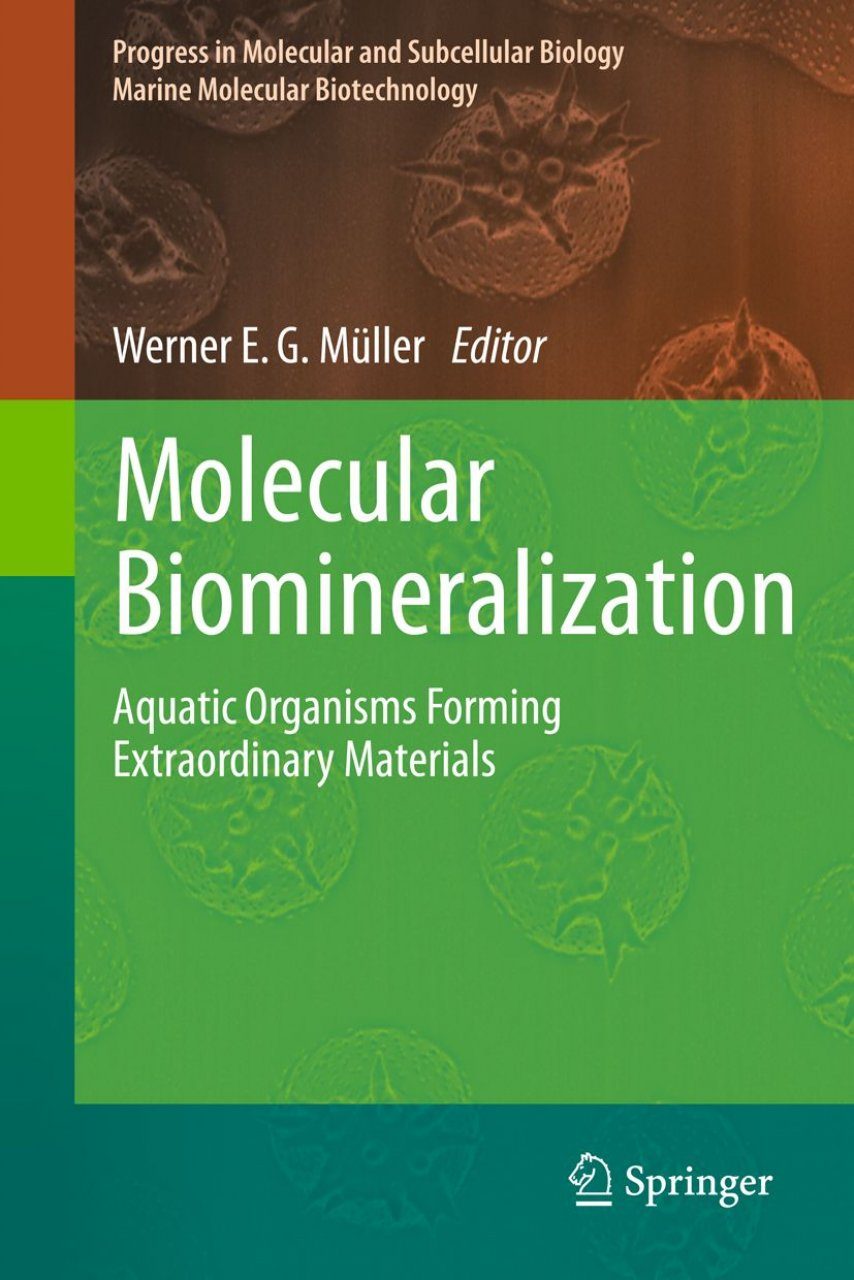
Molecular Biomineralization Aquatic Organisms Forming Extraordinary Materials

By: Werner EG Muller(Editor)
300 pages, 63 colour & 56 b/w illustrations
Publisher: Springer Nature
Molecular Biomineralization
Click to have a closer look
Select version
  • Molecular Biomineralization ISBN: 9783642271182 Paperback Nov 2013 Not in stock: Usually dispatched within 1-2 weeks
    £139.99
    #209217
  • Molecular Biomineralization ISBN: 9783642212291 Hardback Aug 2011 Not in stock: Usually dispatched within 1-2 weeks
    £179.99
    #192627
Selected version: £139.99
About this book Contents Customer reviews Related titles

About this book

The concept of 'biomineralization' signifies mineralization processes that take place in close association with organic molecules or matrices. The awareness that mineral formation can be guided by organic molecules notably contributed to the understanding of the formation of the inorganic skeletons of living organisms. Modern electron microscopic and spectroscopic analyses have successfully demonstrated the participation of biological systems in several mineralization processes, and prominent examples include the formation of bio-silica in diatoms and sponges. This insight has already made the application of recombinant technology for the production of valuable inorganic polymers, such as bio-silica, possible. This polymer can be formed by silicatein under conditions that cannot be matched by chemical means. Similarly, the efforts described in Molecular Biomineralization have elucidated that certain organisms, bacteria in deep-sea polymetallic nodules and coccoliths in seamount crusts, are involved in the deposition of marine minerals. Strategies have already been developed to utilize such microorganisms for the biosynthesis and bioleaching of marine deposits. Moreover, studies reveal that bio-polymers enhance the hydroxyapatite formation of bone-forming cells and alter the expression of important regulators of bone resorption, suggesting a potential for bone regeneration and treatment / prevention of osteoporosis.

Contents

- Magnetite Biomineralization in Bacteria
- Maxi and Mini Ferritins: Minerals and Protein Nanocages
- Manganese Oxidation by Bacteria: Biogeochemical Aspects
- Molecular Biomineralization: Towards an Understanding of the Biogenic Origin of Polymetallic Nodules, Seamount Crusts and Hydrothermal Vents
- Molecular basis of bacterial calcium carbonate precipitation
- Principles of calcium-based biomineralization
- Molecular Aspects of Biomineralization of the Echinoderm Endoskeleton
- Echinoderms as blueprints for biocalcification: regulation of skeletogenic genes and matrices
- The unique invention of the siliceous sponges: their enzymatically made bio-silica skeleton
- Biosilica-based strategies for treatment of osteoporosis and other bone diseases
- Structure and function of matrix proteins and peptides in the biomineral formation in crustaceans
- Molecular Approaches to Understand Biomineralization of Shell Nacreous Layer
- Acidic shell proteins of the Mediterranean fan mussel Pinna nobili

Customer Reviews

By: Werner EG Muller(Editor)
300 pages, 63 colour & 56 b/w illustrations
Publisher: Springer Nature
Current promotions
Great GiftsNew and Forthcoming BooksBritish Wildlife Magazine SubscriptionField Guide Sale 2025