Um genaue Preise zu sehen, wählen Sie bitte Ihr Lieferland.
 
 
United States
£ GBP
Alle Kategorien
Important Notice for US Customers

British Wildlife

8 issues per year 84 Seiten per Ausgabe Nur im Abonnement erhältlich

British Wildlife is the leading natural history magazine in the UK, providing essential reading for both enthusiast and professional naturalists and wildlife conservationists. Published eight times a year, British Wildlife bridges the gap between popular writing and scientific literature through a combination of long-form articles, regular columns and reports, book reviews and letters.

Abonnement ab £33 im Jahr

Conservation Land Management

4 Auflagen im Jahr 44 Seiten Nur im Abonnement erhältlich

Conservation Land Management (CLM) ist ein Mitgliedermagazin und erscheint viermal im Jahr. Das Magazin gilt allgemein als unverzichtbare Lektüre für alle Personen, die sich aktiv für das Landmanagement in Großbritannien einsetzen. CLM enthält Artikel in Langform, Veranstaltungslisten, Buchempfehlungen, neue Produktinformationen und Berichte über Konferenzen und Vorträge.

Subscriptions from £26 per year
Akademische und professionelle Bücher  Habitats & Ecosystems  Forests & Wetlands

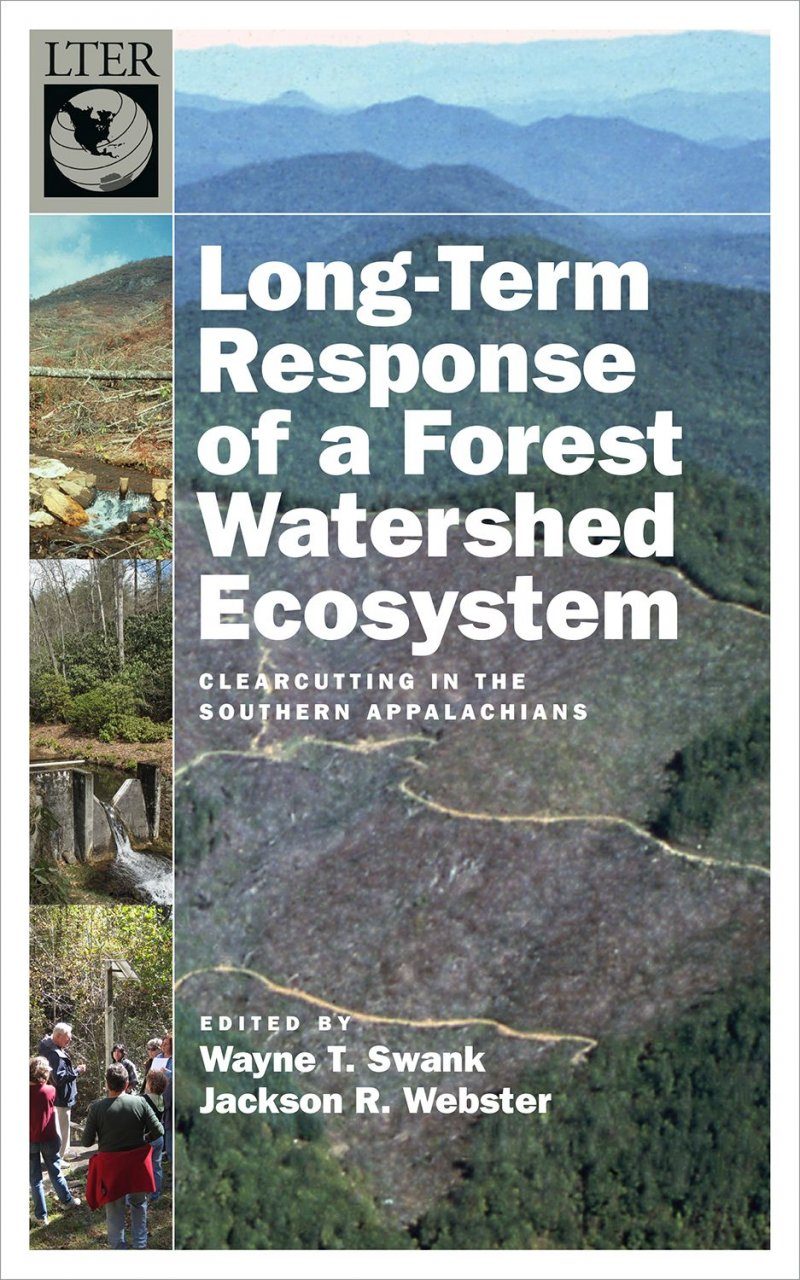
Long-Term Response of a Forest Watershed Ecosystem Clearcutting in the Southern Appalachians

Monograph
By: Wayne T Swank(Author), Jackson R Webster(Author)
272 pages, 18 b/w photos, 66 b/w illustrations
Long-Term Response of a Forest Watershed Ecosystem
Click to have a closer look
  • Long-Term Response of a Forest Watershed Ecosystem ISBN: 9780195370157 Hardback Mar 2014 Not in stock: Usually dispatched within 1-2 months
    £49.99
    #209266
Price: £49.99
About this book Contents Customer reviews Biography Related titles

About this book

This latest addition to the Long-Term Ecological Research Network series gives an overarching account of the recovery and management of a forest watershed ecosystem. It synthesizes and cross-references important and rare-to find, long-term data in 14 chapters that deal with the hydrologic, biogeochemical, and ecological processes of mixed deciduous forests. The data is representative of the entire U.S., and shows the effects of commercial clearcutting using examples from the Southeastern U.S. and a range of East coast forests. It includes responses of both forest and stream components of the watershed and provides unique insights into the interrelationships between the effects of natural disturbances (floods, droughts, insects, and disease, etc.) versus management disturbances.

Clearly illustrating the importance and need for long-term research to evaluate recovery processes of long-lived ecosystems, the work will serve academics, professionals, and students seeking to understand more fully the effects of forest-cutting on forest and stream ecosystems.

Contents

Chapter 1- Introduction: programmatic background, site description, experimental approach and treatment, natural disturbances.
Wayne T. Swank and Jackson R. Webster.
Chapter 2- Successional forest dynamics: 20 years following clearcutting.
Lindsay R. Boring, Katherine J. Elliott, and Wayne T. Swank
Chapter 3- Response and recovery of water yield and timing, stream sediment, abiotic parameters, and stream chemistry.
Wayne T. Swank, Jennifer D. Knoepp, James M. Vose, Stephanie Laseter, and Jackson R. Webster.
Chapter 4- Long-and short-term changes in soil nutrient availability following logging.
Jennifer D. Knoepp, Bruce L. Haines, Wayne T. Swank.
Chapter 5- Soluble organic nutrient fluxes.
Robert G. Qualls, Bruce L. Haines, Wayne T. Swank.
Chapter 6- Dynamics of dissolved organic carbon in a stream during a quarter century of forest succession.
Judy L. Meyer, Jackson R. Webster, Jennifer D. Knoepp, and E. F. Benfield.
Chapter 7- Woody debris decomposition and its contribution to the forest floor and soil on watershed 7.
Kim G. Mattson and Wayne T. Swank
Chapter 8- Recovery of decomposition and soil microarthropod communities.
Liam Heneghan and Alissa Salmore
Chapter 9- Canopy Arthropods
Barbara C. Reynolds, Timothy D. Schowalter, and D. A. Crossley, Jr..
Chapter 10- Recovery of particulate organic matter dynamics in a stream draining a logged watershed—— a pressing situation.
Jackson R. Webster, E. F. Benfield, Stephen W. Golladay, and Matthew E. McTammany.
Chapter 11- Stream macroinvertebrate response to clearcut logging.
J. Bruce Wallace and Damon Ely.
Chapter 12- Comparisons with results from the Fernow Experimental forest in the central Appalachians.
Mary Beth Adams and James N. Kochendenfer.
Chapter 13- Comparisons with results from the Hubbard Brook Experimental forest in the northern Appalachians.
James W. Hornbeck, Amey S. Bailey, Christopher Eagar, and John L. Campbell.
Chapter 14- Ecosystem stability and forest watershed management: A synthesis from 30+ years of research on WS7.
Jackson R. Webster, Wayne T. Swank, James M. Vose, Jennifer D. Knoepp, and Katherine J. Elliott.

Customer Reviews

Biography

Wayne T. Swank is Scientist Emeritus, Coweeta Hydrologic Laboratory, USDA Forest Service, and Adjunct Professor at both the University of Georgia and Clemson University.

Jackson R. Webster is Professor of Ecology in the Department of Biological Sciences at Virginia Tech, which is officially Virginia Polytechnic Institute and State University.

Monograph
By: Wayne T Swank(Author), Jackson R Webster(Author)
272 pages, 18 b/w photos, 66 b/w illustrations
Current promotions
Great GiftsNew and Forthcoming BooksBritish Wildlife Magazine SubscriptionField Guide Sale 2025