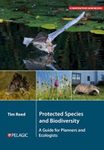
About this book
It is well known that infrastructure development projects can boost the economy and reduce the cost of trade in both developing and developed economies; however, infrastructure projects can also cause biodiversity loss.
This book is the result of an important biodiversity survey conducted along an East African railway in Tanzania. The building of the railway, still under construction, has already led to habitat loss, habitat degradation and landscape change, which may have affected biodiversity. The book includes recommendations to mitigate the effect of railway construction by protecting biodiversity and ecosystem services, which could have major implications across Africa and other regions.
The area covered by the survey focuses on the Standard Gauge Railway (SGR) running through the Pugu and Ruvu South Forest Reserves towards Maktupora-Dodoma, plus data on large mammals through to Isaka-Shinyanga. The Pugu forests boast high biodiversity of both flora and fauna, some of which are endemic to the area. There are both plant and animal species that are of major conservation concern, so there is an urgent need to consolidate information to help formulate suitable conservation measures.
The data collected covers plants, invertebrates, amphibians, birds, and mammals for terrestrial and aquatic environments along the SGR. This work is timely as there are many more ongoing SGR construction projects in Tanzania and across Africa; as such, construction activities inevitably involve some habitat modification and destruction that may have a negative impact on biodiversity.
National and international scientists, decision makers and policy makers, as well as ecologists and conservation managers involved in large infrastructure projects, will find this book invaluable. The book provides baseline information and can be used as a case study for other infrastructure development projects around the world.
Contents
Chapter 1. Book Overview
Chapter 2. Effects of Standard Gauge Railway development on biodiversity and forest conservation: The case study of Pugu Nature Forest Reserve and Ruvu South Forest Reserve in Tanzania
Chapter 3. Wetlands status within the SGR footprint from Dar es Salaam to Makutupora Dodoma
Chapter 4. Floristic structure, Composition, Diversity and Anthropogenic Pressure: The Implications on the Management of Biodiversity along the SGR Segment in Pugu and Ruvu Forest Reserves, Tanzania
Chapter 5. Arthropod assemblages of Pugu-Kazimzumbwi Nature Forest and Ruvu South Forest Reserves, Tanzania
Chapter 6. Macroinvertebrate and Fish Assemblages as Indicators of Wetland Modification within the SGR Footprint
Chapter 7. Herpetofauna within the Standard Gauge Railway Footprint from Dar es Salaam to Makutupora, Dodoma, Tanzania
Chapter 8. The Avifauna of Pugu Hills and Ruvu South Coastal Forests amidst Railway Development
Chapter 9. Ecological Status of Galagos in Pugu Nature and Ruvu South Forest Reserves
Chapter 10. Bats of Pugu-Kazimzumbwi and Ruvu South Forests, Tanzania
Chapter 11. Wildlife Conservation Implications of Large Mammals along Standard Gauge Railway from Dar Es Salaam to Isaka-Kahama, Tanzania
Chapter 12. Prospects on biodiversity along the Standard Gauge Railway, Dar es Salaam to Makutupora, Dodoma, Tanzania
Customer Reviews
Biography
Dr Catherine A. Masao is a Senior Lecturer and Head of the Department of Quality Assurance for Research, Publications & Innovations of the UDSM. She has a PhD in Nature Conservation from Sokoine University of Agriculture (SUA) in a sandwich with Oslo University in Norway since 2012, and an MSc. in Conservation Biology from Kent University, Canterbury, UK in 2004. Dr Masao undertook her Post-doctoral Research on the Scientific foundations of conservation and sustainable use of biodiversity and ecosystem services, financed by the Swiss National Science Foundation SNF in collaboration with the German Research Foundation (2018/2019). Dr Masao is also a TRC's Advisor for Biodiversity Action Plan Implementation along the Standard Gauge Railway (SGR) from Dar es Salaam to Mwanza since 2020. Dr C.A. Masao has also been a Lead Author of the Africa Chapter in the IPCC WG2AR6 Report. Dr C.A. Masao also did long-term research on Afro-alpine Sky Islands: Genetic Versus Taxonomic Biodiversity, Biodiversity Conservation and implications of Climate Change, which was conducted on the high mountains of eastern Africa, funded by NUFU.
Prof. Joel Nobert is Associate Professor and Director of the Institute of Resource Assessment, University of Dar es Salaam. He is trained at the University of Dar es Salaam and Yokohama National University, Japan, and has specialised in hydrology and Water Resources Management. He is currently leading the team in the development of the Integrated Water Resources Management and Development Plan (IWRMDP) for the Lake Victoria basin. He is the hydrologist with the team doing the Environmental and Social Impact Assessment (ESIA) for the Standard Gauge Railway (SGR) project as a water resources expert. He is also working with the Danish Hydraulic Institute (DHI) as a hydrologist for the ongoing project under the Ministry of Development of prediction tools for flood forecasting early warning (FFEWS).
Prof. John Magige received the BSc degree from the University of Dar es Salaam (UDSM), Tanzania, in 2000, and later MSc and PhD in Wildlife Ecology from the UDSM and NTNU, Norway, in 2003 and 2008, respectively. In 2006, she joined the UDSM as an Assistant Lecturer and has been an Associate Professor since 2020. Prof. Magige has been engaged in teaching, conducting research, and supervising students, both undergraduate and postgraduate. She has published several articles in reputable journals, is a member of research advisory committees, and is currently the Principal of the College of Natural and Applied Sciences, UDSM.